

October 10, 2026 · 星期六
Cotton
棉花· generic term for cotton or kapok

 Today’s episode with Jason & Amy
Cotton's introduction to China revolutionized textile production, making warm clothing accessible to all.
寒露 marks the point when the dew turns cold and may verge on frost, signaling a sharper, deeper autumn chill. The air grows dry and brisk, migrating birds head south, and chrysanthemums come into bloom.
People climb heights to admire the autumn views, enjoy chrysanthemums, and in some places drink chrysanthemum wine for health.
Cotton
棉花mián huā
Cotton, known as 棉花 in Chinese, has played a significant role in Chinese culture and agriculture. Initially, cotton was not native to China but was introduced from abroad. Its cultivation became widespread due to its adaptability and the high demand for warm clothing and bedding, especially in the colder regions of the country. The plant's fibers are spun into threads and woven into fabric, which can be used for a variety of purposes, from everyday clothing to intricate traditional garments.[1]
The impact of cotton on Chinese society is profound, as it enabled the production of affordable clothing, contributing to social and economic changes. Before the widespread use of cotton, silk and hemp were the primary materials for clothing, but they were either too expensive or not warm enough for the harsh winters. Cotton provided a solution, offering warmth and comfort to people across different social classes. It became a staple in household textiles, especially for making soft quilts, which are essential in many Chinese homes during winter.[2]
In addition to its practical uses, cotton has also influenced Chinese culture and art. The soft, fluffy appearance of cotton fields has been a source of inspiration for artists and poets throughout the centuries. Moreover, the cultivation and processing of cotton have been depicted in various forms of Chinese art, symbolizing prosperity and abundance. This cultural significance is reflected in traditional festivals and local customs, where cotton is often celebrated for its contribution to community well-being and livelihood.[3]
Today, on the first day of the ninth lunar month, it is fitting to remember the humble yet impactful role of cotton in shaping Chinese culture and daily life. As we move through the Year of the Horse, let us appreciate the warmth and comfort that cotton, or 棉, continues to bring to our lives.
Cotton's introduction to China revolutionized textile production, making warm clothing accessible to all.
今天是棉花的日子。
Jīntiān shì miánhua de rìzi.
Today is a day for cotton.
- [1] Joseph Needham, Science and Civilisation in China, Volume 5: Chemistry and Chemical Technology
- [2] Elvin, Mark. The Pattern of the Chinese Past
- [3] Ebrey, Patricia Buckley. The Cambridge Illustrated History of China
Jason & Amy on 棉
Podcast: Dragon Daily: Cotton — and the word 棉
Jason & Amy on Cotton and 棉
New here?
October 10, 2026
Today's highlights include influential figures in Chinese cinema and biology, as well as a famous Hong Kong singer.
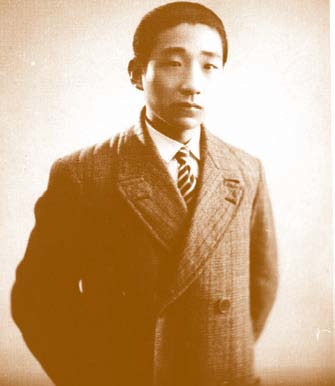
Unknown author Unknown author / Wikimedia Commons (Public domain) source Birth of Bei Shizhang 贝时璋
Bei Shizhang, a pioneering biologist and academic, was born. He contributed significantly to the study of cytology and microbiology, founding several important research institutes in China.
His work laid the foundation for modern biological research in China.
Read moreBirth of Fei Mu 费穆
Fei Mu, an influential Chinese director and screenwriter, was born. Known for classics such as 'Spring in a Small Town', his films are celebrated for their artistic depth and innovative storytelling.
Fei Mu's work is considered timeless, influencing generations of filmmakers.
Read moreBirth of Anita Mui
Anita Mui, a renowned Hong Kong singer and actress, was born. Known as the 'Madonna of Asia', she captivated audiences with her powerful voice and stage presence. Mui's career included numerous hit songs and memorable film roles.
Her influence on the Cantopop genre and the music industry remains strong.
Read more
我有棉衣。
Wǒ yǒu miányī.
I have a cotton jacket.
This sentence uses 棉 to describe a cotton garment.
棉花很柔软。
Miánhuā hěn róuruǎn.
Cotton is very soft.
Here, 棉花 refers to the cotton plant, emphasizing its softness.
冬天用棉被很暖。
Dōngtiān yòng miánbèi hěn nuǎn.
Using a cotton quilt in winter is very warm.
棉被 (cotton quilt) highlights the insulating property of cotton.
棉的普及改变了纺织业。
Mián de pǔjí gǎibiànle fǎngzhīyè.
The spread of cotton changed the textile industry.
This sentence uses 棉 in a broader economic and industrial context.
Using 的 to show possession
noun + 的 + noun
The particle 的 is used to indicate possession, similar to 'of' in English.
Use 的 to connect a possessor and the thing possessed.
这是我的书。
Zhè shì wǒ de shū.
This is my book.
他的朋友来了。
Tā de péngyǒu lái le.
His friend has arrived.
这是棉的特性。
Zhè shì mián de tèxìng.
These are the properties of cotton.
What does 棉 mean?
How is 棉 pronounced?
How do you write "cotton" in Chinese?
Listen. What does the sentence mean?
这件___衣很暖。(This jacket is ___.)
棉花很重要。 — What does this sentence mean?
Which crop is known for its role in making warm clothing in China?
Arrange into a correct sentence
Which influential figure related to Cantopop was born in 1963?
Who contributed to the foundations of biological research in China?
Frequently asked questions about the word 棉
棉 translates to 'cotton' in English.
No, 棉 can refer to various cotton products, including bedding and textiles.
棉 is pronounced as 'mián'.
Chinese Learner’s Horoscope
Your sign’s reading for today, written for learners.
Find your sign
The Chinese zodiac assigns each birth year one of twelve animals, each paired with an element that colours its character. Yours shapes a reading written for learners.
- Your sign and its elementOne of twelve animals on a 12-year cycle
- A daily affirmationFresh every morning, never repeated
- A learning horoscopeWhat to study today, and when
- A lucky characterWith pinyin, meaning and a study tip
Your birth date
Saved on this device — used only to work out your zodiac sign.
Today's Mandarin word: 棉 (mián) — generic term for cotton or kapok.
Learn it on Mandarin Temple's Dragon Daily 🐉