

October 9, 2026 · 星期五
Terraced Rice
稻子· paddy

 Today’s episode with Jason & Amy
Terraced rice fields showcase the adaptability and skill of farmers in cultivating rice on challenging landscapes.
寒露 marks the point when the dew turns cold and may verge on frost, signaling a sharper, deeper autumn chill. The air grows dry and brisk, migrating birds head south, and chrysanthemums come into bloom.
People climb heights to admire the autumn views, enjoy chrysanthemums, and in some places drink chrysanthemum wine for health.
Terraced Rice
稻子dào zǐ
Terraced rice fields are a remarkable example of the ingenuity and dedication of farmers who cultivate 稻 (dào), or paddy rice, across the varied landscapes of China. These terraces, carved into hillsides, are not only a testament to human adaptability but also a visually striking element of the rural landscape. They enable rice cultivation in areas that would otherwise be unsuitable due to steep slopes and limited flat land. This practice has been honed over centuries, demonstrating the deep connection between the people and their environment[1].
The terraced fields are particularly associated with southern China, where rice is a staple part of the diet. The terraces allow farmers to control water levels precisely, which is crucial for rice cultivation. Water is an essential element in the growth of 稻, and the intricate irrigation systems ensure that each terrace receives adequate water. The water reflects the sky, creating breathtaking scenes that have inspired countless artists and photographers[2].
While the terraces are functional, they also hold cultural significance. They are a living representation of traditional agricultural techniques and a reminder of the community's resilience and harmony with nature. During the rice planting and harvest seasons, these terraces come alive with the activity of farmers working together, embodying a spirit of cooperation that has been passed down through generations. This communal effort is not only vital for the cultivation of 稻 but also strengthens social bonds within the community[3].
As we reflect on the significance of these terraced fields, we are reminded of the integral role that 稻 plays in cultural and daily life, providing sustenance and symbolizing the harmony between humans and their environment. The terraced fields stand as a testament to the sustainable practices that have been developed over centuries, ensuring that rice continues to be a fundamental part of life in China.
Terraced rice fields showcase the adaptability and skill of farmers in cultivating rice on challenging landscapes.
稻是南方的主食。
Dào shì nánfāng de zhǔshí.
Rice is the staple food of the south.
- [1] UNESCO inscription: Cultural Landscape of Honghe Hani Rice Terraces, 2013
- [2] Fei Xiaotong, From the Soil: The Foundations of Chinese Society
- [3] James C. Scott, The Art of Not Being Governed: An Anarchist History of Upland Southeast Asia
Jason & Amy on 稻
Podcast: Dragon Daily: Terraced Rice — and the word 稻
Jason & Amy on Terraced Rice and 稻
New here?
October 9, 2026
Today's explorations include influential figures in China's scientific and missionary history.
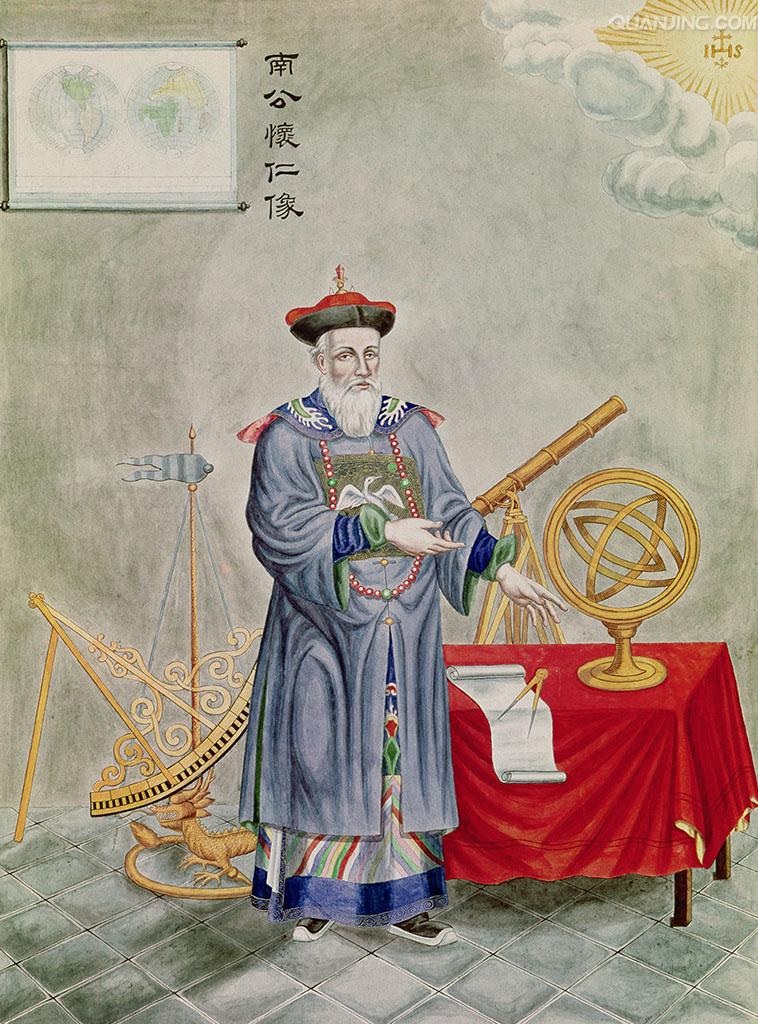
Unknown author Unknown author / Wikimedia Commons (Public domain) source Ferdinand Verbiest, Flemish Jesuit Missionary Born 南怀仁
Ferdinand Verbiest was a Flemish Jesuit missionary who significantly contributed to the field of astronomy in China. He became an important figure at the Qing court, working alongside the Kangxi Emperor and modernizing astronomical instruments.
Verbiest's contributions helped advance scientific knowledge in China, fostering cultural exchange.
Read more
Unknown author Unknown author / Wikimedia Commons (Public domain) source Jean Joseph Marie Amiot, Missionary and Linguist Dies
Jean Joseph Marie Amiot was a French Jesuit missionary known for his work in China. He worked extensively on Chinese music and language, producing important works that helped introduce European audiences to Chinese culture.
Amiot's efforts played a key role in bridging cultural understanding between China and the West.
Read more
我种稻。
Wǒ zhòng dào.
I plant rice.
This shows the basic action of planting rice.
稻在田里长得很好。
Dào zài tián lǐ zhǎng de hěn hǎo.
The rice grows well in the field.
This illustrates rice growing well in its environment.
稻是南方的主要粮食。
Dào shì nánfāng de zhǔyào liángshí.
Rice is the main food in the south.
This highlights the importance of rice in southern diets.
稻田如诗,映现自然之美。
Dàotián rú shī, yìngxiàn zìrán zhī měi.
Rice fields are like poetry, reflecting the beauty of nature.
This uses rice fields as a metaphor for natural beauty.
The use of 是 to express identity or equivalence
noun + 是 + noun
This pattern is used to identify or equate one noun with another, often translating to 'is' in English.
Use this structure to state facts or define something.
他是老师。
Tā shì lǎoshī.
He is a teacher.
苹果是水果。
Píngguǒ shì shuǐguǒ.
An apple is a fruit.
稻是粮食。
Dào shì liángshí.
Rice is a staple food.
What does 稻 mean?
How is 稻 pronounced?
How do you write "paddy" in Chinese?
Listen. What does the sentence mean?
我们需要更多的___。(We need more ___.).
稻在田里长得很好。 — What does this sentence mean?
What is a key feature of terraced rice fields?
Arrange into a correct sentence
Which Jesuit missionary was known for his contributions to astronomy in China?
Who worked on Chinese music and language to enhance cultural understanding?
Frequently asked questions about the word 稻
稻 (dào) refers to the rice plant or paddy, while 米 (mǐ) refers to rice grains, typically the form ready for cooking.
稻 is often used when discussing agriculture, cooking, or food, especially in rural contexts where rice farming is prevalent.
Yes, it can be used in both formal and informal contexts, particularly when discussing agricultural topics or food.
Chinese Learner’s Horoscope
Your sign’s reading for today, written for learners.
Find your sign
The Chinese zodiac assigns each birth year one of twelve animals, each paired with an element that colours its character. Yours shapes a reading written for learners.
- Your sign and its elementOne of twelve animals on a 12-year cycle
- A daily affirmationFresh every morning, never repeated
- A learning horoscopeWhat to study today, and when
- A lucky characterWith pinyin, meaning and a study tip
Your birth date
Saved on this device — used only to work out your zodiac sign.
Today's Mandarin word: 稻 (dào) — paddy.
Learn it on Mandarin Temple's Dragon Daily 🐉