
October 27, 2026 · 星期二
Vital Energy
气· gas

 Today’s episode with Jason and Amy
Qì, as an idea, underlines the harmony between individuals and their environment in Chinese culture.
霜降 is the last solar term of autumn, when the first frosts settle over the land and temperatures drop toward winter. White rime coats the morning fields, leaves blaze red and fall, and the harvest draws to a close.
People eat persimmons, said to ward off cold and chapped lips, and in some regions enjoy mutton to build warmth for winter.
Vital Energy
气qì
The concept of Qì (气) is deeply woven into the fabric of Chinese culture and philosophy. It is often translated as 'vital energy' or 'life force', playing a crucial role in various traditional practices such as Chinese medicine, martial arts, and feng shui. In traditional Chinese medicine, Qì is thought to flow through the body along pathways called meridians, and maintaining the proper balance and flow of Qì is considered essential for health and well-being[1].
In martial arts, particularly disciplines like Tai Chi and Qigong, practitioners focus on harnessing and directing Qì to enhance physical strength and mental clarity. The practice involves slow, deliberate movements and controlled breathing, which are believed to cultivate and balance the Qì within the body. This emphasis on internal energy distinguishes these arts from others that focus solely on physical prowess[2].
Feng shui, the ancient Chinese art of placement, also revolves around the concept of Qì. It involves arranging living spaces in harmony with the environment to ensure the free flow of Qì, thereby promoting prosperity and health. The positioning of buildings, furniture, and even the choice of colors and materials can influence the Qì flow, impacting the inhabitants' well-being and fortune[3]. On this day, reflecting on the role of Qì can deepen one's understanding of these traditional practices, highlighting the interconnectedness of body, mind, and environment.
The word 气 itself captures the essence of this intangible yet vital energy. In modern Chinese, 气 can also mean 'gas' or 'air', illustrating its elusive and omnipresent nature. As we continue to explore the depth of this concept, we see its enduring influence on Chinese philosophy and daily life.
Qì, as an idea, underlines the harmony between individuals and their environment in Chinese culture.
气是生命的能量。
Qì shì shēngmìng de néngliàng.
Qì is the energy of life.
- [1] 《黄帝内经》 The Yellow Emperor's Inner Canon
- [2] 《太极拳论》 Tai Chi Classics
- [3] 《易经》 The I Ching
Jason & Amy on 气
Podcast: Dragon Daily: Vital Energy — and the word 气
Jason & Amy on Vital Energy and 气
New here?
October 27, 2026
Today highlights influential figures in Chinese literature and sports history.
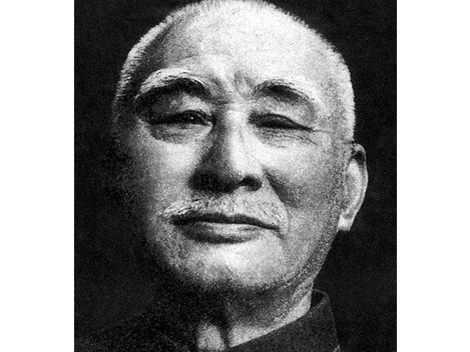
未知 / Wikimedia Commons (CC BY-SA 3.0) sourcelicence Birth of Ye Shengtao, Chinese Writer and Educator 叶圣陶
Ye Shengtao was born in 1894. He was a renowned writer and educator known for his contributions to modern Chinese literature, including the influential novel 'Schoolmaster Ni Huanzhi'.
Ye Shengtao's work remains a touchstone in modern Chinese literature and education.
Read more
Keith Allison from Owings Mills, USA / Wikimedia Commons (CC BY-SA 2.0) sourcelicence Birth of Yi Jianlian, Chinese Basketball Player 易建联
Yi Jianlian, a prominent figure in Chinese basketball, was born. He played in the NBA and is known for his time with the Guangdong Southern Tigers in the Chinese Basketball Association.
Yi Jianlian is a symbol of Chinese talent in international basketball.
Read more
我感到很有气。
Wǒ gǎndào hěn yǒu qì.
I feel very energetic.
This simple sentence uses 气 to express feeling energetic.
气在身体中流动。
Qì zài shēntǐ zhōng liúdòng.
Qì flows within the body.
This sentence explains the concept of Qì flowing in the body.
太极拳能增强气。
Tàijíquán néng zēngqiáng qì.
Tai Chi can enhance Qì.
It highlights how Tai Chi is believed to enhance one's Qì.
气影响人的健康和平衡。
Qì yǐngxiǎng rén de jiànkāng hé pínghéng.
Qì affects a person's health and balance.
This abstract sentence shows the broader influence of Qì on well-being.
Using 气 with 是
气 + 是 + noun
This pattern is used to define or explain what Qì is in terms of another noun.
Use this structure to define Qì or describe its nature.
气是能量。
Qì shì néngliàng.
Qì is energy.
气是生命的动力。
Qì shì shēngmìng de dònglì.
Qì is the force of life.
气是健康的基础。
Qì shì jiànkāng de jīchǔ.
Qì is the foundation of health.
What does 气 mean?
How is 气 pronounced?
How do you write "vital energy" in Chinese?
Listen. What does the sentence mean?
这种___很重要。(This kind of ___ is important.)
气是生命的能量。 — What does this sentence mean?
Which practice involves the flow of Qì?
Arrange into a correct sentence
Who was Yi Jianlian?
What is Ye Shengtao notable for?
Frequently asked questions about the word 气
In traditional Chinese medicine, 气 (qì) refers to the vital energy that sustains life and health.
You can use 气 to describe physical states, like '空气' (kōngqì - air), or emotional states, like '我很生气' (wǒ hěn shēngqì - I'm very angry).
Yes, it appears in idioms like '气急败坏' (qì jí bài huài), meaning to be exasperated or frantic.
Chinese Learner’s Horoscope
Your sign’s reading for today, written for learners.
Find your sign
The Chinese zodiac assigns each birth year one of twelve animals, each paired with an element that colours its character. Yours shapes a reading written for learners.
- Your sign and its elementOne of twelve animals on a 12-year cycle
- A daily affirmationFresh every morning, never repeated
- A learning horoscopeWhat to study today, and when
- A lucky characterWith pinyin, meaning and a study tip
Your birth date
Saved on this device — used only to work out your zodiac sign.
Today's Mandarin word: 气 (qì) — gas.
Learn it on Mandarin Temple's Dragon Daily 🐉