

August 29, 2026 · 星期六
Acrobatics
杂技· skill

 Today’s episode with Jason & Amy
Acrobatics in China exemplifies the profound skill ('技') involved in traditional performance arts.
处暑 signals that the oppressive summer heat is finally retreating, with 处 here meaning to halt or withdraw. Mornings and evenings turn crisp, the air loses its heaviness, and the harvest of autumn crops begins.
Coastal communities hold fishing festivals to celebrate the open season, and people eat duck, believed to nourish the body in autumn.
Acrobatics
杂技zá jì
Acrobatics, known as 'Zájì' (杂技) in Chinese, is an ancient performance art form that has captivated audiences for centuries. With its roots tracing back over two thousand years, it combines physical agility, coordination, and balance in a mesmerizing display. The performers' ability to maintain equilibrium while balancing objects or their own bodies exemplifies the essence of '技' (skill) in this traditional art form. Skills such as these are passed down through generations, evolving into a refined and highly respected performance discipline[1].
Chinese acrobatics gained prominence during the Han Dynasty, where it was considered a form of entertainment for the imperial courts. The performances often involved daring acts such as tightrope walking, plate spinning, and human pyramids. Over time, these acts have become more sophisticated, incorporating modern elements while retaining their traditional roots[2]. The artistry lies not only in the physical prowess of the performers but also in their creativity and innovation, allowing them to continually push the boundaries of what is possible.
Today, acrobatics continues to be a celebrated aspect of Chinese cultural heritage, with performers training rigorously to master their craft. Acrobatic troupes from China travel worldwide, showcasing their highly developed '技' (skills) in international festivals and competitions. This global exposure has helped preserve and promote Zájì as a vital part of cultural exchange and appreciation[3]. The dedication and skill demonstrated by these artists serve as a testament to the enduring appeal and significance of acrobatics in both traditional and contemporary contexts.
Acrobatics in China exemplifies the profound skill ('技') involved in traditional performance arts.
杂技表演很精彩。
Zájì biǎoyǎn hěn jīngcǎi.
The acrobatics performance is spectacular.
- [1] UNESCO inscription: Traditional Chinese Acrobatics, 2010.
- [2] Chinese History in the Han Dynasty, by Ban Gu.
- [3] The Art of Chinese Acrobatics, National Geographic Documentary.
Jason & Amy on 技
Podcast: Dragon Daily: Acrobatics — and the word 技
Jason & Amy on Acrobatics and 技
New here?
August 29, 2026
Today's highlights explore a crucial figure in Sinology and the historical introduction of coin minting in Japan.
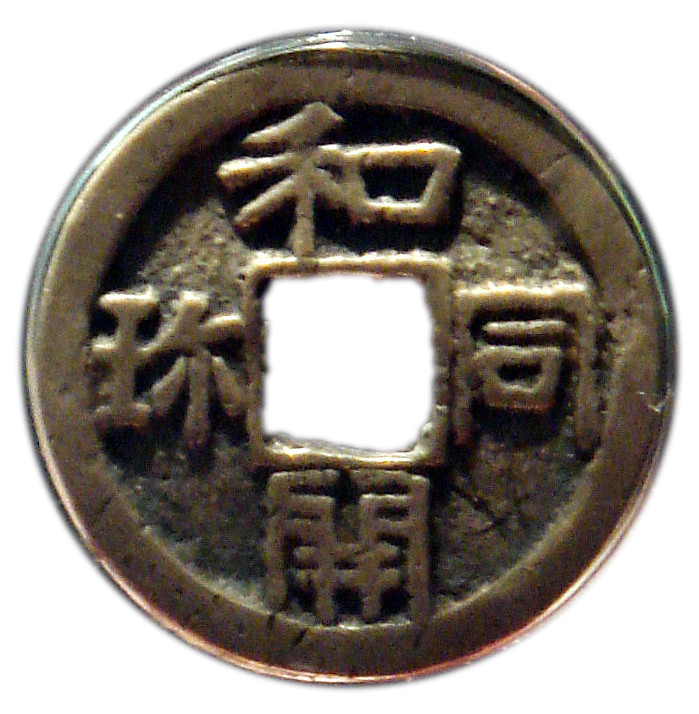
PHGCOM / Wikimedia Commons (CC BY-SA 3.0) sourcelicence Introduction of copper coins in Japan 和同开珎
In 708, Japan minted copper coins for the first time, known as Wadōkaichin. This marked the start of a new monetary system and showed Chinese influence on Japanese economic practices.
The introduction of Wadōkaichin represents the spread of Chinese technological and cultural influence in East Asia.
Read more
Nikolay Bestuzhev (1791-1855) / Wikimedia Commons (Public domain) source Birth of Hyacinth, founder of Sinology 海雅信院
Hyacinth, born in 1777, was a Russian religious leader who significantly contributed to the foundation of Sinology. His work involved translating key Chinese texts and fostering cultural understanding between Russia and China.
Hyacinth's efforts laid the groundwork for Western studies of Chinese language and culture.
Read more
他的技很好。
Tā de jì hěn hǎo.
His skill is very good.
A simple sentence expressing someone's skill.
杂技需要很高的技。
Zájì xūyào hěn gāo de jì.
Acrobatics requires high skill.
Explains the necessity of skill in acrobatics.
她的技艺令人惊叹。
Tā de jìyì lìng rén jīngtàn.
Her skill is astonishing.
Describes a person's impressive skill.
技的精进需要多年练习。
Jì de jīngjìn xūyào duōnián liànxí.
The refinement of skill requires years of practice.
Describes the long-term effort needed to improve skill.
The use of '的' for possessive structures
noun + 的 + noun
In Chinese, 的 is used to link a possessor to the possessed, similar to the use of 's in English.
Use 的 to show possession or association between nouns.
他的书
Tā de shū
His book
老师的教室
Lǎoshī de jiàoshì
Teacher's classroom
朋友的家
Péngyǒu de jiā
Friend's home
What does 技 mean?
How is 技 pronounced?
How do you write "skill" in Chinese?
Listen. What does the sentence mean?
他有很高的___。(He has high ___.)
她的技艺很高 — What does this sentence mean?
Which of these is a traditional Chinese performance art?
Arrange into a correct sentence
Who founded Sinology and helped translate key Chinese texts?
What significant event in 708 involved the introduction of a new monetary system?
Frequently asked questions about the word 技
Common phrases include 技能 (jìnéng, skills), 技术 (jìshù, technology/technique), and 特技 (tèjì, special skills or stunts).
You can say '他有很高的技能' (Tā yǒu hěn gāo de jìnéng), meaning 'He has very high skills.'
Yes, 技 can be used in both formal and informal writing, but it is more common in contexts discussing arts or trades.
Chinese Learner’s Horoscope
Your sign’s reading for today, written for learners.
Find your sign
The Chinese zodiac assigns each birth year one of twelve animals, each paired with an element that colours its character. Yours shapes a reading written for learners.
- Your sign and its elementOne of twelve animals on a 12-year cycle
- A daily affirmationFresh every morning, never repeated
- A learning horoscopeWhat to study today, and when
- A lucky characterWith pinyin, meaning and a study tip
Your birth date
Saved on this device — used only to work out your zodiac sign.
Today's Mandarin word: 技 (jì) — skill.
Learn it on Mandarin Temple's Dragon Daily 🐉