
November 8, 2026 · 星期日
Classical Gardens
园林· land used for growing plants

 Today’s episode with Jason and Amy
The word 园 connects to today's story by highlighting the cultivated spaces that form the essence of classical gardens.
立冬 marks the beginning of winter, when the harvest is stored away and the land settles into rest. The cold deepens, water begins to freeze, and creatures retreat into shelter and stillness.
Northerners eat dumplings (饺子) on this day, their shape recalling ears to protect against frostbite in the coming cold.
Classical Gardens
园林yuán lín
Classical gardens, or 园林 (yuánlín), represent a distinctive art form in Chinese culture, embodying philosophy, aesthetics, and natural harmony. These gardens are designed to capture the essence of nature in a confined space, using elements such as rockeries, water bodies, and strategically placed pavilions to create a tranquil environment that encourages reflection and contemplation. The design of these gardens is heavily influenced by Daoist and Confucian ideals, which emphasize balance and harmony in all aspects of life [1].
The layout of a classical garden is carefully planned to resemble a natural landscape, often incorporating elements like artificial hills and ponds that mimic mountains and lakes. These gardens are not just about visual beauty; they are also spaces for intellectual and spiritual engagement. Visitors can walk through winding paths, discovering new perspectives and scenes at every turn, much like exploring a classical Chinese painting. This approach to garden design was popularized during the Ming and Qing Dynasties, with Suzhou being home to some of the most famous examples, such as the Humble Administrator's Garden and the Lingering Garden [2].
园 (yuán), meaning "land used for growing plants," is integral to the concept of 园林. It highlights the idea of cultivating both nature and the human spirit within the confines of a garden. Classical gardens are more than just physical spaces; they are cultural symbols that reflect the deep connection between humans and the natural world. As you explore these gardens, you are not just witnessing a collection of plants and structures, but a living expression of Chinese philosophy and art.
The word 园 connects to today's story by highlighting the cultivated spaces that form the essence of classical gardens.
园林很美。
Yuánlín hěn měi.
The garden is beautiful.
- [1] Ji Cheng, The Craft of Gardens (《园冶》)
- [2] UNESCO inscription: Classical Gardens of Suzhou, 1997
Jason & Amy on 园
Podcast: Dragon Daily: Classical Gardens — and the word 园
Jason & Amy on Classical Gardens and 园
New here?
November 8, 2026
Today features key figures from the Qing dynasty and ancient Chinese literature.
Death of Yao Yi, Chinese Chancellor
Yao Yi was a noted chancellor and scholar during the Later Jin period. His governance and literary contributions were respected across the region, highlighting his role in Chinese intellectual history.
Yao Yi's literary work continues to be a part of classical Chinese literature studies.
Death of Empress Liu of Qi 刘皇后
Empress Liu was a prominent figure during the Ten Kingdoms period, known for her influence and leadership. Her life and role as empress reflect the complexities of power dynamics in ancient China.
Her story reveals insights into the role of women in Chinese imperial politics.
Read more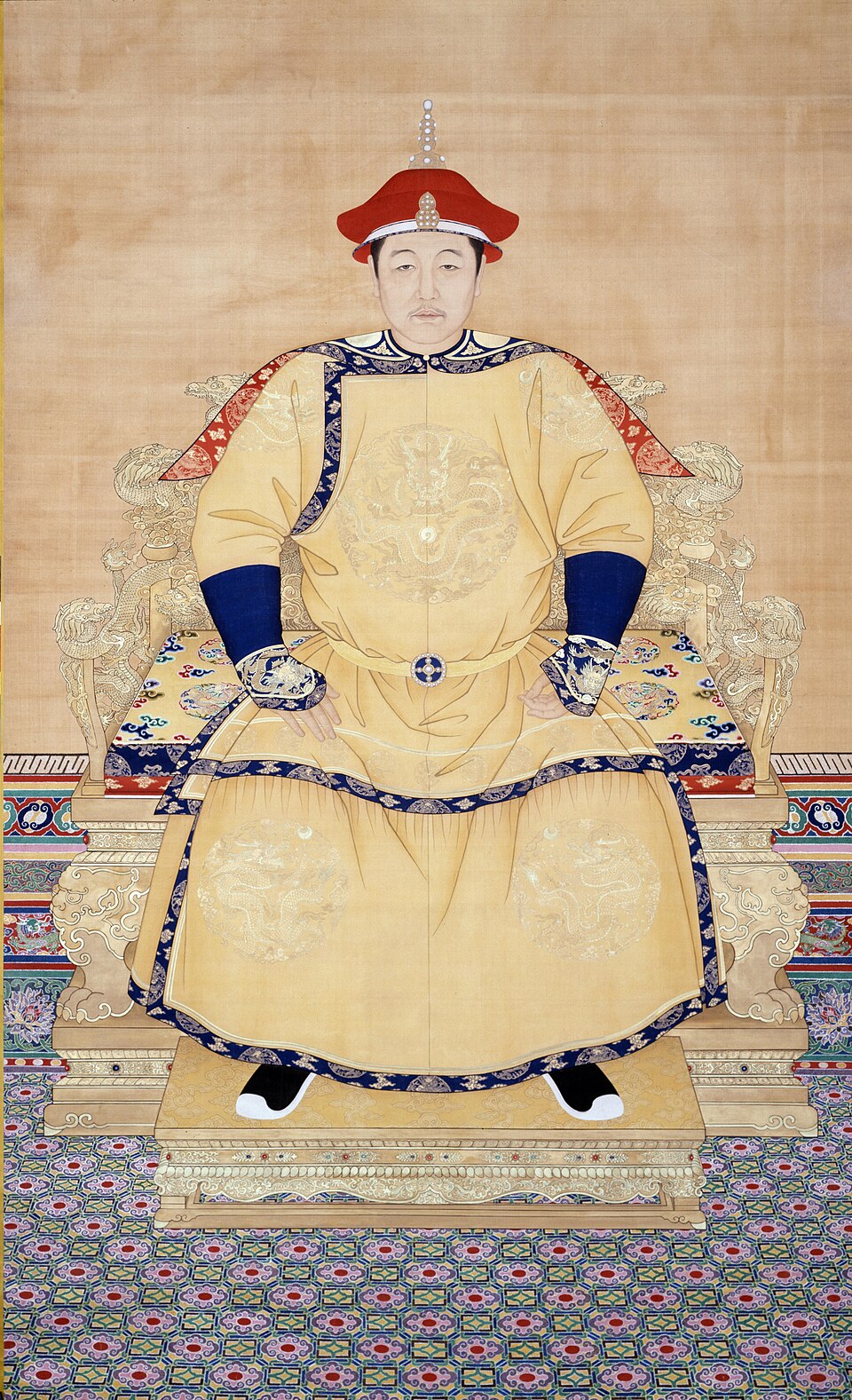
Unknown author Unknown author / Wikimedia Commons (Public domain) source Enthronement of Shunzhi Emperor 顺治帝
The Shunzhi Emperor became the first Qing emperor to rule over China. His enthronement marked the transition from the Ming dynasty to the Qing dynasty, ushering in a new era of cultural and intellectual development.
The Qing era significantly influenced Chinese art, culture, and administrative changes.
Read more
这是一个园。
Zhè shì yí gè yuán.
This is a garden.
A simple sentence introducing the concept of a 'garden'.
园里有很多花。
Yuán lǐ yǒu hěn duō huā.
There are many flowers in the garden.
Describes what can be found in a garden.
我们去公园散步。
Wǒmen qù gōngyuán sànbù.
We go to the park for a walk.
Shows a common activity associated with gardens or parks.
园艺是门艺术。
Yuányì shì mén yìshù.
Gardening is an art.
Uses 园 in a more abstract sense to discuss gardening as an art form.
Using 是 to Define or Identify
A 是 B
This pattern is used to identify or describe something by equating it with something else.
Use 是 to link a subject with a noun that describes or defines it.
这是一本书。
Zhè shì yì běn shū.
This is a book.
他是老师。
Tā shì lǎoshī.
He is a teacher.
今天是周末。
Jīntiān shì zhōumò.
Today is the weekend.
What does 园 mean?
How is 园 pronounced?
How do you write "garden" in Chinese?
Listen. What does the sentence mean?
我们去___散步。(We go to the ___ for a walk.)
园里有很多花。 — What does this sentence mean?
Which city is famous for its classical gardens?
Arrange into a correct sentence
Who was the first Qing emperor to rule over China?
Which Empress is associated with the Ten Kingdoms period?
Frequently asked questions about the word 园
Common phrases include '公园' (gōngyuán - public park) and '动物园' (dòngwùyuán - zoo), both of which illustrate the use of the character in different recreational contexts.
The correct pronunciation is 'yuán', with the second tone, which rises slightly in pitch.
No, 园 can refer to various types of recreational spaces, including parks and orchards, as well as gardens.
Chinese Learner’s Horoscope
Your sign’s reading for today, written for learners.
Find your sign
The Chinese zodiac assigns each birth year one of twelve animals, each paired with an element that colours its character. Yours shapes a reading written for learners.
- Your sign and its elementOne of twelve animals on a 12-year cycle
- A daily affirmationFresh every morning, never repeated
- A learning horoscopeWhat to study today, and when
- A lucky characterWith pinyin, meaning and a study tip
Your birth date
Saved on this device — used only to work out your zodiac sign.
Today's Mandarin word: 园 (yuán) — land used for growing plants.
Learn it on Mandarin Temple's Dragon Daily 🐉