

October 19, 2026 · 星期一
Wisdom
智· wisdom

 Today’s episode with Jason & Amy
In Chinese culture, wisdom (智) is seen as essential for making sound judgments and leading a virtuous life.
寒露 marks the point when the dew turns cold and may verge on frost, signaling a sharper, deeper autumn chill. The air grows dry and brisk, migrating birds head south, and chrysanthemums come into bloom.
People climb heights to admire the autumn views, enjoy chrysanthemums, and in some places drink chrysanthemum wine for health.
Wisdom
智zhì
In Chinese culture, wisdom (智) is considered one of the highest virtues. It is often seen as the ability to make sound judgments and decisions based on knowledge and experience. This concept of wisdom is deeply embedded in Confucian thought, where it is viewed as essential to leading a virtuous life. Confucius emphasized the importance of wisdom in guiding moral behavior and fostering harmony in society[1].
Wisdom in Chinese culture is not merely about intelligence or knowledge, but also involves understanding and compassion. It is the insight to see beyond the obvious, to understand the subtleties of human nature and the complexities of life's challenges. This is reflected in the Chinese saying "智者不惑" (The wise are free from doubt). This expression highlights how wisdom brings clarity and confidence, enabling individuals to navigate life's uncertainties with assurance.
The pursuit of wisdom is also a theme in many Chinese philosophical texts and stories. For instance, in the Daoist classic, Laozi's "Dao De Jing", wisdom is portrayed as an intuitive understanding of the Dao, or the natural order of the universe. This wisdom leads to a harmonious life aligned with the natural world[2]. This reflects the belief that true wisdom involves harmony with nature and the universe, promoting peace and balance in one's life.
Today, as we reflect on the value of wisdom, it serves as a reminder of the importance of cultivating insight and understanding in our daily lives. By embracing wisdom, individuals can lead more fulfilling and harmonious lives, guided by clear judgment and compassion.
In Chinese culture, wisdom (智) is seen as essential for making sound judgments and leading a virtuous life.
智慧是一种美德。
Zhìhuì shì yī zhǒng měidé.
Wisdom is a virtue.
- [1] Confucius, The Analects (《论语》)
- [2] Laozi, Dao De Jing (《道德经》)
Jason & Amy on 智
Podcast: Dragon Daily: Wisdom — and the word 智
Jason & Amy on Wisdom and 智
New here?
October 19, 2026
Today we remember significant figures in Chinese literature and their enduring influence.
Birth of Joseph de Guignes, French Sinologist 揆经
Joseph de Guignes was a French orientalist who contributed significantly to the study of Chinese history and culture. His research on Chinese and Egyptian civilizations bridged East and West intellectual traditions.
De Guignes helped lay the foundation for European scholarship in Chinese studies.
Read more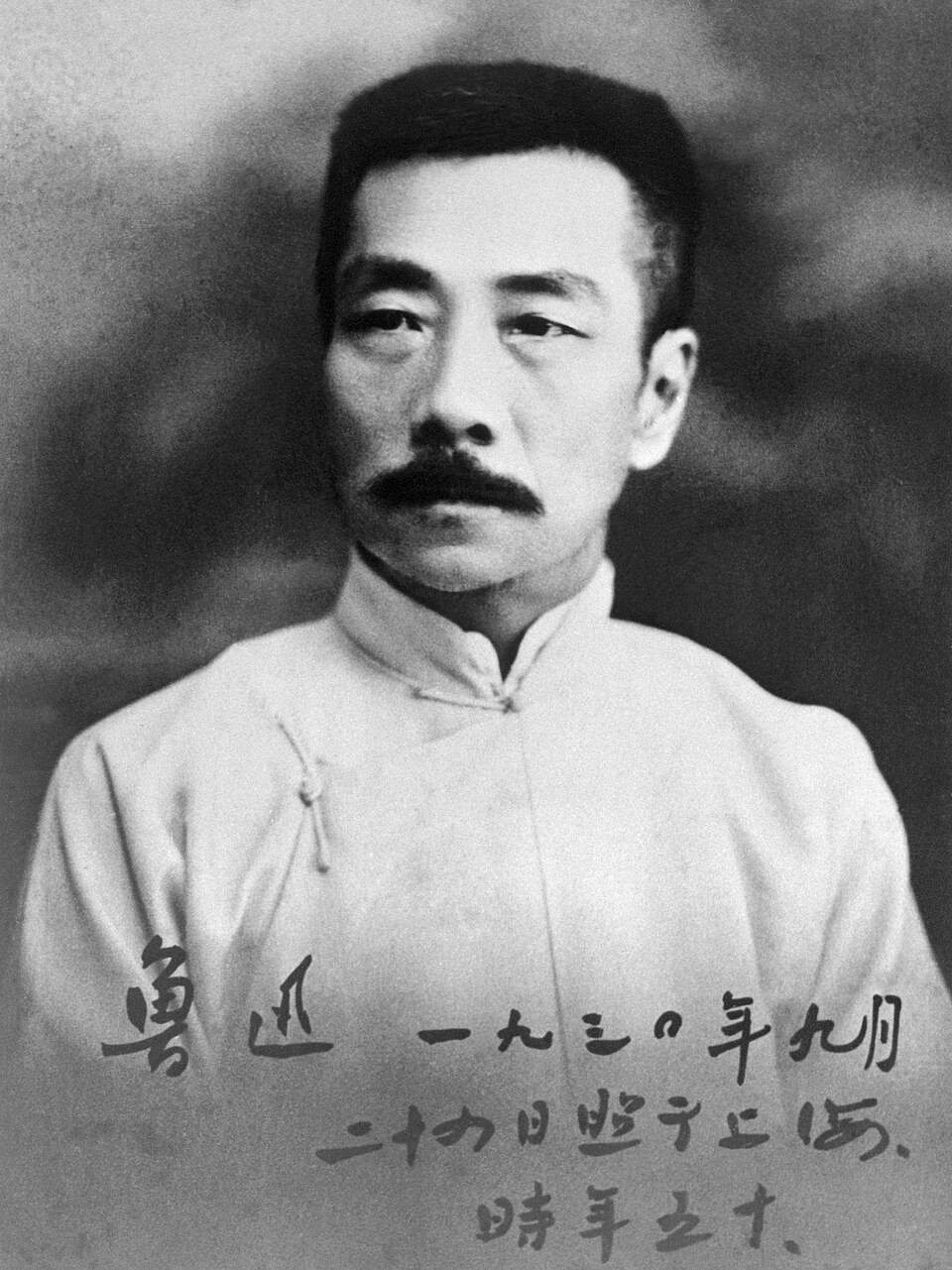
Unknown author Unknown author / Wikimedia Commons (Public domain) source Death of Lu Xun, Influential Chinese Writer 鲁迅
Lu Xun, a prominent Chinese writer and critic known for his essays and short stories that criticized traditional Chinese society, passed away. His works, like 'Diary of a Madman', had a profound impact on modern Chinese literature.
Lu Xun's writings continue to inspire discussions about cultural and social reform in China.
Read more
他很有智。
Tā hěn yǒu zhì.
He has wisdom.
This sentence expresses that someone possesses wisdom.
智慧重要。
Zhìhuì zhòngyào.
Wisdom is important.
Highlights the importance of wisdom.
智者不惑。
Zhìzhě bù huò.
The wise are free from doubt.
Describes how wisdom eliminates doubt.
智慧引导其他美德。
Zhìhuì yǐndǎo qítā měidé.
Wisdom guides other virtues.
Explains the role of wisdom in guiding virtues.
Using 是 (shì) for emphasis
是 + adjective + 的
This pattern emphasizes the adjective that follows 是.
Use this pattern to stress a particular quality.
他是聪明的。
Tā shì cōngmíng de.
He is smart.
这是重要的。
Zhè shì zhòngyào de.
This is important.
智慧是美德的。
Zhìhuì shì měidé de.
Wisdom is virtuous.
What does 智 mean?
How is 智 pronounced?
How do you write "wisdom" in Chinese?
Listen. What does the sentence mean?
他有很大的___。(He has great ___.)
智慧是一种美德。 — What does this sentence mean?
Which virtue is often considered to lead other virtues in Chinese philosophy?
Arrange into a correct sentence
Which Chinese writer passed away in 1936 and influenced modern Chinese literature?
Who was Joseph de Guignes?
Frequently asked questions about the word 智
You can say 智者无敌 (zhì zhě wú dí), meaning 'the wise are invincible,' highlighting the power of wisdom.
It is not commonly used in casual conversation but appears more in formal writing or discussions about intelligence and philosophy.
Synonyms include 聪明 (cōngmíng, clever) and 明智 (míngzhì, wise).
Chinese Learner’s Horoscope
Your sign’s reading for today, written for learners.
Find your sign
The Chinese zodiac assigns each birth year one of twelve animals, each paired with an element that colours its character. Yours shapes a reading written for learners.
- Your sign and its elementOne of twelve animals on a 12-year cycle
- A daily affirmationFresh every morning, never repeated
- A learning horoscopeWhat to study today, and when
- A lucky characterWith pinyin, meaning and a study tip
Your birth date
Saved on this device — used only to work out your zodiac sign.
Today's Mandarin word: 智 (zhì) — wisdom.
Learn it on Mandarin Temple's Dragon Daily 🐉