

October 16, 2026 · 星期五
Benevolence
仁· humane

 Today’s episode with Jason & Amy
The concept of 仁 in Confucianism highlights the importance of compassion and genuine care for others in creating harmonious social relationships.
寒露 marks the point when the dew turns cold and may verge on frost, signaling a sharper, deeper autumn chill. The air grows dry and brisk, migrating birds head south, and chrysanthemums come into bloom.
People climb heights to admire the autumn views, enjoy chrysanthemums, and in some places drink chrysanthemum wine for health.
Benevolence
仁rén
In the teachings of Confucius, 仁 (rén) stands as the pinnacle of moral virtues. Often translated as "benevolence" or "humaneness," it represents the ideal of showing sincere concern for others. Confucius believed that 仁 was essential for maintaining harmony in society and that individuals should cultivate this virtue to live a fulfilling life[1]. By practicing 仁, people can build strong, trusting relationships that contribute to a stable and cohesive community.
Confucius emphasized that 仁 is not just an abstract idea but a practical guide for daily living. He taught that 仁 involves treating others with kindness and respect, fostering an environment of mutual understanding and support. This virtue extends beyond personal gain, encouraging individuals to act selflessly for the greater good of society[2]. In Confucianism, the cultivation of 仁 is seen as the foundation of all other virtues, such as righteousness (义, yì) and propriety (礼, lǐ).
Throughout Chinese history, many scholars and thinkers have explored the concept of 仁. Mencius, a prominent Confucian philosopher, expanded on this idea, arguing that humans are inherently good and that 仁 is a natural expression of that goodness[3]. By nurturing 仁, individuals can realize their full potential and contribute positively to their communities. This emphasis on benevolence is reflected in various aspects of Chinese culture, from literature and art to social norms and practices.
Today, 仁 continues to be a guiding principle in Chinese society, influencing personal interactions and ethical standards. As we reflect on the value of 仁, we are reminded of the importance of compassion and empathy in building a just and harmonious world. The celebration of 仁 encourages us to strive for a life where humaneness guides our actions and relationships, leading to a more peaceful and connected society.
The concept of 仁 in Confucianism highlights the importance of compassion and genuine care for others in creating harmonious social relationships.
仁是儒家的核心。
Rén shì rújiā de héxīn.
Benevolence is the core of Confucianism.
- [1] The Analects of Confucius (《论语》)
- [2] The Doctrine of the Mean (《中庸》)
- [3] Mencius (《孟子》)
Jason & Amy on 仁
Podcast: Dragon Daily: Benevolence — and the word 仁
Jason & Amy on Benevolence and 仁
New here?
October 16, 2026
Today in Chinese cultural history, we explore a famed ruler and an architectural loss.
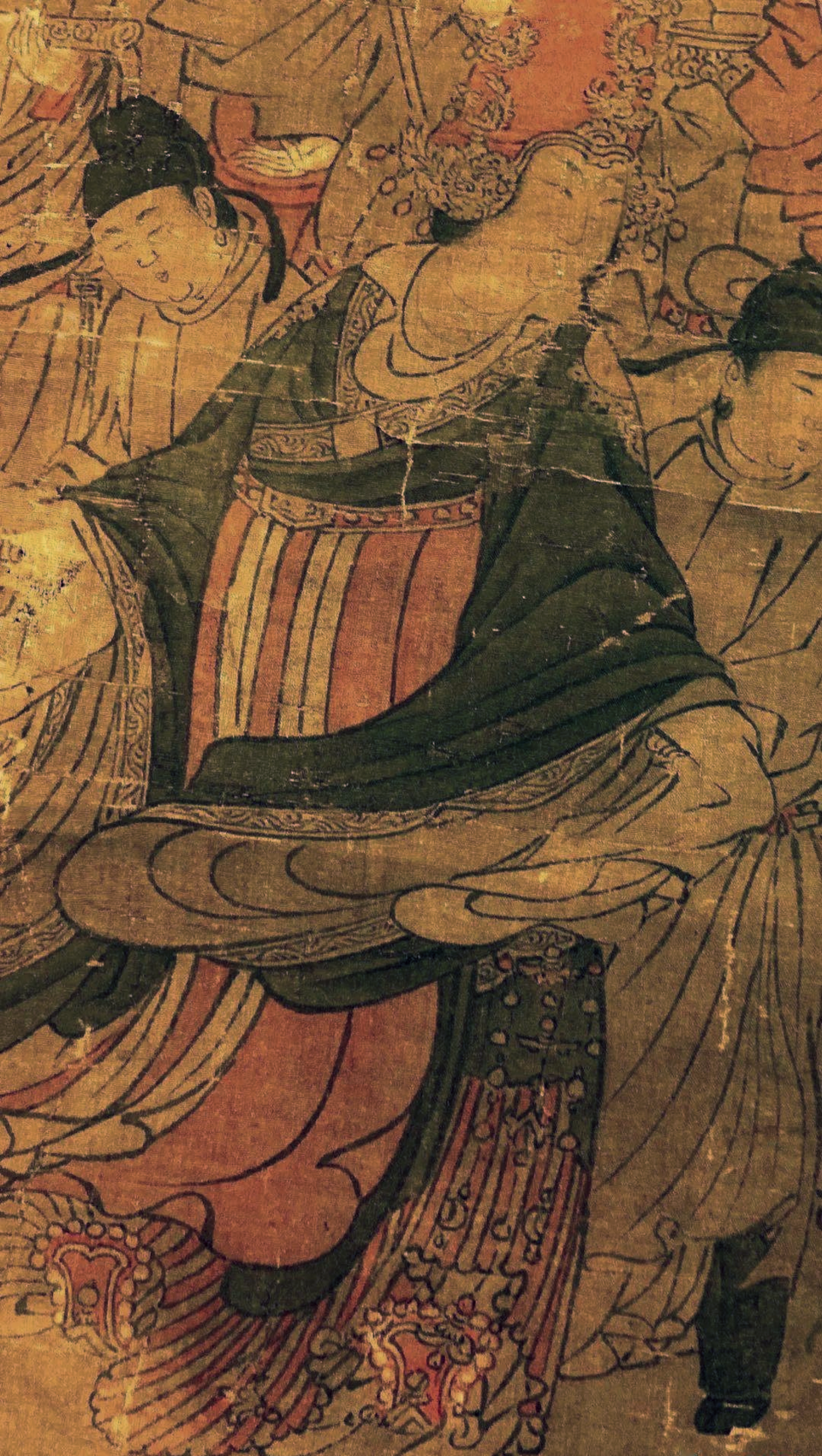
Likely to be Zhang Xuan (张萱) / Wikimedia Commons (Public domain) source Wu Zetian Becomes Empress of China 武则天
Wu Zetian ascended to the throne of the Tang dynasty, proclaiming herself as the ruler of the Chinese Empire. She is the only woman to rule China in her own right and was known for her intelligence and political acumen.
Wu Zetian remains a powerful symbol of female leadership in Chinese history.
Read more
ThatsTheBoss / Wikimedia Commons (CC0) sourcelicence Fire Destroys Most of the Palace of Westminster 威斯敏斯特宫
A devastating fire, caused by the burning of wooden tally sticks, destroyed much of the Palace of Westminster in London. The event led to the iconic Gothic Revival design that stands today.
The resulting architectural style became an iconic image for the seat of British governance.
Read more
他很仁。
Tā hěn rén.
He is very humane.
This sentence uses 仁 to describe someone's compassionate nature.
仁者爱人。
Rén zhě ài rén.
A benevolent person loves others.
Here, 仁 is used to highlight the love and care a benevolent person has for others.
我们要学会仁。
Wǒmen yào xuéhuì rén.
We need to learn benevolence.
This sentence encourages the cultivation of 仁 as an important virtue.
仁是一种终极美德。
Rén shì yī zhǒng zhōngjí měidé.
Benevolence is an ultimate virtue.
This sentence presents 仁 as a profound moral principle in philosophy.
要 + verb
要 + verb
This pattern is used to express necessity or intention to do something.
Use this pattern when you want to indicate that something needs to be done.
我们要学会仁。
Wǒmen yào xuéhuì rén.
We need to learn benevolence.
他要去学校。
Tā yào qù xuéxiào.
He needs to go to school.
你要多喝水。
Nǐ yào duō hē shuǐ.
You need to drink more water.
What does 仁 mean?
How is 仁 pronounced?
How do you write "benevolence" in Chinese?
Listen. What does the sentence mean?
天___地。(Heaven is ___.).
仁者无敌 — What does this sentence mean?
Which virtue is considered the highest in Confucianism?
Arrange into a correct sentence
Who is the only female ruler of China mentioned in today's history?
What led to the destruction of most of the Palace of Westminster in 1834?
Frequently asked questions about the word 仁
仁 emphasizes benevolence in a moral context, while 善 (shàn) focuses more on goodness and virtue in actions.
Yes, although it is more commonly found in formal or philosophical discussions, it can be used to describe someone's character in daily conversation.
It is pronounced 'rén' with a rising tone, similar to how you would ask a question.
Chinese Learner’s Horoscope
Your sign’s reading for today, written for learners.
Find your sign
The Chinese zodiac assigns each birth year one of twelve animals, each paired with an element that colours its character. Yours shapes a reading written for learners.
- Your sign and its elementOne of twelve animals on a 12-year cycle
- A daily affirmationFresh every morning, never repeated
- A learning horoscopeWhat to study today, and when
- A lucky characterWith pinyin, meaning and a study tip
Your birth date
Saved on this device — used only to work out your zodiac sign.
Today's Mandarin word: 仁 (rén) — humane.
Learn it on Mandarin Temple's Dragon Daily 🐉