

September 2, 2026 · 星期三
The Pentatonic Scale
乐曲· bent

 Today’s episode with Jason & Amy
The pentatonic scale is fundamental to the distinct sound of classical Chinese music.
处暑 signals that the oppressive summer heat is finally retreating, with 处 here meaning to halt or withdraw. Mornings and evenings turn crisp, the air loses its heaviness, and the harvest of autumn crops begins.
Coastal communities hold fishing festivals to celebrate the open season, and people eat duck, believed to nourish the body in autumn.
The Pentatonic Scale
乐曲lè qū
The pentatonic scale, or 五声音阶 (wǔ shēng yīn jiē), is a musical scale with five notes per octave, widely used in traditional Chinese music. This scale is integral to the sound of many classical Chinese compositions, such as those played on the guzheng, a traditional Chinese zither. Unlike the Western heptatonic scale, which has seven notes, the pentatonic scale's simplicity gives it a unique, resonant quality that has been cherished for centuries[1].
Within this scale, each note is associated with natural elements and seasons, contributing to its philosophical and cultural depth. The notes are often referred to as gōng, shāng, jué, zhǐ, and yǔ, each carrying symbolic significance. This connection to nature and philosophy is evident in many traditional Chinese melodies, where 曲 (qǔ), or tunes, are composed to evoke imagery and emotions tied to the natural world. The 曲 are bent and shaped to reflect the harmony believed to exist in nature.
The influence of the pentatonic scale extends beyond traditional instruments like the guzheng and pipa. Its simplicity and versatility have allowed it to be adapted into various modern music forms, bridging the gap between ancient and contemporary sounds. Musicians today continue to explore its potential, using the scale to create new compositions while honoring its historical roots. This enduring legacy highlights the scale's ability to resonate with audiences, both in China and around the world.
The pentatonic scale is fundamental to the distinct sound of classical Chinese music.
今天我们学习曲。
Jīntiān wǒmen xuéxí qǔ.
Today we learn about tunes.
- [1] Confucius, The Book of Rites (《礼记》)
Jason & Amy on 曲
Podcast: Dragon Daily: The Pentatonic Scale — and the word 曲
Jason & Amy on The Pentatonic Scale and 曲
New here?
September 2, 2026
Today's cultural history highlights figures and events that shaped China's imperial legacy.
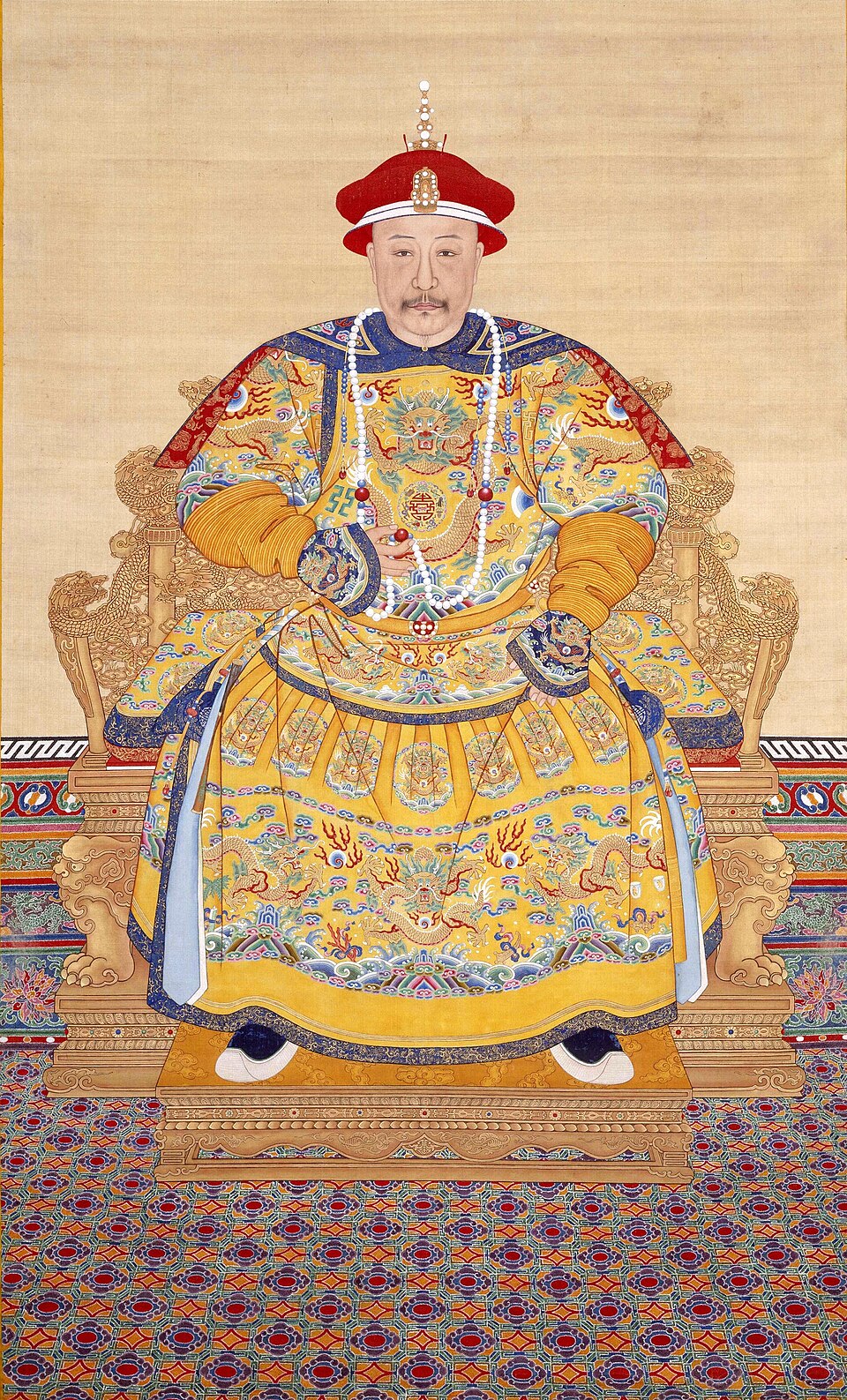
Annonymous Qing Dynasty Court Painter / Wikimedia Commons (Public domain) source Death of the Jiaqing Emperor 嘉庆帝
The Jiaqing Emperor, the sixth emperor of the Qing dynasty, passed away. His reign was marked by efforts to curb corruption and attempt reforms after the prosperous period of his father, the Qianlong Emperor.
His reign is remembered for attempts to stabilize the Qing dynasty in a period of internal challenges.
Read more
这个曲很好听。
Zhège qǔ hěn hǎotīng.
This tune is very pleasant.
Simple sentence praising a tune.
他喜欢创作新曲。
Tā xǐhuān chuàngzuò xīn qǔ.
He likes to compose new tunes.
Sentence about composing music.
古曲有特别的魅力。
Gǔ qǔ yǒu tèbié de mèilì.
Ancient tunes have a special charm.
Refers to the allure of old music.
曲的变化反映了文化的丰富性。
Qǔ de biànhuà fǎnyìngle wénhuà de fēngfùxìng.
The variations in tunes reflect cultural richness.
Abstract usage connecting music to cultural diversity.
使 + noun + adjective
使 + noun + adjective
This pattern is used to show that something makes someone or something else have a certain quality.
Use this structure to express causation or change in state.
音乐使我快乐。
Yīnyuè shǐ wǒ kuàilè.
Music makes me happy.
天气使花开放。
Tiānqì shǐ huā kāifàng.
The weather makes flowers bloom.
学习使他聪明。
Xuéxí shǐ tā cōngmíng.
Studying makes him smart.
What does 曲 mean?
How is 曲 pronounced?
How do you write "bent" in Chinese?
Listen. What does the sentence mean?
这个___很好听。(This ___ is very pleasant.)
这个曲子很好听。 — What does this sentence mean?
Which musical scale is fundamental to traditional Chinese music?
Arrange into a correct sentence
Which emperor of the Qing dynasty passed away in 1820?
What was a key focus of the Jiaqing Emperor's reign?
Frequently asked questions about the word 曲
In music, 曲 refers to a tune or song, highlighting its importance in expressing emotions and storytelling.
Typically, 曲 has a neutral to negative connotation when describing something as 'crooked' or 'wrong,' but in music, it is certainly positive.
Pay attention to context; 曲 (qū) relates to bending or music, while 直 (zhí) means straight.
Chinese Learner’s Horoscope
Your sign’s reading for today, written for learners.
Find your sign
The Chinese zodiac assigns each birth year one of twelve animals, each paired with an element that colours its character. Yours shapes a reading written for learners.
- Your sign and its elementOne of twelve animals on a 12-year cycle
- A daily affirmationFresh every morning, never repeated
- A learning horoscopeWhat to study today, and when
- A lucky characterWith pinyin, meaning and a study tip
Your birth date
Saved on this device — used only to work out your zodiac sign.
Today's Mandarin word: 曲 (qǔ) — bent.
Learn it on Mandarin Temple's Dragon Daily 🐉