

August 31, 2026 · 星期一
Opera Face-Painting
脸谱· face

 Today’s episode with Jason & Amy
脸谱 reveals character traits through facial colors in Chinese opera.
处暑 signals that the oppressive summer heat is finally retreating, with 处 here meaning to halt or withdraw. Mornings and evenings turn crisp, the air loses its heaviness, and the harvest of autumn crops begins.
Coastal communities hold fishing festivals to celebrate the open season, and people eat duck, believed to nourish the body in autumn.
Opera Face-Painting
脸谱liǎn pǔ
Opera face-painting, or 脸谱 (liǎnpǔ), is a fascinating element of Chinese opera that uses a rich palette of colors to convey the attributes and roles of characters. This art form is deeply rooted in Chinese culture and has been an integral part of opera performances for centuries. Each color used in 脸谱 is symbolic, allowing audiences to immediately recognize a character's personality or status on stage. For instance, red on an actor's 脸 (face) suggests loyalty and bravery, whereas white implies duplicity and treachery[1].
The history of 脸谱 can be traced back to the Song Dynasty, where it began to develop into the sophisticated art form we see today. The designs are often elaborate, with intricate patterns that require a skilled hand to execute. Traditional operas such as Peking Opera have utilized 脸谱 to enhance the storytelling, adding a visual layer to the narrative that complements the musical and vocal performances. The use of face-painting in opera not only helps to distinguish characters but also serves as a cultural artifact that reflects the values and aesthetics of different historical periods[2].
Learning about 脸谱 offers insight into the complexity of Chinese opera and its cultural significance. It highlights how visual arts can intersect with performance to create a rich experience for the audience. As we explore the world of Chinese opera, understanding the meaning behind the colors and patterns painted on the actors' 脸 can deepen our appreciation for this art form. Today, 脸谱 remains a cherished tradition, celebrated not just for its beauty, but also for its role in preserving cultural history and identity.
脸谱 reveals character traits through facial colors in Chinese opera.
脸谱在京剧中很重要。
Liǎnpǔ zài jīngjù zhōng hěn zhòngyào.
Face-painting is important in Peking Opera.
- [1] 《中国戏曲史》 (The History of Chinese Opera) by Wang Guowei
- [2] 《京剧脸谱艺术》 (The Art of Peking Opera Face-Painting) by Li Yuru
Jason & Amy on 脸
Podcast: Dragon Daily: Opera Face-Painting — and the word 脸
Jason & Amy on Opera Face-Painting and 脸
New here?
August 31, 2026
Today in Chinese history, we reflect on the lives of notable figures who shaped the cultural landscape of ancient China.
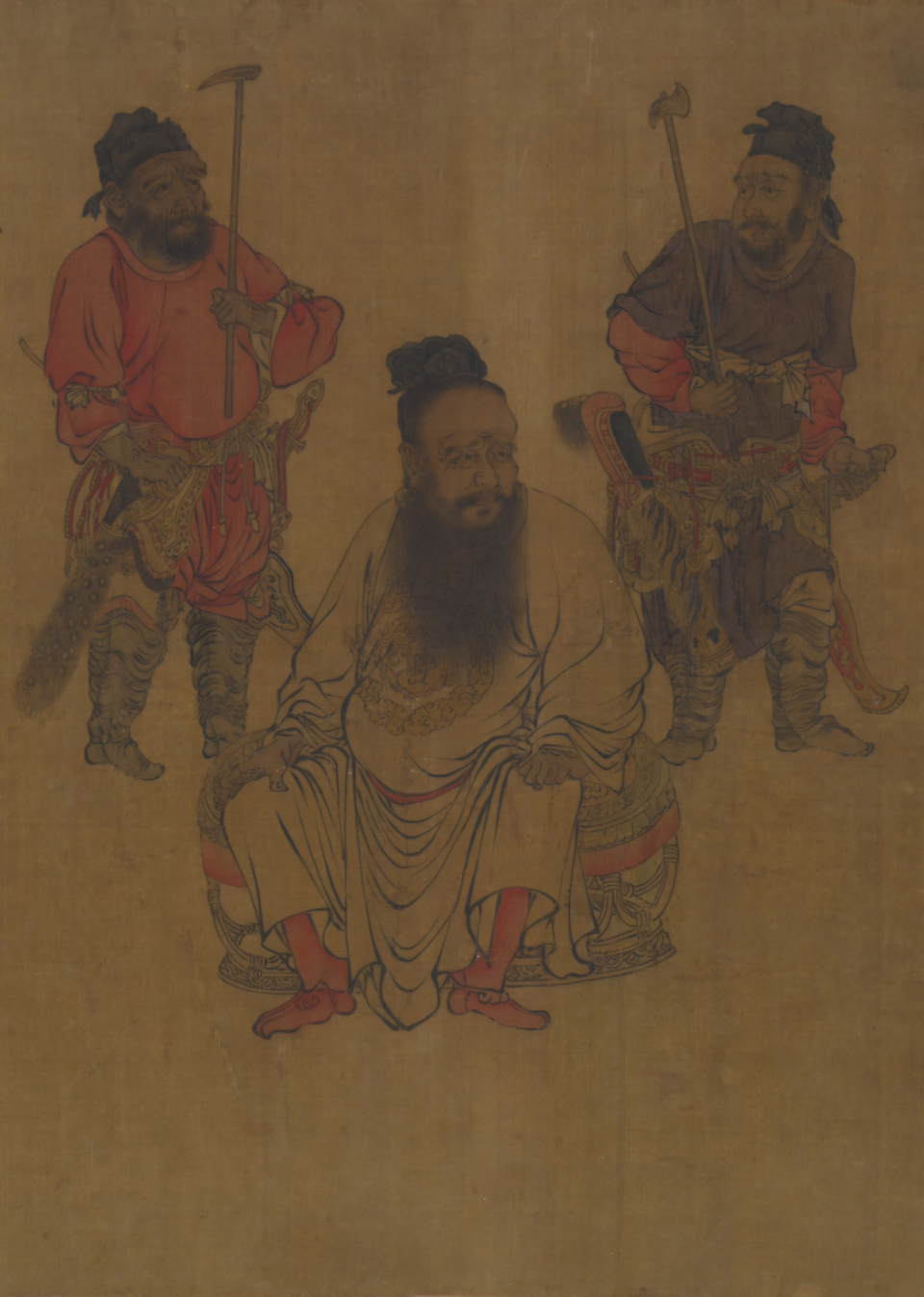
Unknown artist (Attributed to Yan Liben) / Wikimedia Commons (Public domain) source Death of Liu Cong, Xiongnu Emperor 刘聪
Liu Cong, the emperor of the Xiongnu state, passed away in 318. Known for his strategic acumen, he played a significant role in the politics of the Sixteen Kingdoms period in China.
Liu Cong's leadership influenced the political and cultural dynamics of early Chinese history.
Read more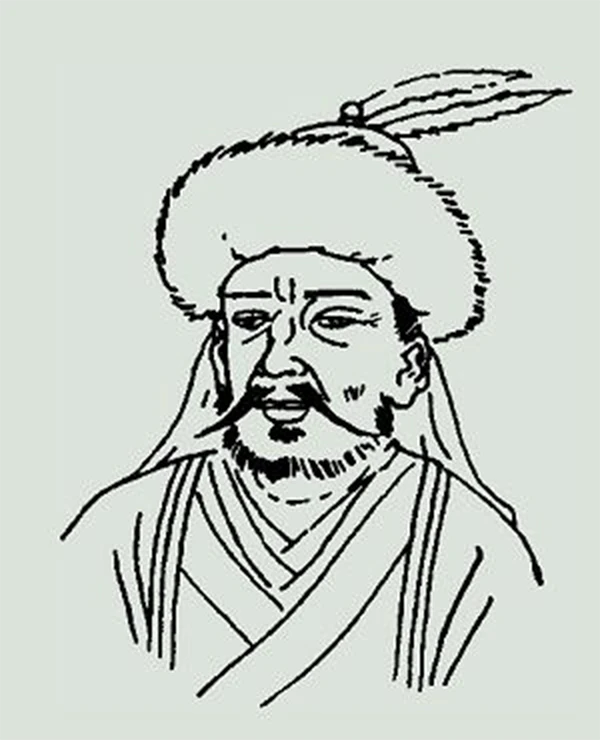
Unknown author Unknown author / Wikimedia Commons (Public domain) source Birth of Emperor Zhangzong of Jin 金章宗
Emperor Zhangzong of the Jin dynasty was born in 1168. He ruled from 1189 to 1208 and is known for his efforts in cultural and educational advancements within the dynasty.
His reign marked a period of cultural development and consolidation for the Jin dynasty.
Read more
她的脸很红。
Tā de liǎn hěn hóng.
Her face is very red.
This sentence uses 脸 to describe the color of someone's face.
脸谱的颜色很重要。
Liǎnpǔ de yánsè hěn zhòngyào.
The colors of face-painting are very important.
This sentence explains the significance of colors in opera face-painting.
他用白色在脸上画图案。
Tā yòng báisè zài liǎn shàng huà tú'àn.
He paints patterns on his face with white.
This sentence describes the action of painting on the face, using 脸.
脸上的图案象征着他的角色。
Liǎn shàng de tú'àn xiàngzhēngzhe tā de juésè.
The patterns on the face symbolize his character.
This sentence uses 脸 metaphorically to discuss symbolic meanings in opera.
Using '的' to link nouns
noun + 的 + noun
The particle '的' is used to link a modifier to a noun, often indicating possession or attribution.
Use '的' to connect descriptors or possessors with nouns.
这是他的书。
Zhè shì tā de shū.
This is his book.
红色的脸谱很常见。
Hóngsè de liǎnpǔ hěn chángjiàn.
Red face-painting is common.
老师的朋友来了。
Lǎoshī de péngyǒu lái le.
The teacher's friend came.
What does 脸 mean?
How is 脸 pronounced?
How do you write "face" in Chinese?
Listen. What does the sentence mean?
她的___很漂亮。(Her ___ is beautiful.)
他的脸很大 — What does this sentence mean?
What does red symbolize in opera face-painting?
Arrange into a correct sentence
Which emperor was born in 1168 and ruled the Jin dynasty?
Who was a significant figure in the Sixteen Kingdoms period?
Frequently asked questions about the word 脸
'脸' can be used in sentences like '我洗脸' (I wash my face) or '他很有面子' (He has a lot of face).
'脸' is mostly used in informal contexts but can appear in formal writing when discussing reputation or social issues.
Common phrases include '洗脸' (wash face) and '丢脸' (lose face), which express actions related to the face.
Chinese Learner’s Horoscope
Your sign’s reading for today, written for learners.
Find your sign
The Chinese zodiac assigns each birth year one of twelve animals, each paired with an element that colours its character. Yours shapes a reading written for learners.
- Your sign and its elementOne of twelve animals on a 12-year cycle
- A daily affirmationFresh every morning, never repeated
- A learning horoscopeWhat to study today, and when
- A lucky characterWith pinyin, meaning and a study tip
Your birth date
Saved on this device — used only to work out your zodiac sign.
Today's Mandarin word: 脸 (liǎn) — face.
Learn it on Mandarin Temple's Dragon Daily 🐉