
August 13, 2026 · 星期四
Shadow Puppetry
皮影· picture

 Today’s episode with Jason & Amy
In shadow puppetry, 影 (yǐng) represents the shadows that are cast by the puppets, highlighting the interplay of light and shadow in this art form.
立秋 marks the official start of autumn, though the lingering "autumn tiger" heat often hangs on for weeks. Subtle signs appear — a cooler breeze at dawn, the first yellowing leaves, ripening fruit.
People practice 贴秋膘 ("sticking on autumn fat"), eating hearty meats to recover weight lost in summer, and bite into melon (啃秋).
Shadow Puppetry
皮影pí yǐng
Shadow puppetry, or 皮影 (píyǐng), is a traditional Chinese art form that has captivated audiences for centuries. It involves the use of flat, translucent leather figures that cast shadows onto a white screen, illuminated from behind. The puppeteers expertly manipulate these figures, creating a lively performance filled with stories, music, and song. The art form is believed to have originated during the Han Dynasty, providing entertainment and storytelling long before modern cinema emerged[1].
The figures used in shadow puppetry are intricately designed, often painted in vibrant colors to enhance the visual appeal. Although the audience sees only the shadows, the details of the figures contribute to the artistry of the performance. Each puppet is traditionally made from the hides of donkeys or other animals, highlighting the craftsmanship and cultural heritage of the practice. The stories told through shadow puppetry range from ancient myths and legends to historical tales and moral lessons, making it a versatile medium for storytelling[2].
Music plays a vital role in shadow puppetry, with live musicians accompanying the performance to enhance the drama and emotion of the stories. Traditional instruments such as the erhu and pipa are often used, creating a unique soundtrack that complements the visual spectacle. The combination of shadow, light, and sound creates an immersive experience that transports audiences into the world of the characters and plots. On this day, as we reflect on the beauty of shadow puppetry, we can appreciate its role in preserving Chinese culture and its ability to convey complex narratives through the simple, yet powerful, medium of light and shadow.
In shadow puppetry, 影 (yǐng) represents the shadows that are cast by the puppets, highlighting the interplay of light and shadow in this art form.
影子在墙上。
Yǐngzi zài qiáng shàng.
The shadow is on the wall.
- [1] UNESCO inscription: Chinese Shadow Puppetry, 2011
- [2] 《中国皮影艺术》 (The Art of Chinese Shadow Puppetry)
Jason & Amy on 影
Podcast: Dragon Daily: Shadow Puppetry — and the word 影
Jason & Amy on Shadow Puppetry and 影
New here?
August 13, 2026
Explore the cultural impact of Emperor Wen of Sui and his lasting contributions to Chinese history.
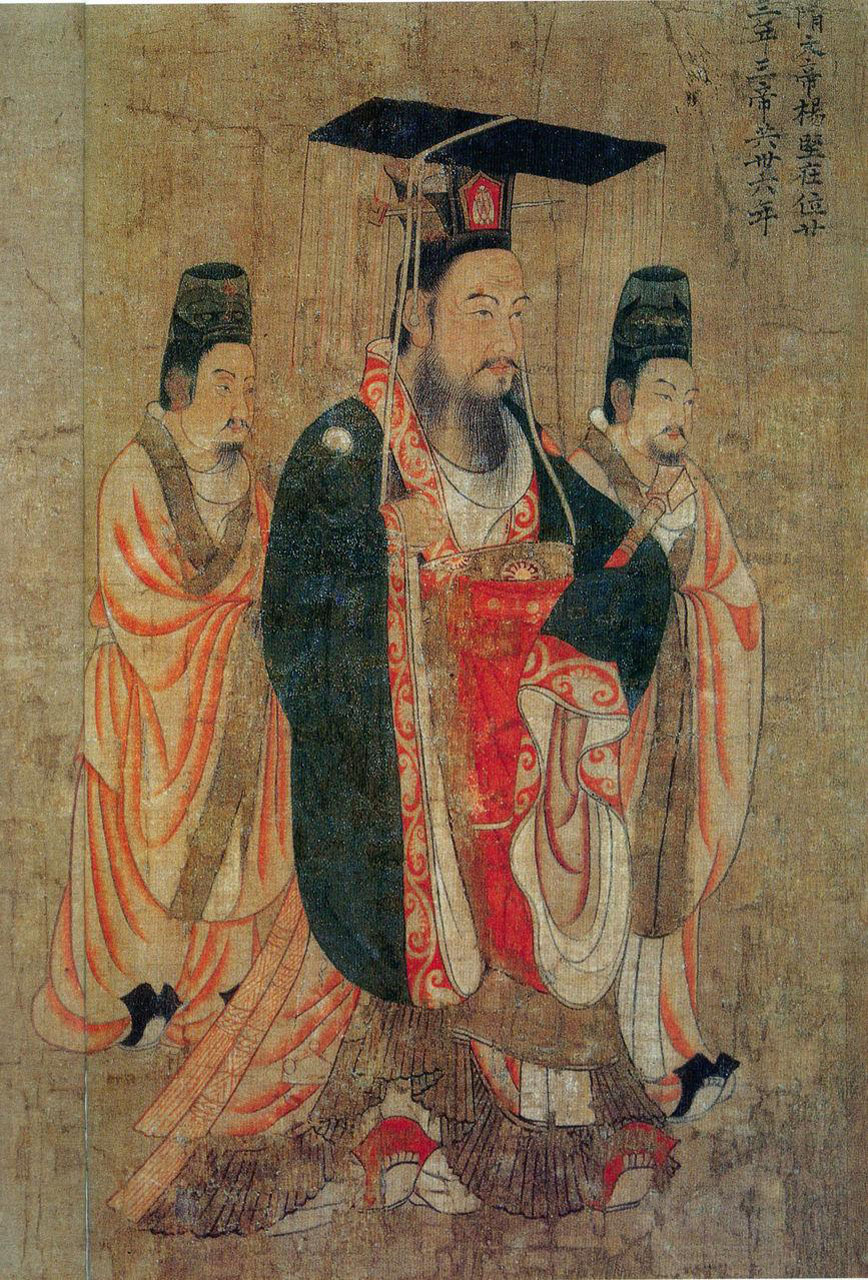
Yan Li-pen / Wikimedia Commons (Public domain) source Emperor Wen of Sui's Passing 隋文帝
Emperor Wen of the Sui Dynasty was a pivotal figure in Chinese history. Known for reuniting China after centuries of division, he initiated reforms in agriculture, governance, and the standardization of the legal system.
His efforts laid the groundwork for the flourishing Tang Dynasty.
Read more
影在地上。
Yǐng zài dì shàng.
The shadow is on the ground.
The word 影 means 'shadow' in this simple context.
电影很有趣。
Diànyǐng hěn yǒuqù.
The movie is interesting.
影 here is part of 电影 (movie), meaning 'film'.
影子跳舞。
Yǐngzi tiàowǔ.
The shadow dances.
Describes a shadow's movement, using 影 to mean 'shadow'.
他的想法像影子。
Tā de xiǎngfǎ xiàng yǐngzi.
His thoughts are like shadows.
A metaphorical use of 影 to describe elusive thoughts.
Usage of 在 indicating location
在 + place
The preposition 在 is used to indicate the location of a subject.
Use 在 to show where something or someone is located.
我在家。
Wǒ zài jiā.
I am at home.
书在桌子上。
Shū zài zhuōzi shàng.
The book is on the table.
小猫在椅子下。
Xiǎo māo zài yǐzi xià.
The kitten is under the chair.
What does 影 mean?
How is 影 pronounced?
How do you write "shadow" in Chinese?
Listen. What does the sentence mean?
墙上有一个___。(There is a ___ on the wall.)
影子在墙上。 — What does this sentence mean?
What is 皮影?
Arrange into a correct sentence
Which emperor is known for uniting China and launching major reforms?
Frequently asked questions about the word 影
影 refers to shadows or images, while 像 means to resemble or to be similar. They are used in different contexts.
Yes, 影 can be used metaphorically to refer to influences or traces left behind by people or events.
Chinese Learner’s Horoscope
Your sign’s reading for today, written for learners.
Find your sign
The Chinese zodiac assigns each birth year one of twelve animals, each paired with an element that colours its character. Yours shapes a reading written for learners.
- Your sign and its elementOne of twelve animals on a 12-year cycle
- A daily affirmationFresh every morning, never repeated
- A learning horoscopeWhat to study today, and when
- A lucky characterWith pinyin, meaning and a study tip
Your birth date
Saved on this device — used only to work out your zodiac sign.

Today's Mandarin word: 影 (yǐng) — picture.
Learn it on Mandarin Temple's Dragon Daily 🐉