
Podcast


Podcast: Li Shizhen and the Bencao Gangmu
Listen to Jason & Amy discuss Li Shizhen and the Bencao Gangmu
New here?
The Naturalist-Physician
Li Shizhen was born in 1518 in Qizhou, Hubei province, into a family of physicians who had practiced medicine for three generations. His father, Li Yanwen, was a respected local doctor who initially discouraged his son from pursuing medicine, urging him instead toward the imperial examinations. After failing the provincial examinations three times, Li Shizhen devoted himself fully to medical study and practice, eventually serving as a physician at the court of the Prince of Chu (Unschuld, 2009).
The young physician quickly distinguished himself through meticulous clinical observation and an insatiable curiosity about the natural world. He traveled extensively throughout central and southern China, collecting specimens, interviewing herbalists, miners, fishermen, and farmers, and personally testing the properties of hundreds of medicinal substances. This empirical approach set him apart from many contemporaries who relied primarily on textual authority (Needham & Lu, 2000).
Li Shizhen recognized that existing materia medica texts contained numerous errors, contradictions, and gaps. The standard reference of his era, the Zhenghe Bencao compiled under the Song dynasty, listed many substances with confused identifications or unreliable therapeutic claims. Determined to produce a corrected and expanded pharmacopoeia, Li Shizhen began what would become his life's work around 1552, embarking on a systematic revision of the entire Chinese pharmaceutical tradition (Métailié, 2001).
"Reading ten thousand books is not as good as traveling ten thousand miles."
Li Shizhen, Bencao Gangmu, PrefaceCompiling the Compendium
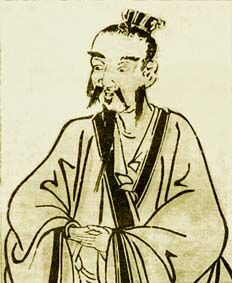
The Bencao Gangmu, completed in 1578 after twenty-seven years of labor, stands as one of the most ambitious works of natural history ever produced. Spanning fifty-two volumes, it catalogues 1,892 distinct medicinal substances drawn from plant, animal, and mineral sources, along with 11,096 prescriptions for their therapeutic application. Li Shizhen consulted over 800 earlier texts and added 374 substances not previously recorded in any pharmacopoeia (Unschuld, 2009).
The organizational innovation of the Bencao Gangmu was as significant as its content. Li Shizhen devised a classification system based on gang (classes) and mu (divisions), arranging substances into sixteen major categories that progressed from minerals and waters through herbs, grains, vegetables, fruits, trees, insects, fish, shellfish, birds, and mammals. Within each category, entries followed a logical order from simple to complex. This taxonomic framework, while rooted in Chinese cosmological thinking, also reflected an empirical sensitivity to natural relationships that impressed later European naturalists (Nappi, 2009).
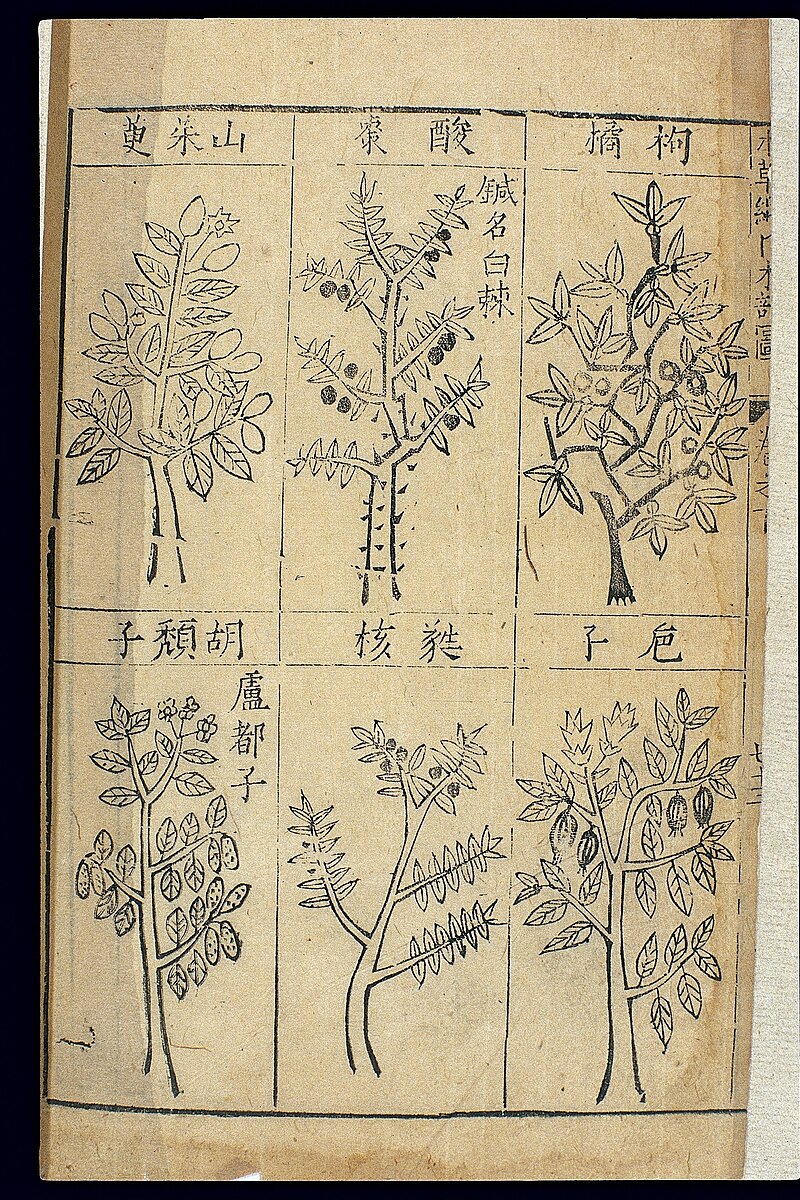
Each entry in the compendium followed a rigorous format: the substance's name and its variants across different regions, a textual history tracing its appearances in earlier pharmacopoeias, a critical commentary by Li Shizhen himself correcting errors of identification or attribution, a detailed morphological description, notes on habitat and collection methods, instructions for processing and preparation, and finally its therapeutic properties and clinical applications. This systematic structure transformed the pharmacopoeia from a simple listing into a critical encyclopedia of pharmaceutical knowledge (Métailié, 2001).
Empirical Methodology
Li Shizhen's approach to pharmaceutical knowledge was remarkably empirical for his era. He insisted on personal verification wherever possible, cultivating medicinal plants in his own garden, dissecting animal specimens, and conducting what might be called rudimentary pharmacological experiments. When earlier texts disagreed about the identity or properties of a substance, he sought to resolve the dispute through direct observation rather than deference to textual authority (Needham & Lu, 2000).
His critical apparatus was sophisticated and methodologically self-conscious. The Bencao Gangmu contains hundreds of instances where Li Shizhen explicitly corrects errors in earlier pharmacopoeias, explains the reasoning behind his corrections, and acknowledges cases where uncertainty remains. He distinguished carefully between firsthand observation, reliable secondhand reports, and unverified claims, often marking traditional beliefs with qualifications such as "it is said" or "this remains to be confirmed" (Unschuld, 2009).
Particularly notable was Li Shizhen's attention to regional variation and the problems of nomenclature. He recognized that the same plant might bear different names in different provinces, or that the same name might refer to entirely different species depending on the region. To address this confusion, he provided detailed morphological descriptions supplemented by over 1,100 original illustrations, many drawn from life. This concern with precise identification through empirical description anticipated the methods of modern botanical taxonomy by more than a century (Nappi, 2009).
"Medicines have their sovereign, minister, assistant, and envoy — this must be carefully examined."
Li Shizhen, Bencao Gangmu, Volume 1Pharmacological Contributions
The Bencao Gangmu recorded numerous pharmacological insights that have been validated by modern science. Li Shizhen documented the use of ephedra (ma huang) for respiratory ailments centuries before the isolation of ephedrine by Nagayoshi Nagai in 1885. He described the application of chaulmoogra oil for leprosy, the use of mercury compounds for syphilis, and the antimalarial properties of qinghao (Artemisia annua), the same plant from which Tu Youyou later derived artemisinin (Unschuld, 2009).
Beyond individual drug entries, Li Shizhen made significant contributions to pharmaceutical processing theory. He documented elaborate methods of paozhi, the preparation and processing of raw medicinal substances to enhance their therapeutic effects or reduce toxicity. These processing techniques, including roasting, steaming, soaking in vinegar or wine, and calcination, reflected centuries of accumulated practical knowledge about the chemical transformation of natural substances. Modern research has confirmed that many of these traditional processing methods do indeed alter the pharmacological activity of the treated substances (Zhao et al., 2010).
Li Shizhen also advanced the understanding of drug interactions and compound prescriptions. He articulated principles of drug compatibility and incompatibility with greater precision than his predecessors, identifying combinations that enhanced therapeutic effect and warning against combinations that produced dangerous reactions. His analysis of the relationships among ingredients in classical formulas demonstrated a sophisticated grasp of synergistic pharmacology that continues to inform traditional Chinese pharmaceutical practice today (Métailié, 2001).
Global Influence
The Bencao Gangmu was first published in 1596, three years after Li Shizhen's death, through the efforts of his son Li Jianzhong and the Nanjing publisher Hu Chenglong. The work spread rapidly throughout East Asia, with Japanese editions appearing within decades. By the eighteenth century, excerpts and adaptations had been translated into Latin, French, English, and German, influencing European natural history and pharmacology during a formative period of scientific development (Nappi, 2009).
The Swedish naturalist Carl Linnaeus, the father of modern taxonomy, was aware of Chinese botanical knowledge transmitted through Jesuit intermediaries, and scholars have traced indirect influences of Chinese classificatory thinking on European systematics. The English physician John Floyer cited Chinese pulse diagnosis and pharmaceutical knowledge in his own medical writings. More directly, the Bencao Gangmu served as a primary reference for the French Jesuit Pierre-Martial Cibot's contributions to the Mémoires concernant les Chinois in the 1770s, which brought detailed accounts of Chinese medicine to European scholarly audiences (Needham & Lu, 2000).
In the modern era, the Bencao Gangmu has served as a rich source for pharmaceutical bioprospecting. Researchers screening traditional medicinal substances for bioactive compounds have repeatedly turned to Li Shizhen's compendium as a starting point for investigation. The World Health Organization has recognized the work's enduring significance, and in 2011 the Bencao Gangmu was inscribed on the UNESCO Memory of the World Register, acknowledging it as a document of universal heritage and scientific importance (Zhao et al., 2010).
"To know that something is so is important, but to know why it is so is even more important."
Li Shizhen, Bencao Gangmu, Fanli (Guidelines)Legacy and Continuing Relevance
Li Shizhen's legacy extends beyond the Bencao Gangmu itself. His other works, including the Binhu Maixue on pulse diagnosis and the Qijing Bamai Kao on the eight extraordinary vessels, made important contributions to clinical medicine. The Binhu Maixue, written in accessible verse form, became one of the most widely used teaching texts for pulse diagnosis in Chinese medical education and remains in use in traditional medical schools today (Unschuld, 2009).
The methodological example set by Li Shizhen proved equally influential. His insistence on empirical verification, his willingness to challenge established authorities, and his systematic approach to organizing knowledge inspired subsequent generations of Chinese physicians and naturalists. The Qing dynasty saw a flowering of evidential scholarship in medicine directly influenced by Li Shizhen's critical methods, with scholars like Zhao Xuemin producing supplementary pharmacopoeias that extended and corrected the Bencao Gangmu using the same empirical principles (Métailié, 2001).
In contemporary China, Li Shizhen is revered as a cultural hero and a symbol of Chinese scientific achievement. His portrait has appeared on postage stamps and banknotes, and a memorial museum and medicinal botanical garden have been established at his birthplace in Qizhou. More substantively, his pharmacopoeia continues to serve as a practical reference in the practice of traditional Chinese medicine, and the Chinese government has sponsored major research programs to systematically validate the therapeutic claims recorded in the Bencao Gangmu using modern pharmacological methods (Zhao et al., 2010).
Quiz
What was the primary reason Li Shizhen's father initially discouraged him from pursuing medicine?
How did Li Shizhen distinguish his approach from that of his contemporaries?
Which classification method did Li Shizhen use in the Bencao Gangmu?
What was a significant innovation in the structure of the Bencao Gangmu?
How did Li Shizhen address regional variations in the names of substances?
What significant contribution did Li Shizhen make to pharmaceutical processing theory?
Which modern scientific principle is reflected in Li Shizhen's analysis of drug interactions?
How has the Bencao Gangmu influenced global pharmacology?
Write your thoughts, then get feedback from Jason — you can turn any answer into a full discussion.
9. Why do you think Li Shizhen's empirical approach to compiling the Bencao Gangmu was significant for his time?
10. In what ways might Li Shizhen's work in the Bencao Gangmu still be relevant to modern pharmaceutical research?
Frequently Asked Questions
Common questions about Li Shizhen and the Bencao Gangmu
Who was Li Shizhen and what was his greatest achievement?
Li Shizhen (1518–1593) was a Ming dynasty physician and naturalist who spent 27 years compiling the Bencao Gangmu (Comperta of Materia Medica), the most comprehensive pharmacological work in Chinese history. His encyclopedic text documented 1,892 medicinal substances with 11,096 prescriptions, earning him recognition as one of the greatest scientific minds of pre-modern China.
What is the Bencao Gangmu and why is it significant?
The Bencao Gangmu (Compendium of Materia Medica) is a 52-volume pharmacological encyclopedia completed in 1578 that classified nearly 1,900 medicinal substances using an innovative taxonomic system. It was groundbreaking for its empirical methodology, systematic organization by natural categories, and correction of centuries of accumulated errors in earlier herbals.
How did Li Shizhen research and verify his medical information?
Li Shizhen conducted extensive field research, traveling across China to observe plants, minerals, and animals in their natural habitats and interviewing local healers, farmers, and miners. He personally tested numerous remedies, cross-referenced over 800 earlier texts, and applied critical analysis to distinguish effective medicines from folklore and superstition.
How did the Bencao Gangmu influence Western science?
The Bencao Gangmu was translated into multiple European languages beginning in the 18th century and significantly influenced Western botanical and pharmacological knowledge of East Asian flora. Charles Darwin referenced the work in his research on variation and domestication, and it remains a valuable resource for modern ethnobotanical and drug discovery research.
What classification system did Li Shizhen create for medicines?
Li Shizhen organized his materia medica into 16 major divisions and 60 subcategories based on natural properties, moving away from the traditional three-tier ranking system. His classification grouped substances by type (minerals, herbs, grains, vegetables, fruits, trees, insects, fish, birds, animals) in a hierarchy that anticipated aspects of modern biological taxonomy.