
November 15, 2026 · 星期日
Riverside Towers
楼阁· cabinet, chamber, pavilion

 Today’s episode with Jason and Amy
Riverside towers like the Yellow Crane Tower are celebrated for their cultural and architectural significance, often immortalized in Chinese poetry.
立冬 marks the beginning of winter, when the harvest is stored away and the land settles into rest. The cold deepens, water begins to freeze, and creatures retreat into shelter and stillness.
Northerners eat dumplings (饺子) on this day, their shape recalling ears to protect against frostbite in the coming cold.
Riverside Towers
楼阁lóu gé
Riverside towers, or 阁 (gé), are iconic structures found alongside rivers in China. These towers, such as the Yellow Crane Tower in Wuhan, have become renowned not only for their architectural beauty but also for their cultural significance. They often serve as inspiration for poets and writers who capture the essence of the vistas and emotions they evoke. The Yellow Crane Tower, for instance, is immortalized in the poetry of Cui Hao, a famous Tang dynasty poet, whose verses have contributed to the tower's legendary status[1].
These towers were originally built in strategic locations for observing the surrounding landscapes and controlling river traffic. Over time, they evolved into places of leisure and contemplation, attracting scholars and artists. The architecture of these towers is a testament to traditional Chinese design, featuring intricate wooden carvings and multi-tiered roofs that harmonize with their natural settings. The term 阁, meaning pavilion or chamber, encapsulates this sense of a space meant for reflection and appreciation of the natural world.
Today, many of these towers continue to stand as cultural landmarks, drawing visitors who wish to experience the same views that inspired ancient poets. They offer a glimpse into China’s rich heritage, where art, nature, and architecture converge seamlessly. Visiting a riverside tower allows one to step back in time and connect with the historical and cultural narratives that have shaped Chinese society. Such sites are not just architectural marvels but also cultural symbols that reflect the enduring legacy of Chinese civilization.
Riverside towers like the Yellow Crane Tower are celebrated for their cultural and architectural significance, often immortalized in Chinese poetry.
黄鹤楼是著名的阁。
Huánghè Lóu shì zhùmíng de gé.
The Yellow Crane Tower is a famous pavilion.
- [1] Cui Hao, 'Yellow Crane Tower' (《黄鹤楼》), a famous Tang dynasty poem.
Jason & Amy on 阁
Podcast: Dragon Daily: Riverside Towers — and the word 阁
Jason & Amy on Riverside Towers and 阁
New here?
November 15, 2026
Today, we explore the cultural impact of a prominent Chinese figure and a notable polyglot from history.
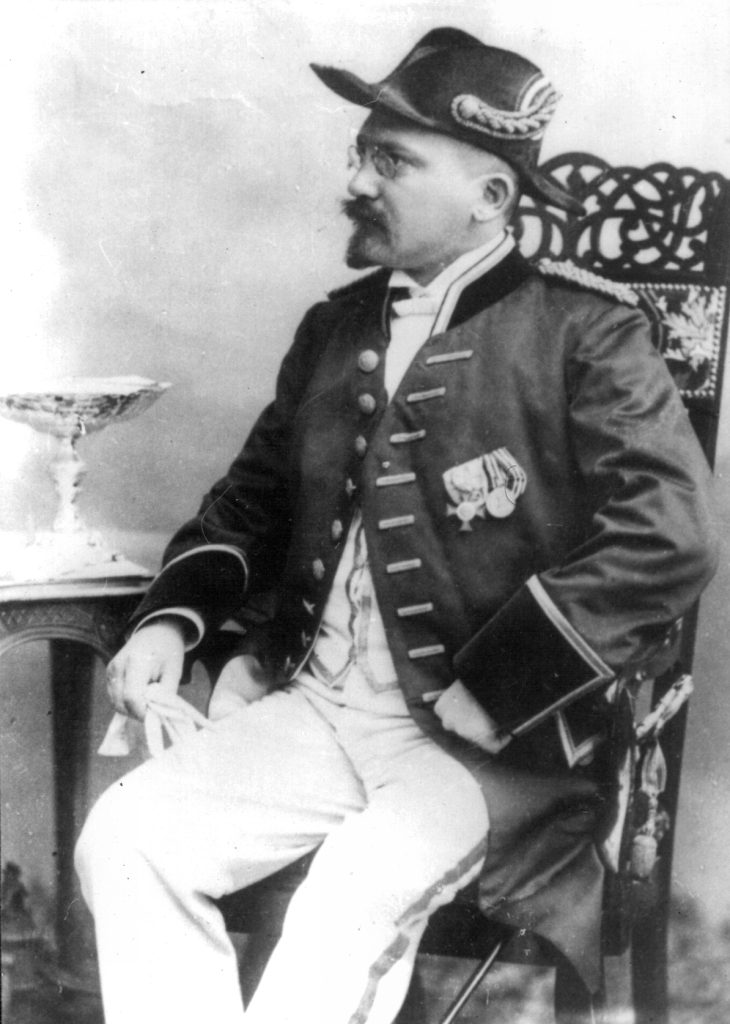
Unknown author / Wikimedia Commons (Public domain) source Birth of Emil Krebs, German Polyglot
Emil Krebs was a renowned German polyglot who mastered an impressive number of languages during his lifetime. His linguistic abilities were studied and admired by many.
Krebs' extraordinary linguistic talent continues to inspire language enthusiasts worldwide.
Read moreBirth of Gu Kailai, Chinese Lawyer and Businesswoman 谷开来
Gu Kailai is a well-known Chinese lawyer and businesswoman. She has been involved in several legal and business ventures, gaining attention for her work in these fields.
Gu Kailai remains a notable figure in Chinese legal and business circles.
Read more
这是一个阁。
Zhè shì yí gè gé.
This is a pavilion.
A simple sentence showing the basic meaning of 阁.
阁楼很高。
Gélóu hěn gāo.
The attic is very high.
Shows a slightly more complex use of 阁 in the word 阁楼.
我们在阁里喝茶。
Wǒmen zài gé lǐ hē chá.
We drink tea in the pavilion.
Illustrates using 阁 as a place where activities occur.
他的思想如同空中阁楼。
Tā de sīxiǎng rútóng kōngzhōng gélóu.
His thoughts are like castles in the air.
Uses 阁 in a metaphorical sense, showing abstract usage.
Using 的 to link nouns
noun + 的 + noun
The particle 的 is used to link a modifier to a noun, indicating possession or description.
Use 的 to connect a descriptive word or phrase to the noun it describes.
我的书
wǒ de shū
my book
红色的花
hóngsè de huā
red flower
可爱的猫
kě'ài de māo
cute cat
What does 阁 mean?
How is 阁 pronounced?
How do you write "pavilion" in Chinese?
Listen. What does the sentence mean?
我们在___里喝茶。(We drink tea in the ___.
我们在阁里喝茶 — What does this sentence mean?
Which famous tower is known for its association with poetry?
Arrange into a correct sentence
What field is Gu Kailai known for?
What is Emil Krebs famous for?
Frequently asked questions about the word 阁
阁 usually refers to a pavilion or a chamber, while 楼 refers to a building or floor. Use 阁 for specific architectural styles.
Yes, but it's more common in formal or literary contexts. In daily speech, you might opt for simpler words like 房.
Yes, it is commonly used to refer to the cabinet or a group of officials in government.
Chinese Learner’s Horoscope
Your sign’s reading for today, written for learners.
Find your sign
The Chinese zodiac assigns each birth year one of twelve animals, each paired with an element that colours its character. Yours shapes a reading written for learners.
- Your sign and its elementOne of twelve animals on a 12-year cycle
- A daily affirmationFresh every morning, never repeated
- A learning horoscopeWhat to study today, and when
- A lucky characterWith pinyin, meaning and a study tip
Your birth date
Saved on this device — used only to work out your zodiac sign.
Today's Mandarin word: 阁 (gé) — cabinet, chamber, pavilion.
Learn it on Mandarin Temple's Dragon Daily 🐉