
November 13, 2026 · 星期五
City Walls
城墙· wall

 Today’s episode with Jason and Amy
The word 墙 connects to today's story as it represents the physical barrier that protected ancient Chinese cities, reflecting their cultural and historical significance.
立冬 marks the beginning of winter, when the harvest is stored away and the land settles into rest. The cold deepens, water begins to freeze, and creatures retreat into shelter and stillness.
Northerners eat dumplings (饺子) on this day, their shape recalling ears to protect against frostbite in the coming cold.
City Walls
城墙chéng qiáng
In ancient China, city walls (城墙, chéngqiáng) played a crucial role in the defense and identity of urban areas. These walls were constructed from tamped earth and bricks, forming a protective barrier around towns and cities. Their primary purpose was to protect inhabitants from invasions and raids, serving as a physical manifestation of a city's strength and resilience. The construction of these walls was an engineering feat, often involving advanced techniques in architecture and materials science. Notable examples include the city walls of Xi'an and Nanjing, which remain impressive even today[1].
City walls also held cultural and symbolic significance. They often represented a boundary between the known and the unknown, the safe and the dangerous. Within the walls, communities thrived, developing unique cultures and traditions. The gates within these walls were not just entry points but also places where social and commercial activities flourished. Markets were often held near these gates, turning them into vibrant centers of economic life.
The design of city walls varied across regions, influenced by local geography and available materials. In northern regions, where invasions were more frequent, walls were typically thicker and higher. In contrast, southern cities often had more decorative elements on their walls, reflecting different cultural priorities. Despite their differences, city walls shared a common purpose: to serve as a vital defense mechanism and a symbol of urban identity. Even today, remnants of these walls offer us a glimpse into the past, reminding us of the ingenuity and resilience of those who built them[2].
The word 墙 connects to today's story as it represents the physical barrier that protected ancient Chinese cities, reflecting their cultural and historical significance.
古代的城墙很高。
Gǔdài de chéngqiáng hěn gāo.
Ancient city walls were very tall.
- [1] UNESCO World Heritage Centre, 'The Historic Monuments of Ancient Nara', UNESCO World Heritage List.
- [2] Wang, Guobin. 'The History of Chinese City Walls', Beijing University Press.
Jason & Amy on 墙
Podcast: Dragon Daily: City Walls — and the word 墙
Jason & Amy on City Walls and 墙
New here?
November 13, 2026
Today in Chinese cultural history, we highlight influential figures from acting and the Qing dynasty.
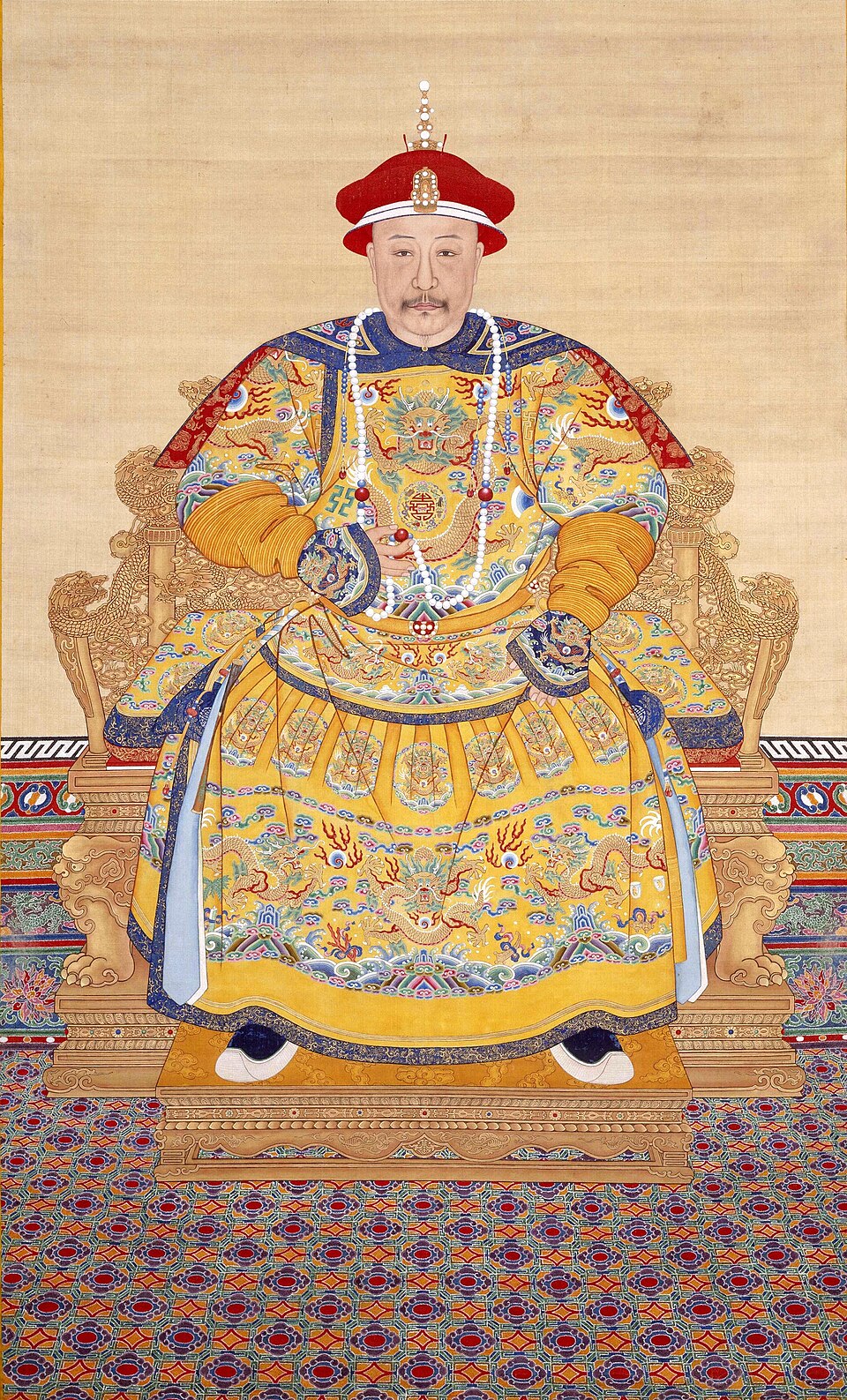
Annonymous Qing Dynasty Court Painter / Wikimedia Commons (Public domain) source Birth of Jiaqing Emperor 嘉庆帝
The Jiaqing Emperor was born in 1760 and later became the sixth emperor of the Qing dynasty. His reign was marked by efforts to restore imperial authority and manage internal strife.
His reign represents a period of cultural and political significance in Qing history.
Read more
Dick Thomas Johnson from Tokyo, Japan / Wikimedia Commons (CC BY 2.0) sourcelicence Birth of Huang Xiaoming, Chinese Actor and Singer
Huang Xiaoming, born in 1977, is a prominent Chinese actor and singer known for his roles in both television and film. His versatility and charisma have made him a popular figure in Chinese entertainment.
Huang Xiaoming remains a major influence in Chinese pop culture and media.
Read more
墙上有画。
Qiáng shàng yǒu huà.
There are paintings on the wall.
This sentence shows the basic use of 墙 as a physical wall.
他们修建了一道墙。
Tāmen xiūjiàn le yī dào qiáng.
They built a wall.
Highlights the action of building a wall, using 墙 as the object.
这堵墙很坚固。
Zhè dǔ qiáng hěn jiāngù.
This wall is very strong.
Describes the quality of the wall, emphasizing its sturdiness.
文化是无形的墙。
Wénhuà shì wúxíng de qiáng.
Culture is an invisible wall.
Uses 墙 metaphorically to describe cultural barriers.
Using adjectives with 是…的 structures
是 + adjective + 的
This pattern is used to emphasize a particular characteristic of a noun.
Use this structure to highlight a specific attribute of an object or concept.
这座桥是新的。
Zhè zuò qiáo shì xīn de.
This bridge is new.
这本书是有趣的。
Zhè běn shū shì yǒuqù de.
This book is interesting.
他的观点是重要的。
Tā de guāndiǎn shì zhòngyào de.
His viewpoint is important.
What does 墙 mean?
How is 墙 pronounced?
How do you write "wall" in Chinese?
Listen. What does the sentence mean?
他在___上画画。(He is painting on the ___.
墙上有画。 — What does this sentence mean?
What was the primary purpose of ancient Chinese city walls?
Arrange into a correct sentence
Who was born in 1977 and became a well-known actor and singer?
What dynasty did the Jiaqing Emperor belong to?
Frequently asked questions about the word 墙
墙 is the simplified form used in Mainland China, while 牆 is the traditional form used in regions like Taiwan and Hong Kong. Both mean 'wall'.
You can use 墙 in sentences like '这面墙很高' (Zhè miàn qiáng hěn gāo) meaning 'This wall is very tall'.
Yes, one common phrase is '墙有耳' (qiáng yǒu ěr), meaning 'walls have ears', which warns about being cautious when speaking about private matters.
Chinese Learner’s Horoscope
Your sign’s reading for today, written for learners.
Find your sign
The Chinese zodiac assigns each birth year one of twelve animals, each paired with an element that colours its character. Yours shapes a reading written for learners.
- Your sign and its elementOne of twelve animals on a 12-year cycle
- A daily affirmationFresh every morning, never repeated
- A learning horoscopeWhat to study today, and when
- A lucky characterWith pinyin, meaning and a study tip
Your birth date
Saved on this device — used only to work out your zodiac sign.
Today's Mandarin word: 墙 (qiáng) — wall.
Learn it on Mandarin Temple's Dragon Daily 🐉