November 4, 2026 · 星期三
West Lake
西湖· lake

 Today’s episode with Jason and Amy
West Lake exemplifies how natural landscapes have deeply influenced Chinese cultural expressions.
霜降 is the last solar term of autumn, when the first frosts settle over the land and temperatures drop toward winter. White rime coats the morning fields, leaves blaze red and fall, and the harvest draws to a close.
People eat persimmons, said to ward off cold and chapped lips, and in some regions enjoy mutton to build warmth for winter.
West Lake
西湖xī hú
West Lake, or Xīhú (西湖), is a timeless symbol of natural beauty and cultural significance in China. Located in Hangzhou, Zhejiang Province, this picturesque lake has been a source of inspiration for countless poets and painters. Its serene waters and elegant causeways have been immortalized in traditional Chinese art and literature, making it a beloved subject throughout history[1]. The calm reflections on the lake's surface and the surrounding lush greenery create an atmosphere of peace and tranquility, which has long attracted visitors seeking solace and inspiration.
The beauty of West Lake is enhanced by its harmonious integration with the surrounding natural and man-made elements. It is dotted with numerous pagodas, gardens, and temples, each contributing to the lake's overall aesthetic charm. The famous Broken Bridge and Su Causeway are just some of the landmarks that add to its allure. These features have not only inspired individual artistic expression but have also played a role in shaping the cultural identity of the region[2].
West Lake's influence on Chinese culture extends beyond visual arts. It has been the backdrop for many ancient legends and stories, enriching the tapestry of Chinese folklore. One such story is the Legend of the White Snake, a tale of love and magic set around the lake. These stories, along with the lake's natural beauty, contribute to its status as a UNESCO World Heritage Site, recognized for its cultural and historical value[3]. As you explore the concept of 湖 (hú), or 'lake', you can see how West Lake embodies the essence of this word, offering a glimpse into the deep connection between nature and culture in China.
West Lake exemplifies how natural landscapes have deeply influenced Chinese cultural expressions.
西湖很美。
Xīhú hěn měi.
West Lake is beautiful.
- [1] UNESCO World Heritage Centre, 'West Lake Cultural Landscape of Hangzhou', 2011.
- [2] Lin Yutang, 'My Country and My People'.
- [3] Classic of Poetry (《诗经》), ancient collection of Chinese poems.
Jason & Amy on 湖
Podcast: Dragon Daily: West Lake — and the word 湖
Jason & Amy on West Lake and 湖
New here?
November 4, 2026
Today features notable figures in science and sports who have made significant contributions to their fields.

David Dobkin [1] / Wikimedia Commons (CC BY-SA 3.0) sourcelicence Birth of Charles K. Kao, Physicist and Engineer 高锟
Charles K. Kao, a Chinese physicist and engineer, was born. Known as the 'father of fiber optics,' he contributed to revolutionizing telecommunications through his work on fiber optic transmissions.
His discoveries paved the way for the high-speed internet and global communications we use today.
Read more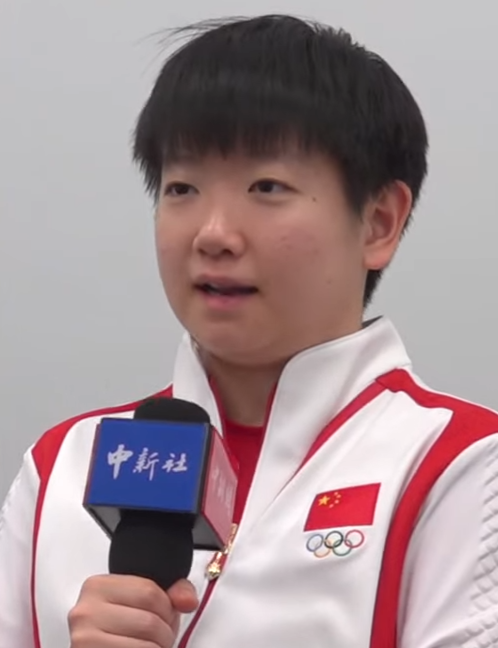
China News Service / Wikimedia Commons (CC BY 3.0) sourcelicence Birth of Sun Yingsha, Table Tennis Player 孙颖莎
Sun Yingsha, a Chinese table tennis player, was born. She has quickly risen to prominence in international competitions, renowned for her agility and strategic play.
Sun continues to inspire young athletes and contribute to China's legacy in table tennis.
Read more
湖很大。
Hú hěn dà.
The lake is big.
A simple sentence describing a lake's size.
湖水很清。
Hú shuǐ hěn qīng.
The lake water is clear.
Describes the clarity of lake water.
西湖是著名的湖。
Xīhú shì zhùmíng de hú.
West Lake is a famous lake.
Highlights the fame of West Lake.
湖泊在中国文化中有重要地位。
Húpō zài Zhōngguó wénhuà zhōng yǒu zhòngyào dìwèi.
Lakes hold an important place in Chinese culture.
Discusses the cultural significance of lakes in China.
Verb + 得 + complement
Verb + 得 + complement
This pattern describes how well something is done.
Use to express the degree or manner of an action.
他跑得很快。
Tā pǎo de hěn kuài.
He runs very fast.
她唱得很好。
Tā chàng de hěn hǎo.
She sings very well.
你说得对。
Nǐ shuō de duì.
You are right.
What does 湖 mean?
How is 湖 pronounced?
How do you write "lake" in Chinese?
Listen. What does the sentence mean?
西___很美。(West ___ is beautiful.)
西湖很美。 — What does this sentence mean?
Which famous Chinese lake is known for its scenic beauty and cultural significance?
Arrange into a correct sentence
Which field is Sun Yingsha known for?
What is Charles K. Kao famously known as?
Frequently asked questions about the word 湖
'湖' is pronounced as 'hú' with a rising tone, similar to how you might ask a question.
'湖' is often used with '泊' (pō), forming '湖泊', which means lakes.
Yes, you can use '湖' when discussing places or nature, especially when talking about geography.
Chinese Learner’s Horoscope
Your sign’s reading for today, written for learners.
Find your sign
The Chinese zodiac assigns each birth year one of twelve animals, each paired with an element that colours its character. Yours shapes a reading written for learners.
- Your sign and its elementOne of twelve animals on a 12-year cycle
- A daily affirmationFresh every morning, never repeated
- A learning horoscopeWhat to study today, and when
- A lucky characterWith pinyin, meaning and a study tip
Your birth date
Saved on this device — used only to work out your zodiac sign.
Today's Mandarin word: 湖 (hú) — lake.
Learn it on Mandarin Temple's Dragon Daily 🐉