

October 3, 2026 · 星期六
Sweet Osmanthus
桂花· cassia, cinnamon

 Today’s episode with Jason & Amy
Sweet Osmanthus symbolizes success and celebration in Chinese culture.
秋分 divides autumn in half, bringing day and night once more into perfect balance. After it the nights grow longer and the chill deepens, while golden fields ripen toward the great autumn harvest.
Now celebrated as China's Farmers' Harvest Festival, and children traditionally try 竖蛋 (standing eggs on end), as at the spring equinox.
Sweet Osmanthus
桂花guì huā
Sweet Osmanthus, or 桂花, is a beloved flower in Chinese culture, especially during mid-autumn when it blooms and fills the air with its distinctive, sweet fragrance. This flower, native to China, holds a special place in the hearts of many due to its connection with the Mid-Autumn Festival, a time for family reunions and celebrations under the full moon. The flower's blooming season coincides with this festival, enhancing the festive atmosphere with its delightful scent.
Beyond its natural beauty and fragrance, 桂花 has deep cultural significance. In ancient China, the term 'plucking osmanthus' became synonymous with achieving success in the imperial examinations, a pivotal event for scholars who aspired to governmental positions. Passing these exams was akin to 'plucking' a coveted position, an accomplishment celebrated with joy and respect. This metaphor highlights the flower's symbolic association with success and achievement in Chinese literature and folklore[1].
The flower is also used in various culinary and medicinal applications. 桂花 is an essential ingredient in osmanthus wine and tea, both of which are enjoyed for their unique flavor and aroma. The flowers are often used in traditional Chinese medicine, believed to have properties that aid in digestion and soothe the throat. The versatility of 桂花 in enhancing both cultural and practical aspects of life makes it a cherished part of Chinese heritage.
On this day, as the sweet scent of osmanthus fills the air, it invites people to reflect on traditions and the timeless beauty of nature. The presence of 桂花 today serves as a reminder of the rich cultural tapestry that continues to influence modern Chinese society.
Sweet Osmanthus symbolizes success and celebration in Chinese culture.
桂花飘香。
Guì huā piāo xiāng.
The sweet osmanthus is fragrant.
- [1] Wang Wei, 'Plucking Osmanthus' (《采桂》), a famous Tang dynasty poem.
Jason & Amy on 桂
Podcast: Dragon Daily: Sweet Osmanthus — and the word 桂
Jason & Amy on Sweet Osmanthus and 桂
New here?
October 3, 2026
Today in Chinese cultural history, we recognize influential figures in sports and art who have made notable contributions.
Birth of Chen Yanyin, Chinese Sculptor 陈延炘
Chen Yanyin, born in 1958, is a Chinese sculptor celebrated for her innovative contemporary sculptures. Her works often explore themes of femininity and culture, offering a unique perspective within modern Chinese art.
Chen Yanyin has played a vital role in shaping modern Chinese sculpture, especially in representing female perspectives.
Read more
S. Bollmann / Wikimedia Commons (Attribution) source Birth of Herman Li, Guitarist and Producer 李康敏
Herman Li, born in 1976, is a renowned guitarist and producer, known for his work with the band DragonForce. His rapid guitar solos and distinctive sound have earned him international acclaim.
Herman Li's innovative techniques have influenced guitarists worldwide, contributing to the global metal music scene.
Read more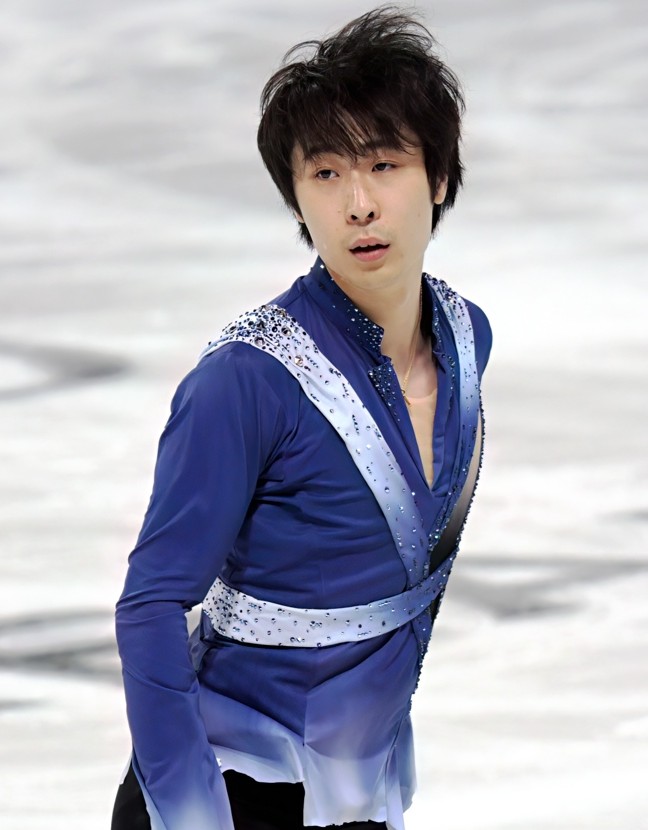
Phantom Kabocha / Wikimedia Commons (CC BY 4.0) sourcelicence Birth of Jin Boyang, Chinese Figure Skater 金博洋
Jin Boyang, born in 1997, is a prominent Chinese figure skater known for his technical prowess and innovative routines. He is the first skater to complete four quadruple jumps in a short program.
Jin Boyang has significantly influenced the technical evolution of figure skating with his quadruple jumps.
Read more
我喜欢桂花。
Wǒ xǐhuān guìhuā.
I like sweet osmanthus.
A simple sentence expressing a preference for sweet osmanthus.
桂花很香。
Guìhuā hěn xiāng.
Sweet osmanthus is very fragrant.
Describes the fragrance of sweet osmanthus.
中秋节时桂花盛开。
Zhōngqiūjié shí guìhuā shèngkāi.
Sweet osmanthus blooms during the Mid-Autumn Festival.
Connects the blooming of osmanthus to the Mid-Autumn Festival.
桂花象征着成功。
Guìhuā xiàngzhēngzhe chénggōng.
Sweet osmanthus symbolizes success.
Uses osmanthus metaphorically to symbolize success.
Using 的 to indicate possession
noun + 的 + noun
This pattern shows possession or association between two nouns.
Use 的 to link an owner or category to what it owns or describes.
我的书
wǒ de shū
my book
老师的笔
lǎoshī de bǐ
teacher's pen
中国的文化
Zhōngguó de wénhuà
Chinese culture
What does 桂 mean?
How is 桂 pronounced?
How do you write "cassia" in Chinese?
Listen. What does the sentence mean?
中秋节时___花开。(During the Mid-Autumn Festival, ___ flowers bloom.)
桂花开了。 — What does this sentence mean?
What is the cultural significance of 桂花 in ancient China?
Arrange into a correct sentence
Which Chinese figure skater was born in 1997?
In which field did Chen Yanyin make her mark?
Frequently asked questions about the word 桂
桂 translates to cassia or cinnamon, and it can also refer to a surname.
桂, particularly 桂皮 (guìpí), is used for its warming properties and is often included in herbal remedies.
Yes, 桂 is commonly used in Chinese cooking for flavoring dishes, especially in sweet and savory recipes.
Chinese Learner’s Horoscope
Your sign’s reading for today, written for learners.
Find your sign
The Chinese zodiac assigns each birth year one of twelve animals, each paired with an element that colours its character. Yours shapes a reading written for learners.
- Your sign and its elementOne of twelve animals on a 12-year cycle
- A daily affirmationFresh every morning, never repeated
- A learning horoscopeWhat to study today, and when
- A lucky characterWith pinyin, meaning and a study tip
Your birth date
Saved on this device — used only to work out your zodiac sign.
Today's Mandarin word: 桂 (guì) — cassia, cinnamon.
Learn it on Mandarin Temple's Dragon Daily 🐉