

October 1, 2026 · 星期四
National Day
国庆节· country

 Today’s episode with Jason & Amy
Guóqìng Jié is a time for celebrating national unity and pride across China.
秋分 divides autumn in half, bringing day and night once more into perfect balance. After it the nights grow longer and the chill deepens, while golden fields ripen toward the great autumn harvest.
Now celebrated as China's Farmers' Harvest Festival, and children traditionally try 竖蛋 (standing eggs on end), as at the spring equinox.
National Day
国庆节guó qìng jié
October 1st marks Guóqìng Jié, a significant date celebrated across China as National Day. This day commemorates the founding of the People's Republic of China in 1949[1]. Many people enjoy a week-long holiday known as 'Golden Week,' which gives them the opportunity to travel and spend time with family. During this time, various events and activities are held to celebrate the unity and achievements of the country (国家). Cities are adorned with flags and decorations, and public spaces host performances and parades that highlight the rich cultural heritage of China.
A popular event during Guóqìng Jié is the flag-raising ceremony held at Tiananmen Square in Beijing. This ceremony is attended by thousands who gather to witness the national flag being raised while the national anthem is played. It is a powerful symbol of national pride and unity, reflecting the diverse yet unified nature of the country (国家).
Besides official ceremonies and celebrations, many people choose to travel during this time. Tourist destinations within China see a surge in visitors, with families and friends exploring the cultural and natural beauty across the country. From the Great Wall to the Terracotta Warriors, these sites become vibrant centers of activity, showcasing the country's rich historical and cultural tapestry.
Guóqìng Jié serves as a reminder of the country's journey and achievements, providing a moment for reflection and celebration. It is a time when people from all walks of life come together to honor their shared history and look forward to the future.
Guóqìng Jié is a time for celebrating national unity and pride across China.
国庆节是国家的节日。
Guóqìng Jié shì guójiā de jiérì.
National Day is a holiday for the country.
- [1] Guo Moruo, 'Founding Ceremony of the People's Republic of China, 1949'
Jason & Amy on 国家
Podcast: Dragon Daily: National Day — and the word 国家
Jason & Amy on National Day and 国家
New here?
October 1, 2026
Today's history highlights influential figures in physics and martial arts, alongside key contributions to literature and mathematics.
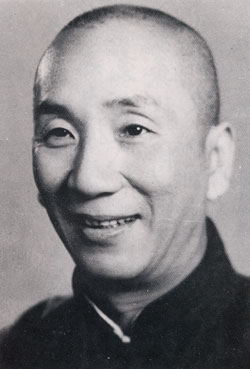
Dever / Wikimedia Commons (Public domain) source Birth of Martial Artist Ip Man 叶问
Ip Man, a famous martial artist, was born. He is widely known for popularizing Wing Chun and mentoring Bruce Lee. His teachings continue to influence martial arts around the world.
Ip Man's legacy endures through the widespread practice and appreciation of Wing Chun.
Read more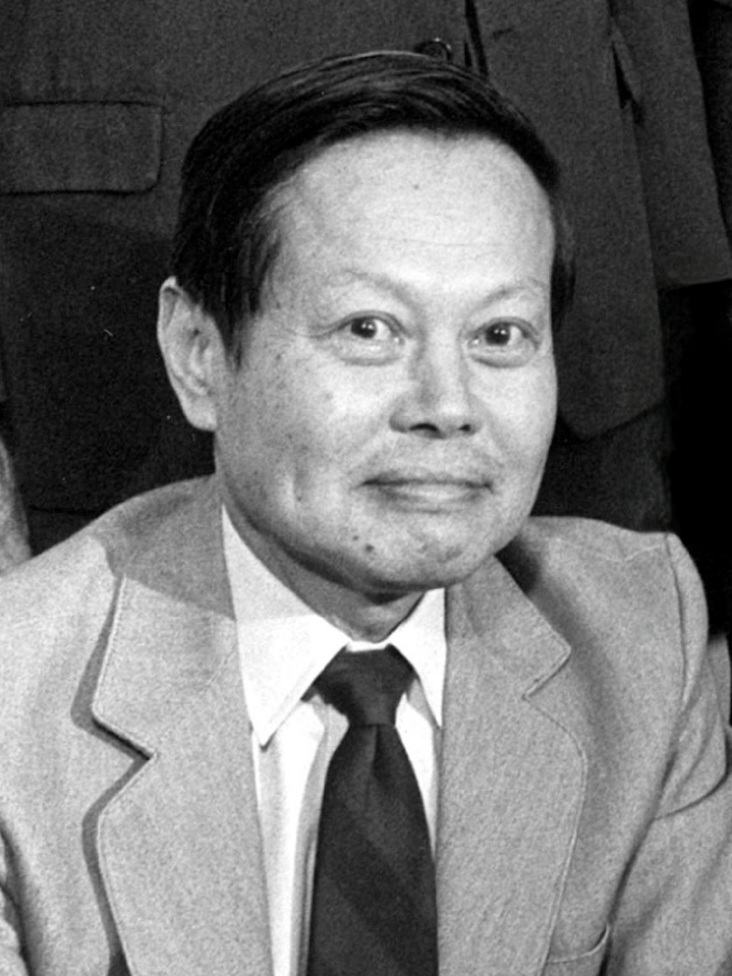
ENERGY.GOV / Wikimedia Commons (Public domain) source Birth of Physicist Chen-Ning Yang 杨振宁
Chen-Ning Yang, a Chinese-American physicist, was born. He is renowned for his work on particle physics and symmetry principles, sharing the Nobel Prize in Physics in 1957. His legacy continues to influence modern physics.
Yang's contributions to physics have had a lasting impact on scientific research and understanding.
Read moreDeath of Mathematician Chiungtze C. Tsen 曾炯之
Chiungtze C. Tsen, a notable Chinese mathematician, passed away. His work contributed to the field of algebra, particularly in the area of Tsen's theorem, which deals with field extensions.
Tsen's mathematical contributions remain important in modern algebraic research.
Read more
这是我的国家。
Zhè shì wǒ de guójiā.
This is my country.
Simple sentence using 国家 to mean 'country'.
我们热爱我们的国家。
Wǒmen rè'ài wǒmen de guójiā.
We love our country.
国家 used to express national pride.
国家的发展很重要。
Guójiā de fāzhǎn hěn zhòngyào.
The development of the country is important.
Shows 国家 in a context of national development.
每个国家都有自己的文化。
Měi gè guójiā dōu yǒu zìjǐ de wénhuà.
Every country has its own culture.
Uses 国家 in a more abstract cultural context.
The use of 的 to indicate possession
noun + 的 + noun
The particle '的' is used to indicate possession or association between two nouns.
Use 的 to link a possessor with what is possessed.
这是我的书。
Zhè shì wǒ de shū.
This is my book.
他的朋友很聪明。
Tā de péngyǒu hěn cōngmíng.
His friend is very smart.
老师的教室很大。
Lǎoshī de jiàoshì hěn dà.
The teacher's classroom is very big.
What does 国家 mean?
How is 国家 pronounced?
How do you write "country" in Chinese?
Listen. What does the sentence mean?
这个___很大。(This ___ is large.)
这个国家很大。 — What does this sentence mean?
What event is commonly held at Tiananmen Square on National Day?
Arrange into a correct sentence
What field did Chen-Ning Yang contribute to?
Who was a martial arts master known for Wing Chun?
Frequently asked questions about the word 国家
'国家' can refer to any recognized nation or state, regardless of size, including small countries.
'国家' is more commonly used in formal discussions, but it can be used informally when talking about different nations among friends.
'国' refers to the concept of a nation generally, while '国家' emphasizes the political and administrative aspects of a country.
Chinese Learner’s Horoscope
Your sign’s reading for today, written for learners.
Find your sign
The Chinese zodiac assigns each birth year one of twelve animals, each paired with an element that colours its character. Yours shapes a reading written for learners.
- Your sign and its elementOne of twelve animals on a 12-year cycle
- A daily affirmationFresh every morning, never repeated
- A learning horoscopeWhat to study today, and when
- A lucky characterWith pinyin, meaning and a study tip
Your birth date
Saved on this device — used only to work out your zodiac sign.
Today's Mandarin word: 国家 (guójiā) — country.
Learn it on Mandarin Temple's Dragon Daily 🐉