
August 22, 2026 · 星期六
Blue Calico
蓝印花布· to announce

 Today’s episode with Jason & Amy
Blue Calico is a testament to the enduring nature of traditional Chinese textile arts, blending beauty with cultural significance.
立秋 marks the official start of autumn, though the lingering "autumn tiger" heat often hangs on for weeks. Subtle signs appear — a cooler breeze at dawn, the first yellowing leaves, ripening fruit.
People practice 贴秋膘 ("sticking on autumn fat"), eating hearty meats to recover weight lost in summer, and bite into melon (啃秋).
Blue Calico
蓝印花布lán yìn huā bù
Blue Calico, known as Lányìn huābù (蓝印花布), is a traditional Chinese textile that holds a special place in the country's rich heritage. It dates back to the Tang and Song dynasties and was particularly popular among rural communities who used it to make clothing, household items, and even ceremonial decorations[1]. The process involves creating intricate patterns using a resist-dye technique, where parts of the fabric are covered to prevent them from absorbing dye, resulting in beautiful, contrasting designs. These patterns often feature floral and natural motifs, which are symbolic and bring a touch of nature into everyday life.
The dye used in Blue Calico is derived from the indigo plant, which gives the fabric its characteristic deep blue color. This color is not only visually striking but also holds cultural significance, representing elegance and purity. The traditional methods of making Blue Calico have been passed down through generations, ensuring that this art form remains alive today. Artisans carefully apply paste to the fabric to outline the designs before dipping it into the indigo dye. Once the dyeing process is complete, the paste is removed to reveal the intricate patterns beneath.
On August 22, as we celebrate this art form, it's important to appreciate the skill and dedication required to produce Blue Calico. The announcement (布) of new workshops and exhibitions dedicated to this textile art is a testament to its enduring appeal and cultural importance. By learning more about Blue Calico, we not only preserve a piece of Chinese history but also gain insight into the meticulous craftsmanship that defines this beautiful tradition.
Blue Calico is a testament to the enduring nature of traditional Chinese textile arts, blending beauty with cultural significance.
蓝印花布很美。
Lán yìnhuābù hěn měi.
Blue Calico is very beautiful.
- [1] UNESCO Intangible Cultural Heritage, Traditional craftsmanship of Blue Calico, 2020
Jason & Amy on 布
Podcast: Dragon Daily: Blue Calico — and the word 布
Jason & Amy on Blue Calico and 布
New here?
August 22, 2026
Today in Chinese cultural history, we explore influential figures and events across different eras.
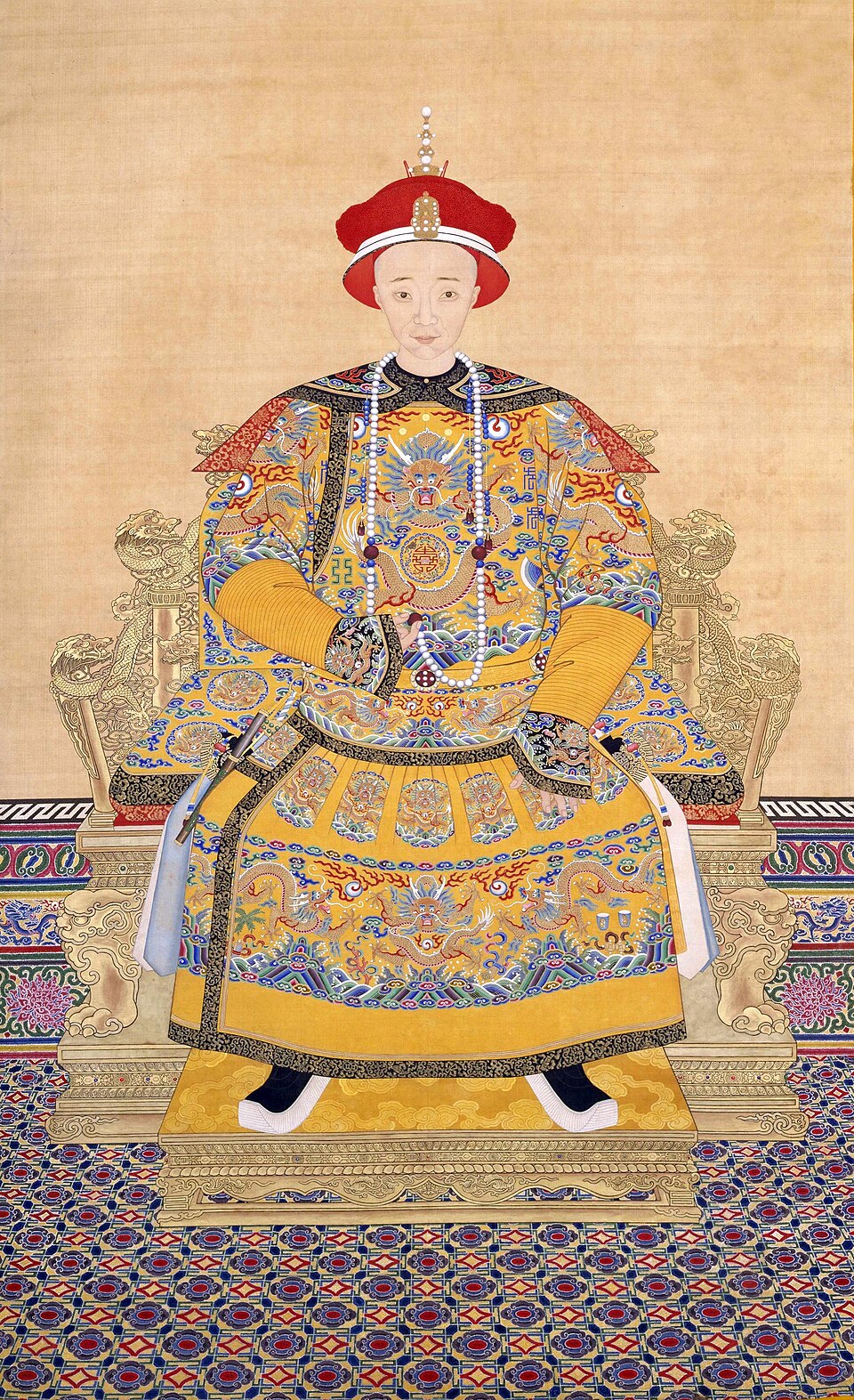
Qing Dynasty Court Painter / Wikimedia Commons (Public domain) source Death of Xianfeng Emperor 咸丰帝
The Xianfeng Emperor, the ninth emperor of the Qing Dynasty, passed away. He ruled during a challenging period marked by internal unrest and foreign pressures.
His reign marked a period of significant challenges that shaped China's modern history.
Read more
cropped by Luuva / Wikimedia Commons (CC BY-SA 2.0) sourcelicence Death of Paul Shan Kuo-hsi 单国玺
Paul Shan Kuo-hsi was a prominent Taiwanese cardinal and an influential spiritual leader within the Catholic community. He was known for his dedication to education and interfaith dialogue.
His efforts in promoting understanding and education continue to inspire religious communities.
Read more
我喜欢蓝布。
Wǒ xǐhuān lán bù.
I like blue cloth.
Simple use of 布 to mean 'cloth'.
他的计划布满了细节。
Tā de jìhuà bùmǎnle xìjié.
His plan is full of details.
Here, 布 is used in 布满, meaning 'full of'.
新政策即将公布。
Xīn zhèngcè jíjiāng gōngbù.
The new policy will be announced soon.
布 is part of 公布, meaning 'to announce'.
这项技术已被广泛传播。
Zhè xiàng jìshù yǐ bèi guǎngfàn chuánbō.
This technology has been widely disseminated.
Abstract use of 布 in the context of dissemination.
Using 布 in announcements
宣布 + noun
The pattern '宣布 + noun' is used to express making an announcement about something.
Use this structure when formally stating that something is being announced.
公司宣布新产品。
Gōngsī xuānbù xīn chǎnpǐn.
The company announced a new product.
政府宣布新政策。
Zhèngfǔ xuānbù xīn zhèngcè.
The government announced new policies.
学校宣布假期时间。
Xuéxiào xuānbù jiàqī shíjiān.
The school announced the holiday schedule.
What does 布 mean?
How is 布 pronounced?
How do you write "to announce" in Chinese?
Listen. What does the sentence mean?
公司___了新产品。(The company ___ a new product.)
政府布新的政策。 — What does this sentence mean?
Which traditional Chinese textile art involves resist-dyeing with indigo?
Arrange into a correct sentence
Which emperor of the Qing Dynasty passed away in 1861?
Who was Paul Shan Kuo-hsi?
Frequently asked questions about the word 布
You can say '我买了新的布来做衣服' (Wǒ mǎile xīn de bù lái zuò yīfú), meaning 'I bought new cloth to make clothes.'
No, 布 can also refer to the act of spreading or announcing information, so it's versatile in usage.
Common phrases include '布告' (bùgào, notice) and '布置' (bùzhì, to arrange or set up).
Chinese Learner’s Horoscope
Your sign’s reading for today, written for learners.
Find your sign
The Chinese zodiac assigns each birth year one of twelve animals, each paired with an element that colours its character. Yours shapes a reading written for learners.
- Your sign and its elementOne of twelve animals on a 12-year cycle
- A daily affirmationFresh every morning, never repeated
- A learning horoscopeWhat to study today, and when
- A lucky characterWith pinyin, meaning and a study tip
Your birth date
Saved on this device — used only to work out your zodiac sign.
Today's Mandarin word: 布 (bù) — to announce.
Learn it on Mandarin Temple's Dragon Daily 🐉