
Podcast


Podcast: Marriage and Family in China
Listen to Jason & Amy discuss Marriage and Family in China
New here?
Traditional Marriage Customs
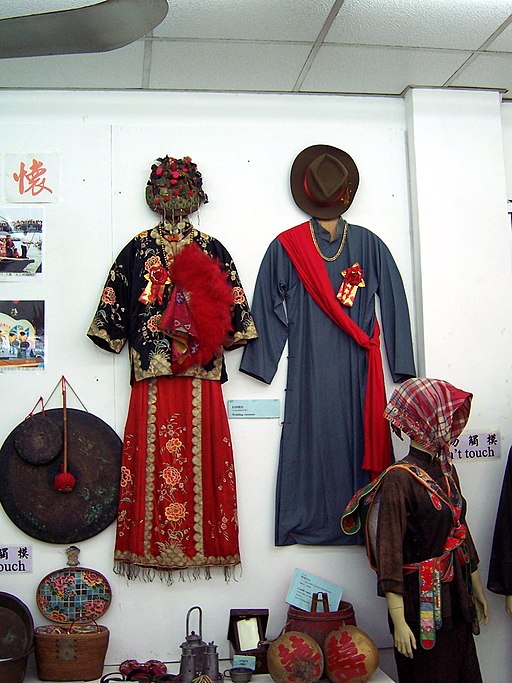
Marriage in traditional China was understood not as a union between two individuals but as an alliance between two families, a transaction governed by elaborate ritual protocols, economic calculations, and social conventions that left little room for personal choice or romantic sentiment. The classical model of Chinese marriage was codified in the "Six Rites" (liuli) described in the Book of Rites (Liji), a sequence of formal procedures that structured the marriage process from initial proposal through the wedding ceremony itself: nacai (presenting gifts to propose), wenming (inquiring about the bride's name and birth date), naji (announcing the favorable divination result), nazheng (presenting the bride price), qingqi (selecting the wedding date), and qinying (the groom's procession to receive the bride). While the specific practices varied enormously by region, class, and period, the underlying principle remained constant across centuries: marriage was too important to be left to the preferences of the young people involved and must be arranged by parents, facilitated by matchmakers, and validated by diviners who confirmed the astrological compatibility of the prospective couple (Ebrey, 1993, pp. 1–28).
The matchmaker (meiren or meipo) occupied a position of considerable social importance in traditional Chinese communities, functioning as an information broker, negotiator, and ritual specialist whose skills were essential to the successful completion of a marriage alliance. Professional matchmakers maintained detailed knowledge of the eligible young people in their district — their family backgrounds, financial circumstances, physical appearance, temperament, and birth dates — and were retained by families seeking suitable matches for their sons and daughters. The matchmaker's role was not merely to identify compatible partners but to manage the delicate process of negotiation between families whose interests, expectations, and social standing might not perfectly align. The bride price (caili), paid by the groom's family to the bride's family, and the dowry (jiazhuang), provided by the bride's family for her use in her new household, were subjects of intense and sometimes protracted negotiation, with the matchmaker serving as intermediary to prevent the loss of face that would result from direct haggling between the families themselves. The amounts involved could be substantial, and disputes over bride price and dowry were a common source of social conflict, legal litigation, and, in extreme cases, broken engagements that damaged the reputations of all parties involved (Watson and Ebrey, 1991, pp. 35–62).
The wedding ceremony itself was an elaborate multi-day ritual that marked the bride's transfer from her natal family to her husband's household — a transition so profound that it was sometimes described as a form of social death and rebirth. On the wedding day, the groom led a procession to the bride's home, accompanied by musicians, attendants, and a decorated sedan chair (huajiao) in which the bride would be carried to her new residence. The bride, veiled in red and weeping ritual tears of separation from her natal family, was carried over the threshold of the groom's home, where the couple performed the "three bows" (san bai): to Heaven and Earth, to the groom's parents, and to each other. The wedding banquet that followed could last for several days and served as a public declaration of the alliance between the two families, an occasion for the display of wealth and social status, and a ritual incorporation of the bride into her new community. The patrilocal residence pattern — in which the bride moved permanently to her husband's household — meant that marriage represented a permanent separation from her birth family, a separation mitigated only by periodic visits and the ongoing exchange of gifts and assistance between the allied families (Ebrey, 1993, pp. 42–68).
"By the command of the parents and the words of the matchmaker."
Mencius (Mengzi), 3B.3, on the proper arrangement of marriageThe Marriage Law Revolution
The Marriage Law of the People's Republic of China, promulgated on May 1, 1950, as one of the first major pieces of legislation enacted by the new government, represented the most radical legal intervention into Chinese family life in history — an attempt to dismantle in a single stroke the patriarchal marriage system that had prevailed for millennia and replace it with a model based on free choice, gender equality, and companionate partnership. The law abolished arranged marriages, prohibited the payment of bride price and dowry, established the legal minimum marriage ages at twenty for men and eighteen for women, granted women the right to own property and retain their natal surnames, and — most revolutionary of all — gave women the right to initiate divorce on equal terms with men. These provisions represented not merely a reform of marriage customs but a fundamental assault on the Confucian family system, which the Communist Party regarded as a pillar of "feudal" social organization and a mechanism for the oppression of women, who were trapped in marriages they had not chosen, subordinated to mothers-in-law they could not defy, and denied the legal personhood that would enable them to escape (Diamant, 2000, pp. 1–32).
The implementation of the 1950 Marriage Law encountered fierce resistance in rural China, where the local cadres charged with enforcement were often themselves products of the patriarchal culture the law sought to transform. The law's divorce provisions, in particular, generated a crisis of extraordinary proportions: in the years following its promulgation, thousands of women attempted to exercise their newly granted right to divorce, provoking a violent backlash from husbands, in-laws, and community members who regarded divorce as a shameful betrayal of family obligation. Reports from this period document cases of women beaten, imprisoned, or murdered by husbands or in-laws enraged by divorce petitions, and an estimated 70,000 to 80,000 women died in connection with marriage-related disputes during the early 1950s — casualties of a social revolution that the state had initiated but could not fully control. The Party's response was to moderate the enforcement of the divorce provisions, prioritizing social stability over women's liberation in a retreat that women's rights advocates within the Party protested but could not prevent (Johnson, 1983, pp. 45–72).
Subsequent revisions to the Marriage Law — in 1980 and 2001 — reflected the evolving priorities of the Chinese state and the changing realities of Chinese family life. The 1980 revision raised the legal marriage ages to twenty-two for men and twenty for women, introduced family planning obligations that foreshadowed the one-child policy, and added provisions addressing domestic violence and marital property. The 2001 revision further strengthened protections against domestic violence, established a formal fault-based divorce system, and addressed new issues arising from the market economy, including the division of commercially acquired property and the rights of children born outside marriage. The Supreme People's Court's controversial 2011 interpretation of marital property law — which ruled that real estate purchased before marriage belongs solely to the purchaser, regardless of the other spouse's contributions to mortgage payments — was widely criticized as a setback for women's economic rights in marriage, since Chinese social convention overwhelmingly expected the groom's family to provide the marital home. This ruling triggered a nationwide debate about gender equity in marriage that revealed the deep tensions between legal modernization and persistent patriarchal norms in Chinese family culture (Diamant, 2000, pp. 55–82).
"Women hold up half the sky."
Attributed to Mao Zedong, widely used in PRC gender equality campaignsBride Price and the Economics of Marriage
The bride price (caili, 彩礼), far from disappearing under the transformative pressures of revolution, reform, and urbanization, has experienced a dramatic resurgence and escalation in contemporary China, evolving from a traditional token of respect into a financial burden so crushing that it has become a major source of rural poverty, social conflict, and public policy concern. In many rural areas of northern and central China, the customary bride price demanded by the bride's family has escalated to amounts exceeding 200,000 to 300,000 yuan — several times the average annual household income in agricultural communities — plus the expectation that the groom's family will provide a newly built or renovated house and, increasingly, an automobile. These demands have created a marriage market in which the ability of young men to marry depends less on their personal qualities than on their families' financial resources, driving some families into crippling debt and others into a state of permanent bachelorhood that Chinese media has labeled the "bare branches" (guanggun) crisis (Yan, 2003, pp. 35–58).
The escalation of bride price must be understood in the context of China's distorted sex ratio, itself a consequence of the one-child policy and the deep-rooted cultural preference for sons that led to widespread sex-selective abortion, female infanticide, and the underreporting of female births during the decades of strict birth control enforcement. By 2020, China's sex ratio at birth had moderated to approximately 111.3 males per 100 females (down from a peak of over 120 in some provinces), but the cumulative effect of decades of imbalance had produced an estimated surplus of 30 to 40 million men of marriageable age — a "marriage squeeze" that has dramatically shifted bargaining power in the marriage market toward women's families, particularly in rural areas where the sex ratio imbalance is most severe. In this seller's market, bride price functions as a competitive mechanism through which grooms' families signal their desirability, and the inflationary spiral is driven by each family's rational response to the perceived scarcity of potential brides. The Chinese government has repeatedly attempted to curb bride price inflation through propaganda campaigns, administrative directives, and even local regulations capping bride price amounts, but these efforts have had limited effect against market forces rooted in demographic fundamentals (Gates, 1996, pp. 42–68).
The economic dimensions of Chinese marriage extend well beyond bride price to encompass a comprehensive financial settlement that often represents the largest single expenditure a family will make in its lifetime. The wedding banquet, traditionally the most public component of the marriage celebration, has evolved into an increasingly lavish affair in which families spend tens or even hundreds of thousands of yuan on venue rental, catering, photography, videography, and entertainment — expenditures that serve simultaneously as celebrations of family joy and displays of social status. The expectation that the groom's family will provide a marital apartment — which in major cities may cost several million yuan — has created a phenomenon known as "house slaves" (fangnu), young couples (and their parents) bound to decades of mortgage payments that constrain their career choices, consumption patterns, and family planning decisions. Wedding industry revenues in China exceeded 300 billion yuan annually by the early 2020s, making marriage one of the country's largest consumer sectors and generating a vast ecosystem of wedding planners, photographers, dress designers, and honeymoon travel agencies that cater to the aspirations of couples seeking the perfect expression of modern romance within the framework of traditional family obligation (Yan, 2003, pp. 72–98).
Discuss with Jason
Want to talk this article through?
Jason discusses the article with you, quizzes you on it and teaches you words from it.
Sign in free to ask. New accounts start with 300 AI credits.
Gender Roles and the "Leftover Women" Debate
The transformation of gender roles within Chinese marriage and family life constitutes one of the most dramatic social changes in modern Chinese history, as women have moved from a position of near-total subordination within the patriarchal family system to one of legal equality and economic participation — while continuing to face persistent cultural expectations and structural barriers that limit the realization of formal equality in practice. The Confucian model of womanhood, codified in texts such as Ban Zhao's "Lessons for Women" (Nüjie, c. 80 CE) and the "Three Obediences and Four Virtues" (sancong side) that prescribed submission to father, husband, and son, was comprehensively rejected by the revolutionary ideology of the Communist Party, which proclaimed the liberation of women as one of its founding commitments. Mao Zedong's famous declaration that "women hold up half the sky" (funü neng ding banbiantian) expressed a genuine commitment to women's economic participation that resulted in the mass mobilization of female labor, the expansion of women's education, and significant improvements in women's legal status — achievements that, however limited or inconsistent in practice, represented an extraordinary transformation from the conditions prevailing in pre-revolutionary China (Johnson, 1983, pp. 82–108).
The reform era has produced a complex and contradictory landscape of gender relations in which formal legal equality coexists with resurgent patriarchal norms, workplace discrimination, and cultural pressures that disproportionately constrain women's choices. The phenomenon of "leftover women" (sheng nü, 剩女) — a term popularized by state media beginning around 2007 to describe unmarried urban professional women over the age of twenty-seven — illustrates the tensions between women's expanding economic autonomy and persistent social expectations regarding marriage and motherhood. The "leftover women" discourse, which was actively promoted by the All-China Women's Federation and state-controlled media outlets, framed educated single women as victims of their own excessive standards, warning that their pursuit of career success and personal independence was leading them toward loneliness, social marginalization, and demographic irrelevance. Feminist scholars, most notably Leta Hong Fincher (2014, pp. 1–28) in her landmark study "Leftover Women: The Resurgence of Gender Inequality in China," have argued that the "leftover women" campaign was a deliberate state strategy to pressure educated women into marriage and childbearing in order to address concerns about population quality and demographic decline — a patriarchal intervention disguised as sympathetic concern.
The reality behind the "leftover women" label is far more nuanced than the state media narrative suggests, reflecting genuine changes in women's expectations, preferences, and life strategies that are reshaping the Chinese marriage market from the demand side. Highly educated urban women, who now outnumber men in Chinese universities and are increasingly represented in professional and managerial positions, are exercising unprecedented agency in their marriage decisions, refusing to settle for partners who cannot match their educational attainment and economic earning power. This phenomenon of female "hypergamy" (marrying up) colliding with male "hypogamy" (marrying down) creates a structural mismatch in the marriage market, in which the most educated women and the least educated men are both unable to find suitable partners — a pattern that sociologists have described as "A-quality men and B-quality women marry each other, leaving A-quality women and D-quality men without matches." The growing acceptance of singlehood as a legitimate life choice among young Chinese women, the rise of female economic independence, and the increasing visibility of feminist discourse on social media platforms like Weibo and Xiaohongshu all suggest that the traditional equation between womanhood and marriage is being fundamentally renegotiated in contemporary China (Fincher, 2014, pp. 35–62).
"Better to be lacking than to settle for something inferior."
Classical Chinese proverb, widely cited by modern single women defending their choice to delay marriageDivorce and Changing Family Structures
The dramatic rise in China's divorce rate over the past three decades represents one of the most significant indicators of the transformation underway in Chinese family life, challenging the traditional emphasis on marital permanence and family stability that has been central to Chinese social values for millennia. China's crude divorce rate increased from 0.33 per thousand population in 1979 to 3.4 per thousand in 2019, a tenfold increase that accelerated particularly sharply after 2003, when a new marriage registration regulation simplified the divorce process by allowing couples to divorce through a simple administrative procedure at the local civil affairs bureau rather than requiring employer or community approval. By 2020, approximately 4.3 million couples divorced annually in China, and the divorce-to-marriage ratio — the number of divorces divided by the number of marriages in a given year — reached 53.6 percent in some major cities, a figure that alarmed policymakers and provoked widespread public debate about the stability of the Chinese family (Davis, 2014, pp. 1–25).
The government's response to rising divorce rates revealed the continuing tension between individual rights and social stability that pervades Chinese family policy. In 2021, the newly enacted Civil Code introduced a mandatory thirty-day "cooling-off period" (lihun lengjingqi) for couples seeking divorce by mutual consent, during which either party could unilaterally withdraw the divorce application. This provision, which applied only to administrative (consensual) divorces and not to contested divorces adjudicated by courts, was officially justified as a measure to prevent "impulsive divorces" (chongdong lihun) and protect family stability, but it was widely criticized by women's rights advocates who argued that it effectively trapped women in unhappy or abusive marriages by introducing a procedural obstacle to escape. The cooling-off period generated over 500 million views in social media discussions within days of its announcement, with the overwhelming majority of comments opposing the measure — a rare instance of large-scale public pushback against a government policy on family matters. Data from the first year of implementation showed a significant decline in administrative divorce filings, though it remained unclear whether this represented genuine reconciliation or simply a diversion of divorce cases from the administrative to the judicial track (Diamant, 2000, pp. 92–118).
The diversification of family structures in contemporary China extends well beyond the question of divorce to encompass a range of living arrangements that depart significantly from the traditional nuclear-family-plus-grandparents model. The rise of single-person households, driven by delayed marriage, increased divorce, population aging, and the growing social acceptability of living alone, has been one of the most striking demographic trends of recent decades: the proportion of one-person households increased from 10 percent of all households in 2000 to over 25 percent by 2020, and in major cities the figure is even higher. The phenomenon of "DINK" (double income, no kids) couples, once regarded as a marginal lifestyle choice, has gained significant cultural visibility and social acceptance, particularly among highly educated urban professionals who cite the prohibitive costs of child-rearing, the desire for personal freedom, and environmental concerns as reasons for remaining childless. These trends, combined with China's plummeting birth rate (which fell to just 6.77 births per thousand population in 2023, the lowest since the founding of the People's Republic), signal a fundamental transformation in Chinese family life whose long-term social and economic consequences remain deeply uncertain (Davis, 2014, pp. 32–58).
Modern Romance and Dating Culture
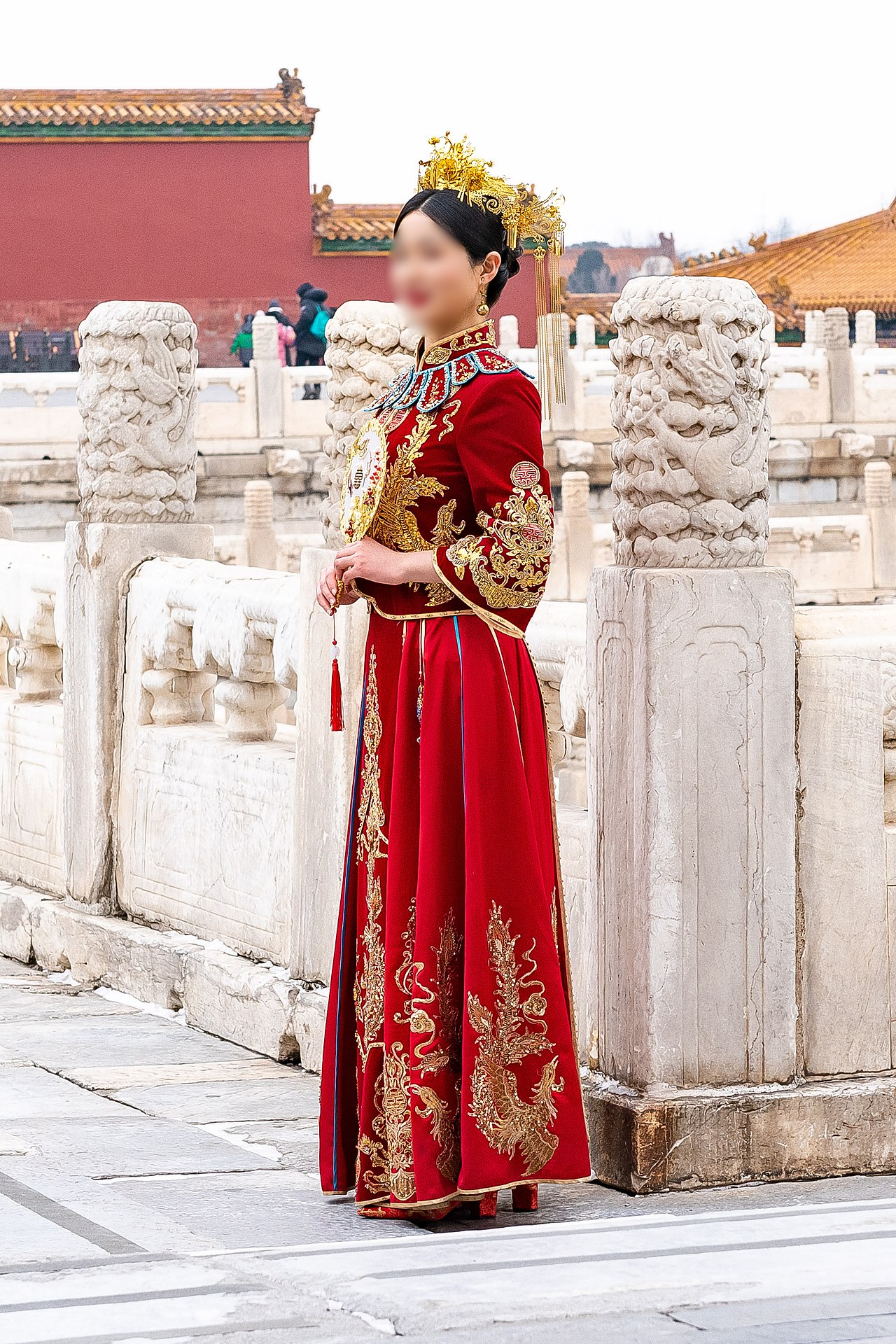
The revolution in Chinese dating culture over the past two decades represents perhaps the most visible manifestation of the broader transformation of marriage and family life, as a society that historically organized reproduction through family-mediated matchmaking has embraced a dizzying array of market-driven, technology-enabled mechanisms for partner selection. The traditional matchmaker has been succeeded by a multi-billion-yuan dating industry that encompasses everything from television dating shows and professional matchmaking agencies to mobile dating applications and AI-powered compatibility algorithms. Jiayuan, Baihe, and Zhenai — China's three largest online dating platforms — collectively claim hundreds of millions of registered users, while newer entrants like Tantan (often described as "China's Tinder") and Soul (which emphasizes personality matching over photographs) attract younger demographics seeking different relationship models. The marriage introduction corner (xiangqin jiaoluo), where parents gather in public parks on weekends to display handwritten advertisements listing their unmarried children's vital statistics — age, height, income, hukou status, property ownership — represents a curious hybrid of traditional matchmaking and modern marketing that has become an iconic feature of urban Chinese social life, simultaneously touching and absurd in its reduction of human beings to a list of measurable attributes (Yan, 2003, pp. 108–135).
The concept of romantic love (aiqing), far from being a Western import, has deep roots in Chinese literary and cultural tradition — the star-crossed lovers of "The Butterfly Lovers" (Liang Shanbo yu Zhu Yingtai), the passionate heroines of "Dream of the Red Chamber" (Honglou Meng), and the folk songs of the "Classic of Poetry" (Shijing) all testify to a rich tradition of romantic sentiment that existed in creative tension with the pragmatic imperatives of arranged marriage. What is distinctively modern is not the existence of romantic feeling but its elevation to the primary criterion for mate selection, displacing the traditional priorities of family background, economic compatibility, and astrological harmony. Young Chinese today overwhelmingly cite "love" as the most important factor in choosing a marriage partner, a preference that coexists uneasily with the intensely practical considerations — housing, income, family background, hukou status — that continue to shape marriage decisions in practice. The resulting cultural ambivalence, in which romantic idealism and economic pragmatism exist in permanent tension, is captured in the popular saying "I want to marry for love, but I also want a house in Beijing" (wo xiang jia gei aiqing, dan wo ye xiang yao yitao Beijing de fangzi) — a formulation that encapsulates the distinctive dilemma of marriage in contemporary China (Fincher, 2014, pp. 72–98).
The declining marriage rate in China — which fell from 13.47 million marriages in 2013 to just 6.83 million in 2022, a drop of nearly fifty percent in less than a decade — has become a matter of urgent concern for a government grappling with the demographic and economic consequences of population decline. State responses have included the relaxation of birth restrictions (from the one-child policy to a two-child policy in 2016 and a three-child policy in 2021), the reduction of legal marriage ages in some provincial proposals, the expansion of maternity leave and childcare subsidies, and propaganda campaigns promoting marriage and childbearing as patriotic duties. Yet these top-down interventions have had limited impact against the structural factors depressing marriage and fertility: prohibitive housing costs, intense workplace competition, the rising opportunity cost of parenthood for educated women, and a generational shift in values that prioritizes individual fulfillment over reproductive obligation. The irony of the Chinese state's current predicament — urgently promoting marriage and childbearing after decades of aggressively suppressing both through the one-child policy — has not been lost on the young people whose choices will ultimately determine the demographic future of the world's most populous nation (Davis, 2014, pp. 65–92).
Quiz
What was the primary purpose of marriage in traditional China?
What role did the matchmaker play in traditional Chinese marriages?
What significant change did the 1950 Marriage Law introduce?
What was one major consequence of the one-child policy in relation to marriage?
What is a significant trend in modern Chinese wedding ceremonies?
What does the term 'leftover women' refer to in China?
What was the impact of the 2021 Civil Code's 'cooling-off period' on divorce rates?
What is a key feature of modern dating culture in China?
Write your thoughts, then get feedback from Jason — you can turn any answer into a full discussion.
9. How do you think the resurgence of the bride price tradition impacts rural communities in China?
10. In what ways might the changing role of women in Chinese society influence future marriage trends?
Frequently Asked Questions
Common questions about Marriage and Family in China
What are traditional Chinese marriage customs?
Traditional Chinese marriages were arranged by parents through matchmakers and involved elaborate rituals known as the "Six Rites" (六礼), including betrothal gifts, bride price negotiations, and auspicious date selection. Marriage was viewed primarily as an alliance between families rather than a union of romantic love, with the bride formally joining her husband's household and ancestral lineage.
How has marriage changed in modern China?
Modern Chinese marriage has shifted dramatically from arranged family alliances to love-based partnerships, driven by the 1950 Marriage Law that banned arranged marriages and established free choice. Today's couples navigate dating apps, elaborate wedding photo shoots, and intense property negotiations, while facing new pressures like skyrocketing bride prices and the "leftover women" stigma for unmarried women over 27.
What is bride price in Chinese culture?
Bride price (彩礼, cǎilǐ) is a payment from the groom's family to the bride's family as part of the marriage agreement, a custom with roots stretching back thousands of years. In contemporary China, bride prices have escalated dramatically — often reaching hundreds of thousands of yuan — creating significant financial burdens that contribute to delayed marriages and rural poverty.
Why is there a marriage crisis in China?
China faces a marriage crisis driven by a gender imbalance of roughly 30 million more men than women (a legacy of the one-child policy and son preference), soaring housing costs, rising bride prices, and shifting attitudes among educated women who increasingly prioritize careers over early marriage. Marriage rates have fallen to historic lows, prompting government concern about declining birth rates.
What does "leftover women" mean in China?
The term "leftover women" (剩女, shèngnǚ) is a stigmatizing label applied to unmarried urban women over the age of 27, popularized by state media campaigns beginning around 2007. Critics argue the term was deliberately promoted to pressure educated women into marriage and childbearing, reinforcing traditional gender expectations despite women's growing economic independence and professional achievements.