
Podcast


Podcast: Qigong and the Cultivation of Vital Energy
Listen to Jason & Amy discuss Qigong and the Cultivation of Vital Energy
New here?
Ancient Roots of Energy Cultivation
The cultivation of vital energy through coordinated movement, breathing, and mental intention has roots in Chinese civilization extending back at least to the Warring States period (475–221 BCE). The Zhuangzi, a foundational Daoist philosophical text from the fourth century BCE, contains references to "blowing and breathing, exhaling and inhaling, expelling the old and taking in the new, bear-hangings and bird-stretchings" as practices of the yangsheng (nourishing life) tradition. These scattered references suggest that by the late Zhou period, a well-established tradition of health-cultivation exercises already existed among Daoist practitioners and physicians (Despeux, 1989).
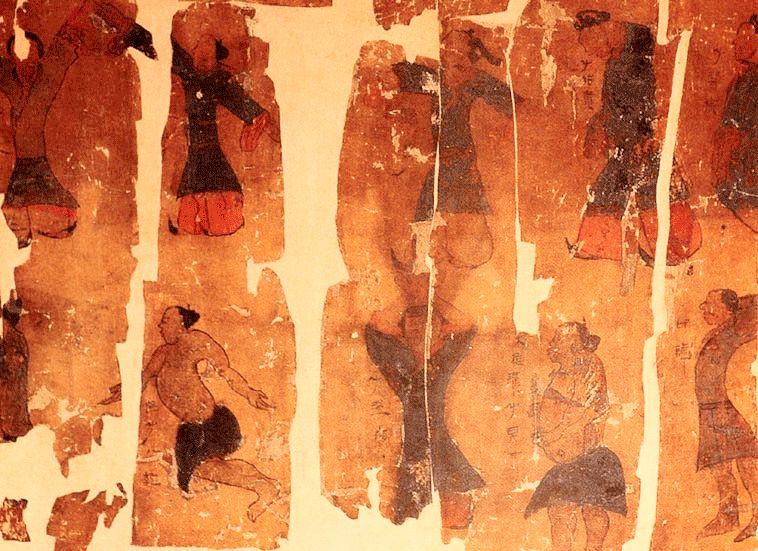
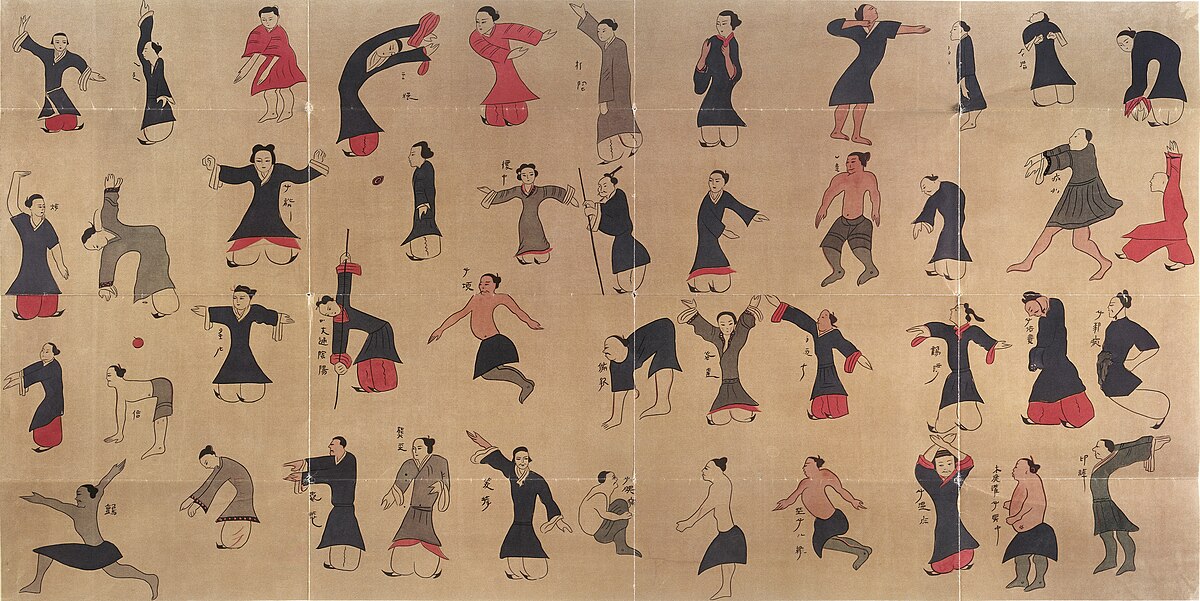
The most dramatic archaeological evidence for early energy cultivation practices came from the tomb of the Marquis of Dai at Mawangdui, near Changsha, sealed in 168 BCE. Among the remarkable finds was the Daoyin Tu, a painted silk scroll depicting forty-four figures performing a variety of stretching, bending, twisting, and breathing exercises. Each figure is accompanied by a brief caption indicating either the movement being performed or the medical condition it was intended to treat. The exercises target ailments including knee pain, deafness, anxiety, digestive disorders, and feverish conditions, demonstrating a clear therapeutic orientation (Harper, 1998).
The Mawangdui corpus also included the Yinshu (Book of Pulling), a bamboo-strip manuscript containing detailed textual descriptions of therapeutic exercises along with their clinical indications. Together, the Daoyin Tu and the Yinshu provide compelling evidence that by the early Han dynasty, Chinese physicians had developed a systematic program of therapeutic exercise that integrated physical movement with breath regulation and was prescribed for specific medical conditions on the basis of accumulated clinical experience (Lo, 2001).
"Qi is the commander of blood; blood is the mother of qi."
Huangdi NeijingFrom Daoyin to Qigong
The term qigong itself is of relatively recent coinage, achieving widespread currency only in the 1950s when the Chinese government promoted systematized health exercises as part of public health campaigns. The earlier term daoyin (guiding and pulling) was used throughout the imperial period to denote therapeutic exercises combining movement and breath regulation. Other related terms included tuna (exhaling and inhaling), emphasizing respiratory techniques, and xingqi (circulating qi), referring to meditation practices focused on guiding qi through the body's internal pathways (Despeux, 1989).
The transition from daoyin to qigong involved not merely a change of terminology but a significant reconceptualization of the practice. Classical daoyin was generally understood as a medical or hygienic practice with specific therapeutic applications, embedded within the broader framework of yangsheng culture. The modern concept of qigong, as formulated by figures such as Liu Guizhen in the 1950s, sought to create a unified category encompassing the diverse traditions of therapeutic exercise, meditation, and breath cultivation under a single scientific-sounding rubric that could be promoted within the ideological framework of the People's Republic (Hsu, 1999).
Despite this modern repackaging, the underlying practices maintain strong continuity with their ancient predecessors. The Five Animal Frolics (Wuqin Xi), attributed to the Han dynasty physician Hua Tuo, imitate the movements of the tiger, deer, bear, monkey, and crane to promote health and treat disease. The Eight Pieces of Brocade (Baduanjin), codified during the Song dynasty, comprise a set of eight standardized exercises that remain among the most widely practiced qigong forms worldwide. These enduring exercise sets demonstrate the remarkable continuity of the Chinese therapeutic exercise tradition across more than two millennia (Lo, 2001).
Medical Qigong Theory
Medical qigong (yiliao qigong) is distinguished from martial and spiritual qigong by its explicit therapeutic orientation and its integration with the diagnostic and theoretical framework of traditional Chinese medicine. The theoretical foundation rests on the premise that disease results from imbalances or blockages in the flow of qi through the body's meridian system, and that specific exercises can restore proper circulation and balance. This framework directly parallels the theoretical basis of acupuncture and herbal medicine, positioning qigong as an internal, self-administered complement to the externally applied therapies of the physician (Despeux, 1989).
Medical qigong exercises are typically prescribed according to the same pattern-identification (bian zheng) system used in other branches of Chinese medicine. A patient diagnosed with liver qi stagnation, for example, might be prescribed specific stretching and breathing exercises that open the lateral chest, promote the smooth flow of qi through the liver meridian, and release emotional tension associated with the liver system. Similarly, a patient with kidney yang deficiency might receive exercises focused on strengthening the lower back and legs, warming the mingmen (gate of life), and cultivating the body's fundamental reserves of vital energy (Hsu, 1999).
The three fundamental components of qigong practice are tiao shen (regulating the body through posture and movement), tiao xi (regulating the breath), and tiao xin (regulating the mind through focused intention). These three regulations are considered inseparable and mutually reinforcing. Proper body alignment facilitates optimal breathing; correct breathing calms the mind; a settled mind enables precise postural awareness. This integrated approach to body-breath-mind training distinguishes qigong from purely physical exercise and connects it to the broader Chinese philosophical tradition of cultivating the unity of form and spirit (Lo, 2001).
"Blowing and breathing, exhaling the old, inhaling the new."
Zhuangzi, Chapter 15 (Keyi)Breathing Techniques and Inner Alchemy
Breathing techniques occupy a central position in qigong practice, ranging from simple abdominal breathing exercises to elaborate practices of internal qi circulation. The most fundamental distinction is between natural breathing (shunhu xi), in which the abdomen expands on inhalation, and reverse breathing (nihu xi), in which the abdomen contracts on inhalation and expands on exhalation. Reverse breathing is considered a more advanced technique that generates stronger internal pressure changes and more vigorous qi circulation, but it requires careful instruction to avoid adverse effects (Despeux, 1989).
More advanced breathing practices include embryonic breathing (taixi), in which the practitioner aims to achieve such subtle, slow respiration that breathing appears to cease altogether, mimicking the effortless respiration attributed to the fetus in the womb. This practice, rooted in Daoist inner alchemy (neidan), was understood not merely as a respiratory exercise but as a method of returning to a primordial state of undifferentiated vitality. The Huangting Jing (Yellow Court Classic) and other Daoist meditation texts describe elaborate visualizations accompanying these breathing practices, in which the practitioner guides qi through specific internal pathways, nourishing the organs and refining vital essence into spiritual energy (Hsu, 1999).
The relationship between qigong breathing practices and Daoist inner alchemy became increasingly elaborate during the late imperial period, with the development of practices involving the circulation of qi through the ren (conception) and du (governing) meridians in a pattern known as the small heavenly circuit (xiao zhoutian). These practices, while maintaining therapeutic applications, extended well beyond medicine into the domains of spiritual cultivation and longevity practice. Modern medical qigong has generally sought to distinguish the therapeutic breathing exercises appropriate for clinical application from the more esoteric spiritual practices of the inner alchemical tradition, though the boundary remains porous (Lo, 2001).
Modern Scientific Research
Scientific investigation of qigong began in earnest in China during the 1980s, when a surge of popular interest in qigong, known as the "qigong fever" (qigong re), stimulated both enthusiastic research programs and considerable controversy. Early studies, many methodologically limited, reported dramatic effects including the emission of measurable infrared radiation, electromagnetic fields, and even material particles from the hands of qigong masters. These claims, widely publicized in the Chinese media, generated intense scientific debate and contributed to a backlash against unsubstantiated qigong claims by the late 1990s (Hsu, 1999).
More rigorous research conducted since 2000 has focused on the measurable physiological effects of qigong practice using established biomedical research methods. Systematic reviews and meta-analyses have found evidence supporting the benefits of qigong for hypertension, chronic pain, balance and fall prevention in the elderly, anxiety and depression, and quality of life in cancer patients. The proposed mechanisms include modulation of the autonomic nervous system, reduction of cortisol and inflammatory cytokines, enhancement of immune function, and neuroplastic changes in brain regions associated with body awareness and emotional regulation (Jahnke et al., 2010).
Randomized controlled trials comparing qigong with conventional exercise have yielded mixed results, with some studies finding advantages for qigong in specific outcomes such as blood pressure reduction and psychological well-being, while others find equivalent benefits. The difficulty of constructing adequate sham controls for qigong interventions remains a significant methodological challenge. Nevertheless, the overall trajectory of research has moved toward acceptance of qigong as a safe and moderately effective complementary intervention for several common chronic conditions, consistent with its traditional role as a health-maintenance practice rather than a treatment for acute disease (Jahnke et al., 2010).
"When righteous qi is stored within, pathogenic factors cannot invade."
Huangdi Neijing Suwen, Chapter 1Contemporary Practice Worldwide
Qigong has become one of the most widely practiced forms of mind-body exercise globally, with an estimated tens of millions of practitioners in China alone and growing communities in virtually every country. The Chinese Health Qigong Association, established in 2001 under the General Administration of Sport, has standardized and promoted four classical qigong forms — the Five Animal Frolics, the Eight Pieces of Brocade, the Muscle-Tendon Change Classic (Yijinjing), and the Six Healing Sounds (Liuzijue) — as evidence-based health exercises suitable for general population practice (Jahnke et al., 2010).
In clinical settings, medical qigong is offered at traditional Chinese medicine hospitals throughout China as a component of comprehensive treatment programs. Qigong therapists may prescribe specific exercise sets for patients based on their diagnostic patterns, supervise group practice sessions for chronic disease management, and in some traditions, apply external qi (waiqi) through the practitioner's hands to the patient's body. While the external qi emission practices remain controversial and scientifically contested, the self-practice exercises have gained broad acceptance within both traditional and integrative medicine frameworks (Despeux, 1989).
The international spread of qigong has been accompanied by significant cultural adaptation and hybridization. Western practitioners have integrated qigong exercises with yoga, mindfulness meditation, and contemporary movement therapies, creating eclectic practices that draw on multiple traditions. While purists may lament the dilution of traditional forms, this cross-cultural exchange also reflects the adaptive vitality of a tradition that has continuously evolved throughout its long history. The core principles of coordinated body, breath, and mind cultivation that animated the Mawangdui daoyin exercises more than two thousand years ago continue to find new expression in the diverse contexts of twenty-first-century global health culture (Lo, 2001).
Quiz
What is the primary focus of qigong practice?
What significant archaeological find demonstrated early energy cultivation practices in China?
Which dynasty is associated with the transition from daoyin to qigong?
What distinguishes medical qigong from martial and spiritual qigong?
What are the three fundamental components of qigong practice?
What is the purpose of reverse breathing in qigong?
What challenge does scientific research on qigong face?
How has qigong practice adapted in contemporary global health culture?
Write your thoughts, then get feedback from Jason — you can turn any answer into a full discussion.
9. Why do you think the transition from daoyin to qigong was significant in the 1950s in China?
10. How might the principles of qigong be beneficial in modern stress management techniques?
Frequently Asked Questions
Common questions about Qigong and the Cultivation of Vital Energy
What is qigong and how does it work?
Qigong is an ancient Chinese practice that combines slow, deliberate movements, controlled breathing, and focused meditation to cultivate and balance qi (vital energy) within the body. Practitioners believe that regular qigong practice strengthens the body's internal energy systems, improves circulation, and enhances the immune system by removing blockages in the meridian network.
What is the difference between qigong and tai chi?
While both practices involve meditative movement and breathing, tai chi (taijiquan) is technically a martial art with codified sequences of flowing combat movements, whereas qigong encompasses a broader range of static and dynamic exercises focused purely on health cultivation. Qigong exercises tend to be simpler and more repetitive, making them more accessible to beginners and those with limited mobility.
What are the proven health benefits of qigong?
Research has shown that regular qigong practice can reduce blood pressure, improve cardiovascular health, decrease stress and anxiety, and enhance balance and flexibility in elderly populations. Systematic reviews have also found benefits for chronic pain management, immune function, and quality of life in patients undergoing cancer treatment.
How old is the practice of qigong?
The roots of qigong extend back over four thousand years, with the earliest evidence being the Daoyin Tu (Guiding and Pulling Chart) discovered in the Mawangdui tomb dating to 168 BCE, which depicts figures performing therapeutic exercises. The term "qigong" itself was not widely adopted until the 1950s, but the underlying practices of breath regulation and meditative movement are among the oldest recorded health traditions in human history.
Can beginners practice qigong safely at home?
Qigong is generally considered safe for people of all ages and fitness levels, with many simple routines that can be learned and practiced at home without special equipment. Beginners are advised to start with basic standing or seated exercises such as Baduanjin (Eight Brocades) and to focus on relaxed breathing and gentle movement rather than forcing difficult postures.