
Podcast


Podcast: Guanxi: The Invisible Currency of Chinese Business
Listen to Jason & Amy discuss Guanxi: The Invisible Currency of Chinese Business
New here?
Understanding Guanxi: More Than Just "Connections"
The Chinese word guanxi (关系) is routinely translated as "relationships" or "connections," but these English approximations fail to capture the depth, specificity, and moral weight of the concept. Guanxi refers not merely to knowing someone but to the existence of a relationship characterized by mutual obligation, reciprocity, and trust — a relationship that creates expectations on both sides and that, once established, carries a moral imperative to honor those expectations. In the Western business world, a "contact" is someone whose business card you collected at a conference; a guanxi relationship is something closer to a bond of informal kinship, carrying obligations that may extend over years or even generations (Yang, 1994). The distinction is not academic — it shapes how deals are structured, how disputes are resolved, how employees are hired, and how information flows through Chinese business networks. To operate in China without understanding guanxi is, as many foreign business executives have discovered to their cost, to operate blind.
Guanxi operates through a logic of reciprocity that Chinese scholars describe with the term bào (报) — repayment, return, or reciprocation. When someone does you a favor, you incur a debt of renqing (人情, human feeling or social obligation) that must eventually be repaid, not necessarily in kind or in equal measure, but in a way that demonstrates your recognition of the obligation. The timing and nature of the repayment are matters of subtle social judgment: repaying too quickly can seem transactional and impersonal, while waiting too long can seem ungrateful or unreliable. The anthropologist Mayfair Mei-hui Yang, in her landmark study Gifts, Favors, and Banquets, described guanxi as a form of "social investment" in which the currency is not money but obligation, face, and trust (Yang, 1994). A successful businessperson in China maintains a vast mental ledger of favors given and received, obligations fulfilled and outstanding, and the relative status and reliability of each person in their network. This ledger is never written down, never explicitly discussed, and never forgotten.
The scope of guanxi in Chinese society extends far beyond business. It governs access to medical care, education, housing, government services, and virtually every domain of life where resources are scarce and gatekeepers hold power. In the business context, guanxi relationships are typically classified into three concentric circles: jiaren (家人, family), shuren (熟人, acquaintances and friends), and shengren (生人, strangers). The innermost circle of family carries the strongest obligations and the highest levels of trust, which is why family businesses have historically dominated Chinese commerce. The middle circle of acquaintances — classmates, colleagues, fellow villagers, and friends of friends — is where most business guanxi operates, and where the arts of cultivation, maintenance, and strategic expansion of one's network are most actively practiced (Gold et al., 2002). The outer circle of strangers is, by default, a zone of low trust, which is why cold calls, unsolicited proposals, and other Western business conventions tend to be far less effective in China than personal introductions through mutual connections.
"At home, rely on your parents; away from home, rely on your friends."
Chinese proverb (谚语)The Confucian Roots of Relational Business
Guanxi did not emerge in a cultural vacuum — its roots extend deep into the Confucian moral philosophy that has shaped Chinese civilization for over two and a half millennia. Confucius (551–479 BCE) placed human relationships at the very center of his ethical system, identifying five cardinal relationships (五伦, wǔlún) that he considered the foundation of social order: ruler and subject, parent and child, husband and wife, elder brother and younger brother, and friend and friend. Each relationship was governed by specific mutual obligations: the ruler must be benevolent, the subject loyal; the parent loving, the child filial; and so on. Crucially, these relationships were not transactions between equals but hierarchical bonds in which each party had distinct responsibilities determined by their relative status (Gold et al., 2002). This Confucian framework — hierarchical, relational, grounded in mutual obligation rather than abstract rights — provides the deep cultural grammar of guanxi and explains why Chinese business relationships often feel so different from their Western counterparts.
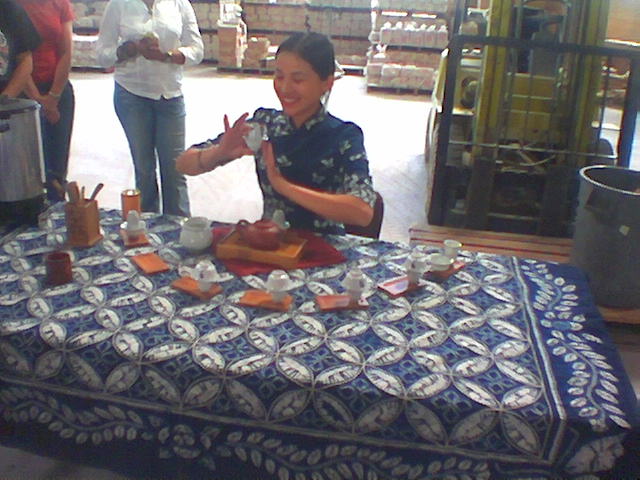
The concept of li (礼, ritual propriety or proper conduct) in Confucian thought further illuminates how guanxi operates in practice. Li originally referred to the elaborate rituals of the Zhou dynasty court but was expanded by Confucius to encompass all forms of social conduct — the proper way to greet a superior, entertain a guest, conduct a negotiation, or express gratitude. In the business context, li manifests as the meticulous attention to protocol, hierarchy, and etiquette that characterizes Chinese commercial culture: the careful exchange of business cards with both hands, the precise seating arrangements at a banquet, the ritual of pouring tea for others before yourself, the elaborate dance of offering and declining gifts. These are not empty formalities but expressions of respect, recognition of status, and demonstrations of one's cultivation (修养, xiūyǎng) — all of which are essential for building the trust that guanxi requires (Yan, 1996). A foreign businessperson who ignores these rituals is not merely committing a faux pas but signaling that they do not understand or respect the relational foundations of Chinese commerce.
The Confucian emphasis on relationships also shaped traditional Chinese attitudes toward law and contracts. In the Western legal tradition, business relationships are primarily governed by written contracts enforced by an impartial legal system — the relationship between the parties is, in theory, irrelevant to the contract's validity. In traditional Chinese thought, by contrast, relationships come first and contracts second: a deal is only as good as the trust between the parties, and a written agreement without underlying guanxi is merely a piece of paper. This does not mean that Chinese business has historically been lawless — on the contrary, imperial China had sophisticated commercial codes and courts — but that personal relationships provided the primary mechanism of trust and enforcement, with legal institutions serving as a backstop rather than a foundation (Yang, 1994). As China's legal system has modernized and strengthened since the 1980s, the relative importance of guanxi versus formal contracts has shifted significantly, but the cultural preference for relational trust over institutional trust remains deeply embedded in Chinese business culture.
Guanxi in Modern Business: Cultivation, Maintenance, and Strategy
Building guanxi is not a one-time transaction but an ongoing process of cultivation that requires patience, sensitivity, and genuine investment of time and emotion. The most common arenas for guanxi-building in Chinese business are banquets, gift exchanges, and the performance of favors — all of which serve to create and reinforce bonds of mutual obligation. The Chinese business banquet (宴会, yànhuì) is perhaps the most important institutional setting for guanxi cultivation. These elaborate meals, which can last three hours or more and involve multiple courses, extensive drinking of baijiu (白酒, grain liquor), and carefully orchestrated toasting rituals, serve functions that go far beyond nutrition. They provide a space for relationship-building that is simultaneously formal and informal: the seating arrangement signals hierarchy, the toasts express respect and aspiration, and the increasingly relaxed atmosphere as the evening progresses allows for the kind of personal disclosure and emotional bonding that is difficult to achieve in the office (Yang, 1994). Many Chinese executives report that the most important business conversations happen not in the boardroom but at the dinner table, after the third or fourth round of toasts.
Gift-giving is another essential tool of guanxi cultivation, but it is governed by a complex set of unwritten rules that unwary foreigners frequently violate. The gift must be appropriate to the relationship: too modest, and it signals indifference; too extravagant, and it creates an uncomfortable obligation or suggests an attempt at bribery. Gifts should generally be presented with both hands, accompanied by self-deprecating remarks about their inadequacy, and the recipient is expected to decline at least once before accepting. Certain items are taboo — clocks (the word for "giving a clock," 送钟 sòng zhōng, sounds like "attending a funeral"), sharp objects (suggesting the severing of a relationship), and gifts in sets of four (四, sì, sounds like "death") — while others are auspicious, particularly items in sets of eight (八, bā, sounds like "prosperity") or gifts of premium tea, fine liquor, or luxury goods that signal respect and good taste (Gold et al., 2002). In recent years, Xi Jinping's anti-corruption campaign has significantly constrained the culture of gift-giving, particularly between business executives and government officials, but among private-sector peers and in interpersonal relationships, the practice remains deeply embedded.
The strategic dimension of guanxi cannot be overlooked. Successful Chinese entrepreneurs do not simply accumulate relationships randomly but cultivate their networks with deliberate intentionality, investing most heavily in relationships that offer the greatest potential for mutual benefit. This strategic calculus involves assessing not only the direct value of a potential guanxi partner — their position, resources, and influence — but also the value of their network, since one of the most important functions of guanxi is providing introductions to third parties (Bian, 1997). A well-connected intermediary who can make introductions across industries, between the private and public sectors, or between Chinese and foreign entities is an extraordinarily valuable guanxi asset. The concept of mianzi (面子, face) adds another strategic layer: doing someone a favor in a way that enhances their face — publicly, visibly, and at some cost to oneself — creates a particularly strong bond of obligation, while causing someone to lose face, even unintentionally, can destroy a relationship beyond repair. The interplay of guanxi, renqing, mianzi, and strategic calculation creates a social landscape of remarkable complexity — one that Chinese businesspeople navigate intuitively from childhood but that foreign executives often find bewildering and exhausting.
"Do not do unto others what you would not have them do unto you."
Confucius, Analects (论语)Discuss with Jason
Want to talk this article through?
Jason discusses the article with you, quizzes you on it and teaches you words from it.
Sign in free to ask. New accounts start with 300 AI credits.
The Fine Line: Guanxi, Corruption, and the Gray Zone
The relationship between guanxi and corruption is one of the most sensitive and consequential issues in contemporary Chinese business culture. At its best, guanxi is a form of social capital that reduces transaction costs, builds trust, and enables cooperation in environments where formal institutions are weak or unreliable. At its worst, it shades into cronyism, nepotism, and outright bribery — the exchange of favors for money, the awarding of contracts to personal connections rather than the most qualified bidder, the use of relationships with government officials to circumvent regulations or secure unfair advantages. The boundary between legitimate relationship-building and corrupt practice is not always clear, and Chinese business culture has long contained a gray zone in which practices that Westerners would consider corrupt are understood by participants as normal and even necessary expressions of guanxi (Fan, 2002). This gray zone has been the source of enormous friction in cross-cultural business encounters, and it has also been the target of increasingly aggressive anti-corruption enforcement by the Chinese government.
President Xi Jinping's anti-corruption campaign, launched in 2012, represents the most sustained and far-reaching effort to police the guanxi-corruption boundary in Chinese history. The campaign has resulted in the investigation and punishment of over a million officials, including dozens of high-ranking "tigers" (老虎, lǎohǔ) at the ministerial level and above. It has also targeted the private-sector practices that enabled corruption: lavish banquets with government officials have been curtailed by regulations limiting the number of courses and banning expensive liquor; gift-giving to officials has been severely restricted; and the use of intermediaries to channel bribes through guanxi networks has been criminalized more aggressively (Gold et al., 2002). The campaign has had a measurable impact on business culture: surveys of foreign and domestic executives report that bribery and gift-giving to officials have declined significantly, and that formal procurement processes and competitive bidding have become more prevalent. However, critics argue that the campaign has also increased uncertainty and risk for businesspeople who are unsure where the new lines are drawn, and that selective enforcement has been used as a political weapon against Xi's rivals.
The challenge for contemporary Chinese business is to preserve the genuine social and economic benefits of guanxi while eliminating its corrupt manifestations. This is not simply a matter of enforcement but of cultural evolution. Some scholars argue that as China's legal and institutional framework continues to mature — as courts become more independent, property rights more secure, and regulatory processes more transparent — the functional need for guanxi as a substitute for institutional trust will diminish, and the practice will gradually evolve into something more closely resembling Western-style networking (Guthrie, 1998). Others contend that guanxi is so deeply embedded in Chinese culture and social psychology that it will persist regardless of institutional development, adapting its forms to new conditions while retaining its essential character as a system of relational trust and mutual obligation (Yang, 1994). The truth likely lies somewhere between these positions: guanxi is neither an immutable cultural essence nor a mere artifact of institutional weakness, but a living social practice that is continually shaped by the interaction of culture, institutions, and individual agency.
Guanxi and Western Networking: Similarities and Differences
Western observers often ask whether guanxi is simply the Chinese equivalent of networking, and the answer is both yes and no. The similarities are real: in both traditions, personal relationships facilitate business transactions, access to information and opportunities flows through social networks, and who you know matters alongside what you know. The "old boy network" of elite British institutions, the fraternity connections of American corporate culture, and the elaborate relationship-building rituals of European business all share functional similarities with guanxi. But the differences are at least as significant as the similarities, and they reflect fundamental divergences in cultural values, social organization, and institutional context. In Western business culture, networking is generally understood as a professional activity — you build business contacts for business purposes, and the relationship is primarily instrumental. In Chinese guanxi culture, the relationship is holistic: it encompasses personal, emotional, and familial dimensions alongside the commercial, and it carries moral obligations that extend beyond any specific transaction (Gold et al., 2002).
The temporal dimension of guanxi also differs markedly from Western networking. Western business relationships tend to be present-focused and relatively short-lived: they form around specific projects, transactions, or career stages and dissolve when those contexts change. Guanxi relationships, by contrast, are expected to endure across time and circumstance. A classmate from university, a colleague from an early career posting, a neighbor from one's hometown — these relationships carry weight decades after they were formed, and the obligation to respond to requests from such connections remains active even when there has been no contact for years. The Chinese concept of tóngxué (同学, classmate), tóngshì (同事, colleague), and lǎoxiāng (老乡, someone from the same hometown) identifies the three most common bases for lasting guanxi bonds, and alumni networks, professional associations, and hometown associations serve as institutional scaffolding for maintaining these connections (Bian, 1997). The depth and durability of guanxi relationships create a form of social capital that is, in many respects, more robust and reliable than the relatively thin ties of Western professional networking.
Perhaps the most profound difference between guanxi and Western networking lies in their relationship to formal institutions. In advanced Western economies, the legal system, regulatory framework, and institutional norms provide a baseline of trust that enables strangers to do business with one another: you can sign a contract with someone you have never met, confident that courts will enforce its terms. In this institutional environment, personal relationships are a valuable complement to formal structures but not a substitute for them. In China, where the legal system is less predictable, regulatory enforcement is more discretionary, and government officials wield enormous power over business outcomes, guanxi has historically served as a functional substitute for institutional trust — a way of creating reliable expectations in an environment where formal rules alone cannot be depended upon (Guthrie, 1998). This explains why guanxi tends to be most important precisely where institutions are weakest — in dealings with government agencies, in industries subject to heavy regulation, and in regions where the rule of law is less firmly established. As China's institutions continue to develop, the relative importance of guanxi may shift, but the cultural preference for relational trust is unlikely to disappear entirely, any more than the importance of personal connections has disappeared from Western business despite centuries of institutional development.
"A fence needs three stakes; a good man needs three helpers."
Chinese proverb (谚语)The Future of Guanxi in a Digital Age
The rise of digital technology is transforming guanxi in ways that would have been unimaginable even a decade ago. WeChat (微信, Wēixìn), the super-app that serves as China's dominant platform for messaging, social media, payments, and business communication, has become the primary infrastructure for maintaining guanxi relationships in the digital age. With over 1.3 billion monthly active users, WeChat has made it possible to maintain vastly larger guanxi networks than were feasible in the era of face-to-face banquets and physical gift-giving. The exchange of red envelopes (红包, hóngbāo) via WeChat — digital gifts of money that can be sent to individuals or scattered in group chats — has created a new, digitized form of guanxi cultivation that preserves the logic of reciprocal gift-giving while dramatically reducing the time and cost involved (Bian, 1997). Business executives now routinely maintain WeChat groups for their professional networks, sharing articles, offering congratulations on holidays and achievements, and engaging in the constant low-level social maintenance that guanxi requires — all from their phones.
The digital transformation of guanxi raises important questions about whether the practice is being strengthened or diluted by technology. On one hand, digital tools make it easier to maintain a larger number of relationships with less effort, extending the reach of one's guanxi network beyond what was possible through in-person interaction alone. On the other hand, digital communication lacks the richness, intimacy, and ritual significance of face-to-face encounters — a WeChat message cannot replicate the bonding power of a three-hour banquet with baijiu, and a digital red envelope of 88 yuan does not carry the same weight as a carefully selected luxury gift presented in person. Some scholars argue that digital guanxi is "thin" compared to traditional guanxi — useful for maintaining weak ties and circulating information, but insufficient for building the deep trust and strong obligation that characterize the most valuable guanxi relationships (Fan, 2002). The COVID-19 pandemic, which forced Chinese business culture to shift heavily toward digital interaction, provided a natural experiment in this regard, and the rapid return to face-to-face banqueting and gift-giving after restrictions were lifted suggests that the in-person dimension of guanxi remains culturally essential.
Looking ahead, the future of guanxi will be shaped by the intersection of cultural continuity and institutional change. Younger generations of Chinese professionals, educated in an era of greater economic openness and exposed to Western business norms through study abroad and multinational employment, tend to practice guanxi differently from their parents' generation — more selectively, more professionally, and with less tolerance for the corruption and cronyism that have historically accompanied the practice. At the same time, the fundamental cultural values that underlie guanxi — the priority of relationships over rules, the importance of mutual obligation and reciprocity, the centrality of trust and face in social and commercial life — show no sign of disappearing. The most likely future is one in which guanxi continues to evolve, as it has for millennia, adapting its forms and practices to new technological, institutional, and generational realities while retaining its essential character as the invisible currency of Chinese social and commercial life (Yang, 1994). For anyone seeking to do business in China, understanding guanxi will remain not merely useful but indispensable — the price of entry into a commercial culture that has been built, for over two thousand years, on the foundation of human relationships.
Quiz
What does the term guanxi primarily refer to in Chinese business culture?
How does the concept of li relate to guanxi in Chinese business practices?
What is one reason why guanxi is considered different from Western networking?
What role does WeChat play in modern guanxi maintenance?
How does guanxi influence business transactions in China?
What is a common setting for cultivating guanxi in Chinese business?
What impact has Xi Jinping's anti-corruption campaign had on guanxi practices?
What is a potential future trend for guanxi according to the article?
Write your thoughts, then get feedback from Jason — you can turn any answer into a full discussion.
9. Why do you think guanxi might be more important in areas where formal institutions are weak?
10. How might the use of digital platforms like WeChat change the traditional practices of guanxi?
Frequently Asked Questions
Common questions about Guanxi: The Invisible Currency of Chinese Business
What is guanxi in Chinese business culture?
Guanxi (关系) refers to the complex network of personal relationships, mutual obligations, and reciprocal favors that form the foundation of Chinese business culture. Unlike simple networking in the West, guanxi involves deep moral obligations and trust that can span generations and influence everything from deal-making to hiring decisions.
How is guanxi different from Western networking?
While Western networking focuses on transactional contacts and professional connections, guanxi involves a deeper moral bond characterized by long-term mutual obligation and reciprocity. In guanxi relationships, there is an implicit social ledger of favors given and received, and the relationship carries expectations that extend well beyond individual business transactions.
Why is guanxi important for doing business in China?
Guanxi is essential because Chinese business culture prioritizes relational trust over institutional mechanisms like contracts and legal frameworks. Without strong guanxi connections, foreign companies often struggle to access decision-makers, navigate bureaucratic processes, or build the trust necessary to close deals in the Chinese market.
What is the role of face (mianzi) in guanxi relationships?
Face, or mianzi (面子), is closely intertwined with guanxi as it represents a person's social reputation, prestige, and dignity within their network. Giving face by showing respect and public recognition strengthens guanxi bonds, while causing someone to lose face can permanently damage or destroy a business relationship.
Is guanxi still relevant in modern Chinese business?
Yes, guanxi remains highly relevant in modern China, though its role has evolved as the country's legal and institutional frameworks have strengthened. While younger Chinese professionals may rely more on formal contracts and digital platforms, guanxi continues to be a critical factor in navigating business relationships, government interactions, and market access throughout China.