
Podcast


Podcast: The Canton System: When Guangzhou Was the World's Gateway to China
Listen to Jason & Amy discuss The Canton System: When Guangzhou Was the World's Gateway to China
New here?
Origins: Why China Restricted Trade to a Single Port
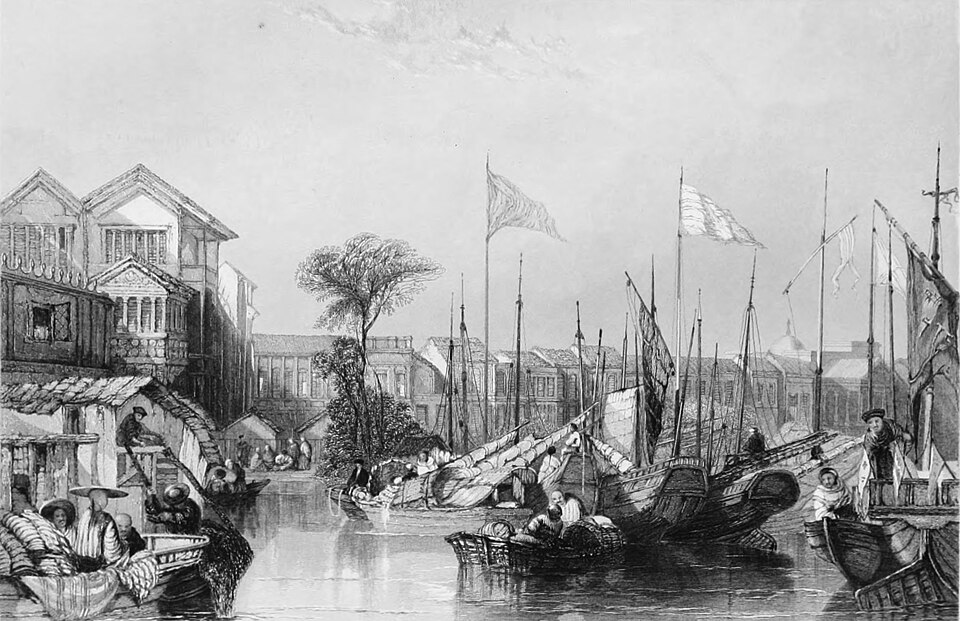
The Canton System did not emerge suddenly but evolved from a long history of Chinese ambivalence toward maritime trade with foreign powers. Since at least the Ming dynasty (1368–1644), Chinese emperors had oscillated between encouraging and restricting overseas commerce, reflecting a deep tension within Chinese statecraft between the economic benefits of trade and the security risks posed by uncontrolled contact with foreigners. The haijin (海禁, sea ban) policies of the early Ming had closed China's coastline entirely, while the subsequent relaxation under the Kangxi Emperor (r. 1661–1722) had opened four ports to foreign trade: Guangzhou, Xiamen, Ningbo, and a customs station on the Yun River in Jiangsu. The decisive turn came in 1757, when the Qianlong Emperor issued an edict restricting all Western maritime trade to the single port of Guangzhou (Van Dyke, 2005). The immediate trigger was a dispute over British merchants' attempts to trade at Ningbo, which the emperor saw as an attempt to circumvent the customs regulations and security controls that had been established at Guangzhou, but the deeper motivation was the court's desire to manage the "barbarian" merchants at arm's length while still capturing the revenues their trade generated.
The Qianlong Emperor's restriction was pragmatic rather than xenophobic — or at least, it was both. Guangzhou was chosen as the sole port for Western trade because it was geographically remote from the political heartland of the empire, reducing the risk that foreign influence would contaminate the court or the capital. It was also a city with centuries of experience in managing foreign commerce: Arab, Persian, Indian, and Southeast Asian merchants had traded there since the Tang dynasty, and the city had developed administrative structures and commercial expertise that could be adapted to handle the growing volume of European trade. The edict created what historians call the "Canton System" — a comprehensive regulatory framework that governed every aspect of Western merchants' interactions with China, from where they could live and trade to whom they could speak and what they could buy and sell (Fairbank, 1953). The system was designed to maximize the Chinese government's control over foreign trade while extracting the maximum possible revenue, and in both respects it was remarkably successful for nearly a century.
The Canton System should be understood not as an isolated Chinese peculiarity but in the context of global trade regulation in the eighteenth century. Mercantilist European powers routinely restricted trade to specific ports, chartered monopoly companies to control commerce, and imposed elaborate customs regimes — the British East India Company, the Dutch VOC, and the French Compagnie des Indes all operated under frameworks that were, in their own ways, as restrictive as the Canton System. What made the Canton System distinctive was the asymmetry of power between the Chinese state and the foreign merchants who operated within it: while the British government could pressure the East India Company to modify its policies, it had no leverage over the Qing court, which viewed the foreign merchants not as partners or equals but as tribute-bearing supplicants whose access to the Chinese market was a privilege that could be withdrawn at any time (Van Dyke, 2005). This fundamental mismatch in how the two sides understood the commercial relationship would eventually lead to the catastrophic rupture of the Opium Wars.
The Cohong: China's First Merchant Princes
At the heart of the Canton System were the Cohong (公行, gōngháng) merchants — a small, government-licensed cartel of Chinese traders who held the exclusive right to conduct business with foreigners. At any given time, there were between six and thirteen Cohong firms, each headed by a merchant who had purchased his license from the government at considerable expense and who bore personal responsibility for the conduct of the foreign traders assigned to his firm. The Cohong merchants served as intermediaries in every sense: they purchased foreign imports (principally silver, furs, cotton, opium, and sandalwood), sold Chinese exports (primarily tea, silk, porcelain, and rhubarb), collected customs duties on behalf of the government, guaranteed the behavior of foreign merchants, and served as translators, cultural brokers, and dispute mediators (Van Dyke, 2005). Their position was simultaneously privileged and precarious: the profits of the Canton trade made them some of the wealthiest individuals in the world, but they were also personally liable for any misbehavior by their foreign counterparts and subject to ruinous fines, confiscation of property, or even exile if they displeased the authorities.
The greatest of the Cohong merchants was Howqua (伍秉鉴, Wǔ Bǐngjiàn, 1769–1843), whose firm Ewo (怡和行) dominated the Canton trade for over three decades and whose personal fortune has been estimated at $26 million in contemporary U.S. dollars — making him, by some calculations, the richest man in the world during the 1830s. Howqua's success rested on a combination of commercial acumen, relationship management, and strategic generosity: he was known for his scrupulous honesty, his willingness to absorb losses to preserve relationships with foreign partners, and his extraordinary personal charm. American merchants who dealt with Howqua consistently described him as the most trustworthy and likeable businessman they had ever encountered, and several maintained personal friendships with him that lasted decades (Haddad, 2014). His portrait, painted by the Chinese artist Lamqua, hung in the Boston Athenaeum and the Peabody Essex Museum — a testament to the personal connections that crossed cultural and political boundaries even within the rigid structure of the Canton System.
The Cohong system created a distinctive business culture that combined Chinese and Western commercial practices in novel ways. The Cohong merchants adopted some Western accounting methods and business conventions while maintaining traditional Chinese practices of relationship-based commerce. Contracts between Cohong merchants and their foreign counterparts were often oral rather than written, sealed by a handshake and the merchant's personal reputation rather than by legal documents enforceable in court. Disputes were resolved through negotiation and mediation rather than litigation, with the Cohong merchant serving as the primary arbitrator. This system worked remarkably well as long as both sides operated in good faith, but it was vulnerable to exploitation by unscrupulous actors on both sides — foreign merchants who smuggled goods to avoid customs duties, and Chinese officials who demanded bribes and "contributions" that squeezed the Cohong merchants between the government above and the foreign traders below (Fairbank, 1953). Several Cohong firms went bankrupt under these pressures, their merchants imprisoned or exiled for debts they had incurred not through commercial failure but through the extortionate demands of corrupt officials.
"Our Celestial Empire possesses all things in prolific abundance and lacks no product within its borders."
Qianlong Emperor, letter to King George III (1793)The Thirteen Factories: A World in Miniature
The physical space in which the Canton trade was conducted was as carefully regulated as its commercial arrangements. Foreign merchants were confined to a narrow strip of land along the Pearl River waterfront, outside the walls of the city of Guangzhou, in a compound known as the Thirteen Factories (十三行, Shísānháng). Despite the name, the number of "factories" — the term derives from the Portuguese word feitoria, meaning a trading post or commercial agent's office, not an industrial facility — varied over time, and the compound eventually housed the trading establishments of the British, Dutch, French, American, Swedish, Danish, Spanish, and other national communities. Each factory consisted of a series of buildings arranged around courtyards, providing offices, warehouses, living quarters, and dining rooms for the foreign merchants and their staffs (Van Dyke, 2011). The factories were oriented with their narrow fronts facing the river and their depth extending back from the waterfront, creating long, narrow compounds that could be monitored and controlled by Chinese authorities.
Life in the Thirteen Factories was governed by a set of regulations that foreign merchants found increasingly oppressive as the volume and value of trade grew. Foreigners were forbidden to enter the walled city of Guangzhou, to learn the Chinese language, to bring women into the factories, to ride in sedan chairs, or to row on the river for pleasure. They were permitted to visit the flower gardens across the river on three specified days each month, in groups of no more than ten, accompanied by a Chinese interpreter. They were forbidden to communicate with Chinese officials directly, required to route all petitions through their Cohong merchant, and subject to collective punishment for any individual transgression. These restrictions were enforced with varying degrees of rigor — some were routinely flouted, while others were strictly maintained — but collectively they created an atmosphere that foreign merchants compared to genteel imprisonment (Fairbank, 1953). The British, in particular, chafed under these constraints, and their resentment would later serve as a justification, however specious, for the military aggression that ended the Canton System.
Despite the restrictions, the Thirteen Factories were a remarkably cosmopolitan and commercially vibrant community. The factories were furnished in a hybrid style that reflected the cultural exchange taking place within them: Chinese furniture alongside English silver, Canton export porcelain displayed next to Dutch oil paintings, Indian calico curtains framing views of the Pearl River. A distinctive local art industry sprang up to serve the foreign community, producing export paintings, reverse glass paintings, and ivory miniatures that depicted scenes of Canton life for the European and American market. The factories also generated a thriving service economy of compradors, linguists, shroffs (money-changers), coolies, servants, and pilots, creating a class of Chinese workers whose livelihoods depended on the foreign trade (Van Dyke, 2011). The pidgin English that developed as the lingua franca of the factories — a blend of English, Portuguese, Malay, Cantonese, and Hindi — was itself a testament to the multicultural character of this tiny enclave, where the world's most powerful trading nations jostled for advantage in a space no larger than a few city blocks.
Discuss with Jason
Want to talk this article through?
Jason discusses the article with you, quizzes you on it and teaches you words from it.
Sign in free to ask. New accounts start with 300 AI credits.
Tea, Silver, and the Engine of Global Commerce
The commodity that drove the Canton trade — and that made the Canton System one of the most consequential commercial arrangements in world history — was tea. European demand for Chinese tea, which had been a curiosity in the seventeenth century, exploded in the eighteenth century as tea drinking became a daily habit across all social classes in Britain, the Netherlands, and their colonial possessions. By the late eighteenth century, Britain was importing over 20 million pounds of tea annually from China, and tea duties provided roughly ten percent of the British government's total revenue — making the Canton trade a matter of national fiscal importance (Mui and Mui, 1984). The British East India Company held a monopoly on the Britain-China tea trade until 1834, and tea was by far its most profitable commodity, generating the revenues that financed British imperial expansion in India and elsewhere. The Canton System's restriction of this vital trade to a single port and a handful of licensed merchants gave the Chinese side enormous leverage — leverage that the British found increasingly intolerable.
The fundamental problem of the Canton tea trade, from the European perspective, was the balance of payments. China produced tea, silk, and porcelain that Europe desperately wanted, but China wanted almost nothing that Europe produced — or so the Qianlong Emperor memorably informed King George III in 1793, writing that "our Celestial Empire possesses all things in prolific abundance and lacks no product within its borders." The result was a massive and chronic trade deficit that European merchants could only settle with silver — principally Spanish-American silver mined in Mexico and Peru, which flowed across the Pacific and Atlantic to Canton in quantities that alarmed European economists. Between 1700 and 1800, an estimated 100 million Spanish silver dollars flowed into China through the Canton trade, representing one of the largest transfers of wealth in premodern history (Fairbank, 1953). This silver inflow had profound effects on the Chinese economy, fueling commercial expansion and price inflation, but it also created a dangerous dependency on a commodity that China did not control.
The British solution to the silver drain was opium — a solution that was commercially brilliant and morally catastrophic. The East India Company, which controlled opium production in Bengal, began systematically promoting the export of Indian opium to China in the late eighteenth century, using private traders known as "country traders" to maintain the legal fiction that the Company was not directly involved in what was, after all, an illegal trade. Chinese law had prohibited the smoking and importation of opium since 1729, but enforcement was lax, and the drug's addictive properties created a self-reinforcing demand that grew exponentially year after year. By the 1830s, opium imports had reversed the trade balance entirely: silver was now flowing out of China at an alarming rate, causing deflation, fiscal crisis, and social disruption (Mui and Mui, 1984). The Qing court's desperate attempts to suppress the opium trade — culminating in Commissioner Lin Zexu's dramatic confiscation and destruction of over 20,000 chests of British opium in 1839 — provided the pretext for the First Opium War, which destroyed the Canton System and inaugurated a century of unequal treaties, territorial concessions, and national humiliation that still shapes Chinese historical memory and foreign policy today.
"Were it to benefit my country, I would lay down my life; what need is there to avoid calamity or seek advantage?"
Lin Zexu (林则徐)The End of the System: From Lin Zexu to the Treaty of Nanjing
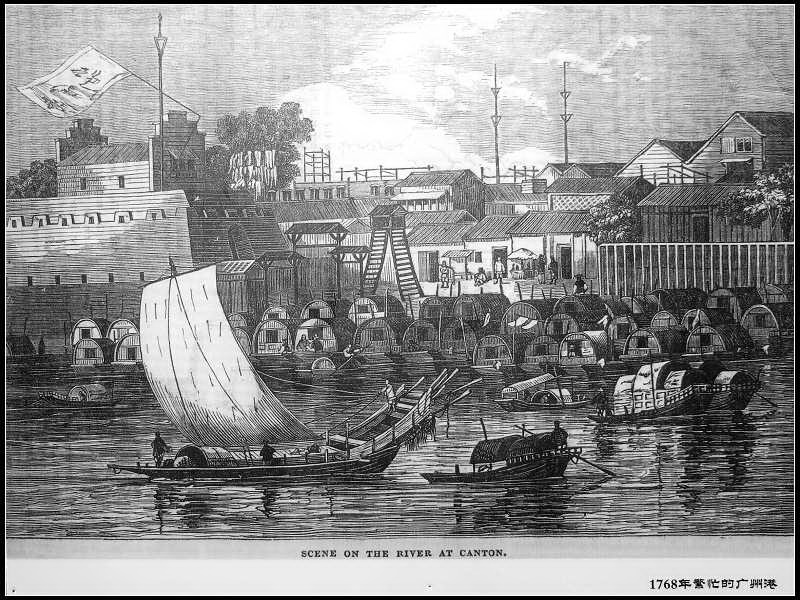
The crisis that destroyed the Canton System had been building for decades, driven by the irreconcilable tension between China's desire to control foreign trade on its own terms and Britain's determination to open the Chinese market to unrestricted commerce — particularly the commerce in opium. The appointment of Lin Zexu (林则徐) as Imperial Commissioner in December 1838, with a mandate to suppress the opium trade, brought this tension to a head. Lin was an unusually capable and incorruptible official who approached the opium problem with characteristic thoroughness. He arrested Chinese opium dealers, ordered the confiscation of opium pipes, demanded that foreign merchants surrender their opium stocks, and — when the British Superintendent of Trade, Captain Charles Elliot, refused to comply — blockaded the Thirteen Factories, trapping the foreign merchants inside without food or servants until they surrendered over 20,000 chests of opium (Lovell, 2011). Lin then supervised the destruction of the confiscated opium in trenches at Humen, mixing it with salt and lime before flushing it into the sea — a dramatic gesture that has become one of the iconic moments of modern Chinese history.
The British response was swift and devastating. In June 1840, a naval expedition of sixteen warships, four armed steamers, and twenty-seven transport ships carrying 4,000 troops arrived off the Chinese coast. The technological disparity between the two sides was enormous: British steam-powered warships with long-range naval guns faced Chinese war junks designed on medieval principles, and British troops armed with modern rifles and artillery confronted Chinese soldiers equipped with matchlock muskets, swords, and bows. The war — if it deserves the name — was a series of one-sided engagements in which British forces captured coastal cities almost at will, sailing up the Yangtze River to threaten Nanjing and cutting the Grand Canal, China's economic lifeline (Lovell, 2011). The Qing court, facing military catastrophe and unable to resupply its armies, sued for peace. Lin Zexu, blamed for provoking the conflict, was stripped of his titles and exiled to the far northwest of the empire — a bitter fate for a man whose actions, by any objective standard, had been both legally justified and morally courageous.
The Treaty of Nanjing, signed on August 29, 1842, abolished the Canton System and opened a new era in China's relations with the Western world — an era that Chinese historians call the "Century of Humiliation" (百年耻辱, bǎinián chǐrǔ). The treaty's terms were sweeping: five ports (Guangzhou, Xiamen, Fuzhou, Ningbo, and Shanghai) were opened to unrestricted foreign trade; the Cohong monopoly was abolished; Hong Kong was ceded to Britain in perpetuity; China was required to pay an indemnity of 21 million silver dollars to cover the cost of the confiscated opium and the war; and a fixed tariff replaced the variable customs duties that had been a source of revenue and complaint under the old system (Fairbank, 1953). Subsequent treaties with France, the United States, and other powers extended these concessions and added new ones, including the principle of extraterritoriality, which exempted foreigners from Chinese law. The Canton System, for all its restrictions and imperfections, had at least allowed China to manage its foreign trade on its own terms; its destruction opened the door to a half-century of imposed free trade that enriched foreign powers at China's expense and left scars on the national psyche that are still raw today.
The Canton System's Legacy: Lessons for the Global Economy
The Canton System's historical significance extends far beyond the specific details of eighteenth-century trade regulation. It represents one of history's most instructive case studies in the management of cross-cultural commerce, the tensions between free trade and national sovereignty, and the consequences of asymmetric power relationships between trading partners. The system worked, in its own fashion, for nearly a century — mediating an enormous volume of trade between civilizations that held fundamentally different views of commerce, diplomacy, and international relations. The Cohong merchants and their foreign counterparts developed working relationships that, within the constraints of the system, generated enormous wealth for both sides (Van Dyke, 2005). The system's ultimate failure was not primarily commercial but political: it collapsed because the British government was willing to use military force to impose its preferred terms of trade, and because the Qing government lacked the military technology to resist. The lesson — that commercial systems, however ingenious, cannot survive when backed by inferior military power — is one that Chinese strategic thinkers have internalized deeply.
The Canton System also offers insights into the relationship between trade regulation and corruption that remain relevant today. The system's elaborate regulatory framework, designed to control every aspect of foreign trade, created innumerable opportunities for rent-seeking by officials at every level of the bureaucracy. Customs duties were supplemented by a bewildering array of additional fees, surcharges, and "contributions" that multiplied as they passed through the administrative hierarchy, so that the actual cost of doing business in Canton often exceeded the official tariff by several hundred percent. The Cohong merchants, caught between the demands of officials above and foreign traders below, were squeezed relentlessly, and several went bankrupt despite handling enormous volumes of trade (Fairbank, 1953). This pattern — elaborate regulation creating opportunities for corruption that ultimately undermine the system's legitimacy — has echoed through Chinese economic history and remains a challenge in the contemporary Chinese economy, where the tension between regulatory control and market freedom continues to generate friction and, occasionally, crisis.
Perhaps the most enduring legacy of the Canton System is the way it shaped Western perceptions of China as a closed, insular, and backward-looking civilization — perceptions that persisted for over a century and that, in modified form, continue to influence Western attitudes today. The Canton System was, in fact, a sophisticated and largely effective regulatory framework that managed an enormously complex and profitable trade relationship, but its restrictions on foreign movement, communication, and commerce struck European merchants and diplomats as evidence of Chinese arrogance, ignorance, and hostility to the modern world. These perceptions were reinforced by the Qianlong Emperor's famous rejection of British trade overtures in 1793 and by the subsequent military humiliations of the Opium Wars, which seemed to confirm the narrative of a declining civilization unable to adapt to modernity (Haddad, 2014). The irony is that the Canton System was, in its own terms, a remarkably successful exercise in managed trade that generated vast revenues for the Chinese state and enormous profits for the merchants involved — a success that was obscured by the violent manner of its ending and by the self-serving narratives of the imperial powers that destroyed it.
"Do not forget the past, for it serves as a guide for the future."
Strategies of the Warring States (战国策)Quiz
What was the primary reason the Qianlong Emperor restricted trade to Guangzhou?
Who were the Cohong merchants?
What was the main commodity driving the Canton trade?
What was a significant consequence of the opium trade for China?
What was the Thirteen Factories?
How did the Cohong merchants resolve disputes with foreign traders?
What led to the end of the Canton System?
What was one of the lessons from the Canton System's collapse?
Write your thoughts, then get feedback from Jason — you can turn any answer into a full discussion.
9. How might the Canton System have influenced modern perceptions of China's approach to international trade?
10. In what ways did the Canton System reflect the global trade practices of the eighteenth century?
Frequently Asked Questions
Common questions about The Canton System: When Guangzhou Was the World's Gateway to China
What was the Canton System in Chinese trade history?
The Canton System (1757–1842) was a trade policy imposed by the Qing Dynasty that restricted all Western maritime trade to the single port of Guangzhou (Canton). Foreign merchants were required to conduct business exclusively through a small group of licensed Chinese merchants known as the Cohong, who served as intermediaries and guarantors for all commercial transactions.
Why did China restrict trade to only Guangzhou?
The Qing government restricted trade to Guangzhou to maintain control over foreign influence, protect national security, and manage the flow of revenue from international commerce. By funneling all trade through one port with designated intermediaries, the emperor could monitor foreign merchants closely and prevent them from establishing broader footholds in Chinese territory.
Who were the Cohong merchants in Canton?
The Cohong were a select group of Chinese merchants licensed by the Qing government to serve as the sole intermediaries between foreign traders and the Chinese market. These merchants were personally responsible for the conduct of foreign traders, collected customs duties on behalf of the government, and amassed enormous fortunes that made some of them among the wealthiest people in the world.
How did the Canton System lead to the Opium Wars?
The Canton System created mounting frustration among Western traders, particularly the British, who resented the trade restrictions and the massive silver outflows needed to purchase Chinese tea and silk. Britain began smuggling opium into China to rebalance trade, and when Chinese authorities cracked down on the opium trade, it triggered the First Opium War (1839–1842), which ended the Canton System.
What was daily life like for foreign traders in Canton?
Foreign traders in Canton were confined to a small waterfront area called the Thirteen Factories, where they could live and conduct business only during the trading season. They were forbidden from learning Chinese, bringing women into the factories, or venturing into the city itself, creating a unique but highly restricted commercial enclave on the Pearl River.