
Podcast


Podcast: Chinese Zodiac: Twelve Animals and the Cycle of Time
Listen to Jason & Amy discuss Chinese Zodiac: Twelve Animals and the Cycle of Time
New here?
The Origin Legend: The Jade Emperor's Great Race
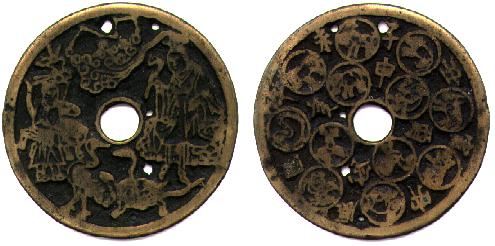
The most beloved explanation for the order of the twelve zodiac animals is the folk legend of the Jade Emperor's Great Race, a story that has been told and retold across China for centuries in countless regional variations. According to the most common version, the Jade Emperor — supreme ruler of Heaven in Chinese folk religion — decreed that time would be measured by a cycle of twelve animals, and that the order would be determined by a race. All the animals of the earth were invited to swim across a great river; the first twelve to reach the opposite bank would earn their place in the zodiac. The ox, diligent and strong, awoke before dawn and was well on his way to winning when the clever rat, who had secretly hitched a ride on the ox's back, leapt ahead at the last moment to claim first place. The tiger arrived third, the rabbit fourth (having crossed by hopping on stones and a floating log), and the dragon — who could have flown to victory but stopped to bring rain to a drought-stricken village — arrived fifth. The sequence continues through the snake, horse, goat, monkey, rooster, dog, and finally the pig, who stopped to eat and nap before completing the crossing (Allan, 1991).
This charming fable functions on multiple levels simultaneously. On the surface, it provides an entertaining and memorable narrative that explains an otherwise arbitrary sequence. More deeply, each animal's behavior in the race encapsulates the personality traits that the zodiac system attributes to people born in that animal's year: the rat's cleverness and opportunism, the ox's steadfastness and reliability, the tiger's courage and competitiveness, and so forth. The legend also encodes moral lessons about the relative values of different character traits — the rat's cunning triumphs over the ox's honest labor, the dragon's compassion costs him the lead but earns admiration — creating a nuanced taxonomy of human behavior that avoids simple judgments of good and bad (Smith, 2012). The absence of the cat from the zodiac — explained in many versions by the rat's treachery in failing to wake the cat for the race, or in deliberately pushing the cat into the river — provides a mythological explanation for the enmity between cats and rats, adding a comic flourish to an already engaging narrative.
Scholars have debated the historical origins of the twelve-animal cycle extensively, with theories ranging from indigenous Chinese development to Central Asian influence. The earliest known reference to a complete twelve-animal cycle appears on bamboo strips from the Qin dynasty tomb at Shuihudi, dating to approximately 217 BCE, though the system may be considerably older (Allan, 1991). Some researchers, noting similarities between the Chinese zodiac and animal cycles used by Turkic and Mongol peoples, have proposed a northern nomadic origin, while others argue for independent Chinese development based on indigenous astronomical observations. The correlation between the twelve animals and the twelve Earthly Branches (地支, dìzhī) — a numbering system used in Chinese astronomy since the Shang dynasty — suggests that the animal cycle was initially a mnemonic device grafted onto an existing abstract system to make it more accessible to the general population (Smith, 2012). Whatever its precise origins, the twelve-animal zodiac had become firmly established in Chinese popular culture by the Han dynasty, and from China it spread to Korea, Japan, Vietnam, and other East Asian societies, each of which adapted the system to reflect local cultural preferences.
"The movements of Heaven have their constancy; they do not exist for the sage Yao, nor perish for the tyrant Jie."
Xunzi, "On Heaven"The Twelve Animals and Their Personality Traits
Each of the twelve zodiac animals embodies a distinct constellation of personality traits, strengths, and weaknesses that are believed to characterize people born in that animal's year. The Rat (鼠, shǔ), governing years such as 1984, 1996, and 2008, is associated with cleverness, resourcefulness, and charm, but also with opportunism and restlessness. The Ox (牛, niú), covering years like 1985, 1997, and 2009, represents diligence, dependability, and patience, though ox people may be stubborn and resistant to change. The Tiger (虎, hǔ) symbolizes bravery, confidence, and natural leadership, while tiger people may also be impulsive and prone to conflict. The Rabbit (兔, tù) embodies gentleness, elegance, and diplomacy, with potential tendencies toward timidity and indecision (Eberhard, 1986). These characterizations draw on centuries of observation of the actual animals' behavior, filtered through the lens of Chinese cultural values and applied metaphorically to human personality. The system creates a shared vocabulary for discussing character that transcends social class and educational background.
The Dragon (龙, lóng), uniquely mythological among the twelve animals, holds a position of special prestige in the zodiac. People born in dragon years are believed to be ambitious, energetic, and destined for greatness, making dragon years the most auspicious for childbirth — a belief that produces statistically measurable spikes in birth rates across East Asia during dragon years. The Snake (蛇, shé), often misunderstood in Western cultures, is associated in Chinese tradition with wisdom, intuition, and grace, though snake people may be secretive and possessive. The Horse (马, mǎ) represents freedom, energy, and sociability, while the Goat (羊, yáng) — also translated as sheep or ram — symbolizes creativity, compassion, and artistic sensibility (Smith, 2012). The Monkey (猴, hóu), inevitably linked to the beloved literary character Sun Wukong from Journey to the West, is associated with intelligence, wit, and versatility, balanced by a reputation for mischievousness and unreliability. The Rooster (鸡, jī) represents punctuality, hard work, and courage; the Dog (狗, gǒu) embodies loyalty, honesty, and a strong sense of justice; and the Pig (猪, zhū) is associated with generosity, diligence, and good fortune, though pig people may be naive and overly trusting.
It is important to note that the Chinese zodiac system is far more nuanced than a simple twelve-category personality classification. The year animal provides only the broadest strokes of a person's astrological profile; the month, day, and hour of birth each correspond to additional animals, creating a "Four Pillars of Destiny" (四柱命理, sìzhù mìnglǐ) that yields a complex and individualized reading. The interaction between these four animals, combined with the Five Elements and the yin-yang polarity, produces a system of considerable sophistication that professional fortune-tellers spend years mastering (Lip, 1992). The popular zodiac — which assigns a single animal based on birth year — is thus a dramatic simplification of a much more elaborate system, comparable to knowing only one's sun sign in Western astrology without considering the full natal chart. Nevertheless, the popular zodiac remains enormously influential in everyday Chinese culture, shaping first impressions, guiding social interactions, and providing a readily accessible framework for understanding human diversity.
The Five Elements and the Sexagenary Cycle
The twelve zodiac animals do not cycle in isolation; they interact with the Five Elements (五行, wǔxíng) — Wood, Fire, Earth, Metal, and Water — to create a more complex and nuanced system of time-reckoning. Each element governs two consecutive years, creating a sub-cycle within the twelve-year animal cycle: a Wood Rat year is followed by a Wood Ox year, then a Fire Tiger year, a Fire Rabbit year, and so on. Because the twelve animals and five elements share no common factor, the complete cycle requires 60 years (12 × 5) to return to its starting point, producing what is known as the sexagenary cycle (六十花甲, liùshí huājiǎ). This 60-year cycle, which combines the Ten Heavenly Stems (天干, tiāngān) with the Twelve Earthly Branches (地支, dìzhī), is one of the oldest calendrical systems in continuous use, with evidence of its application dating to the Shang dynasty oracle bones of the second millennium BCE (Smith, 2012). Completing a full sexagenary cycle — reaching one's sixtieth birthday — is a milestone of enormous significance in Chinese culture, traditionally celebrated with a grand banquet at which the honoree receives the congratulations of the entire community.
Each element modifies the base personality of the zodiac animal in characteristic ways, adding layers of complexity to the astrological profile. A Metal Rat, for example, is believed to be more decisive and forceful than a Water Rat, who would be more adaptable and communicative. A Wood Tiger might be more cooperative and idealistic than a Fire Tiger, who would be more passionate and impetuous. The Five Elements also interact with each other according to cycles of generation (生, shēng) and conquest (克, kè): Wood feeds Fire, Fire creates Earth (ash), Earth yields Metal, Metal carries Water (as in a bucket), and Water nourishes Wood, completing the generative cycle. Conversely, Wood penetrates Earth, Earth absorbs Water, Water extinguishes Fire, Fire melts Metal, and Metal cuts Wood, completing the destructive cycle (Lip, 1992). These elemental interactions play a significant role in compatibility analysis, as relationships between people whose elemental affinities are in a generative relationship are considered more harmonious than those whose elements are in a destructive relationship.
The sexagenary cycle's influence extends far beyond personal astrology into the realm of historical consciousness and cultural memory. Major historical events are often referenced by their cyclical year designations: the Xinhai Revolution of 1911 takes its name from its position in the sexagenary cycle (辛亥, xīnhài), as does the Jiawu War (甲午战争, the First Sino-Japanese War of 1894). This naming convention reflects a traditional Chinese conception of time as fundamentally cyclical rather than linear — a worldview in which patterns recur, dynasties rise and fall in predictable sequences, and the lessons of the past are directly applicable to the present because history, in a sense, repeats itself every sixty years (Allan, 1991). The sexagenary cycle also governs the Chinese practice of assigning elements to years for feng shui and fortune-telling purposes, influencing decisions about when to start businesses, begin construction projects, or schedule important life events. Professional fortune-tellers maintain detailed tables correlating each year's Heavenly Stem and Earthly Branch combinations with predicted trends in health, wealth, and social stability, and their prognostications are widely consulted at the beginning of each lunar new year.
"Dragons beget dragons, phoenixes beget phoenixes, and the children of rats know how to dig holes."
Traditional Chinese proverbDiscuss with Jason
Want to talk this article through?
Jason discusses the article with you, quizzes you on it and teaches you words from it.
Sign in free to ask. New accounts start with 300 AI credits.
Zodiac Compatibility in Marriage and Relationships
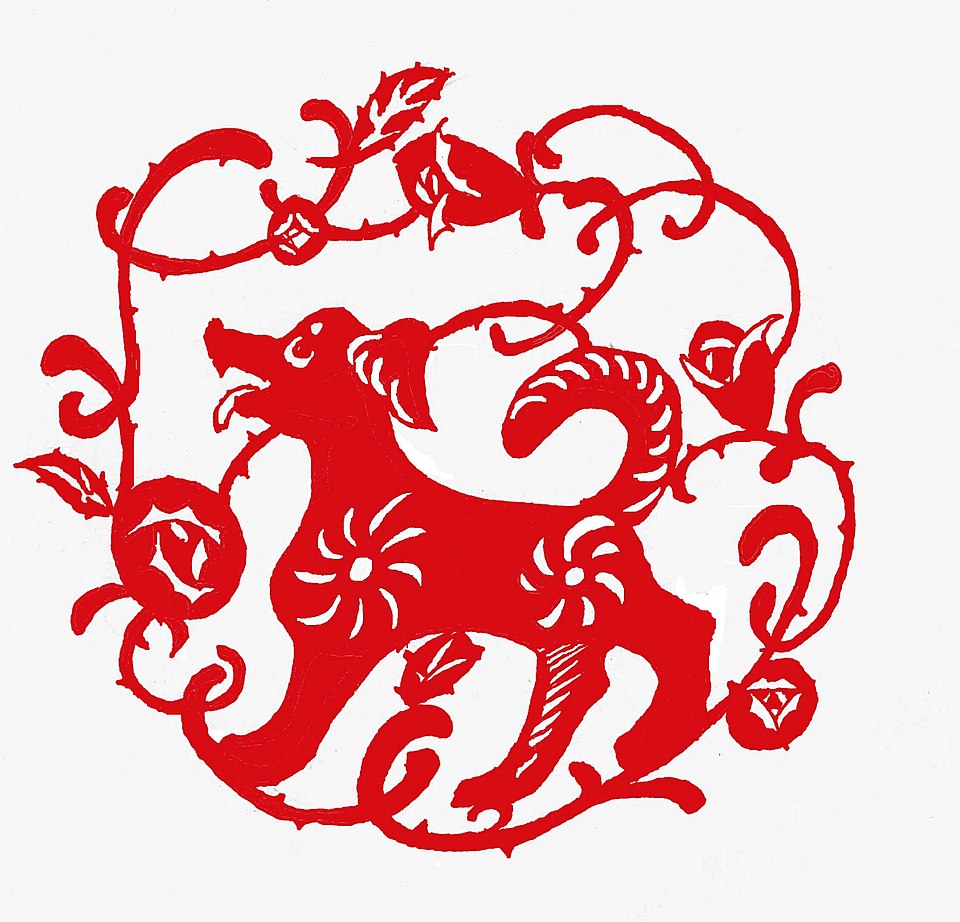
The Chinese zodiac has traditionally played a significant role in marriage decisions, with compatibility between prospective spouses' zodiac signs serving as one of several criteria evaluated before a match could be approved. The traditional system of zodiac compatibility divides the twelve animals into four groups of three, known as "compatible trios" (三合, sānhé): Rat-Dragon-Monkey, Ox-Snake-Rooster, Tiger-Horse-Dog, and Rabbit-Goat-Pig. Marriages between people whose signs fall within the same trio are considered especially auspicious, as the three animals share complementary qualities that promote harmony and mutual support (Lip, 1992). Conversely, animals that are diametrically opposite on the zodiac wheel — separated by six positions — are considered fundamentally incompatible: Rat clashes with Horse, Ox with Goat, Tiger with Monkey, and so forth. These "six clashes" (六冲, liùchōng) were traditionally regarded as grounds for opposing a match, regardless of the couple's personal feelings, because a marriage cursed by zodiac incompatibility was believed to bring misfortune to the entire family.
The practice of zodiac-based matchmaking was formalized in the institution of the "eight characters" (八字, bāzì) compatibility analysis, in which a professional fortune-teller examined the Four Pillars of both prospective spouses to assess their compatibility across multiple dimensions: emotional harmony, financial prospects, likelihood of producing sons, and overall auspiciousness. This analysis went far beyond simple animal sign comparison, incorporating the interactions of Heavenly Stems, Earthly Branches, and Five Elements into a comprehensive assessment that could run to several pages (Smith, 2012). The fortune-teller's verdict carried enormous weight in traditional society, and an unfavorable reading could — and frequently did — prevent marriages between couples who were otherwise well-matched in terms of social status, family background, and personal affection. The emotional cost of these zodiac-based prohibitions is a recurring theme in Chinese literature and opera, where star-crossed lovers separated by astrological incompatibility are stock characters whose suffering implicitly critiques the rigidity of traditional matchmaking customs.
In contemporary China, zodiac compatibility continues to influence romantic decision-making, though its authority has diminished significantly relative to the past. Surveys consistently show that a substantial minority of young Chinese — perhaps 30 to 40 percent — consider zodiac compatibility at least somewhat important in choosing a partner, and online dating platforms in China routinely include zodiac sign information in user profiles (Lip, 1992). Parents and grandparents are more likely than young people themselves to raise zodiac concerns about prospective matches, creating intergenerational tensions that mirror broader conflicts between traditional values and modern individualism. The most dramatic manifestation of zodiac influence on demographic behavior is the "dragon year baby boom" — the statistically significant increase in birth rates during dragon years, as couples time pregnancies to give their children the advantages associated with the most prestigious zodiac sign. Conversely, years of the Goat (or Sheep) traditionally see slightly lower birth rates in some regions, based on the folk belief — rejected by astrologers as a misunderstanding — that goat year children are destined for hardship. These demographic patterns demonstrate that the Chinese zodiac, far from being a mere curiosity or parlor game, continues to exert measurable influence on real-world behavior in one of the world's most rapidly modernizing societies.
Ben Ming Nian: Your Zodiac Year as a Year of Peril
One of the most widely observed zodiac-related customs in contemporary China is the concept of ben ming nian (本命年, běnmìngnián) — one's own zodiac year, which recurs every twelve years. Far from being a cause for celebration, the return of one's birth animal is traditionally regarded as a year of heightened vulnerability and potential misfortune. The underlying belief is that the presiding deity of the year, Tai Sui (太岁, tàisuì), views those born under the same animal as competitors or offenders, subjecting them to particular scrutiny and disfavor. To counteract this cosmic hostility, people in their ben ming nian are advised to wear red undergarments — red socks, red underwear, a red belt, or a red string bracelet — throughout the entire year, as red is believed to ward off evil influences and attract good fortune (Eberhard, 1986). The commercial consequences of this belief are visible every Chinese New Year, when shops display vast quantities of red underwear and accessories specifically marketed to those entering their ben ming nian.
The specific dangers associated with ben ming nian vary by tradition and region, but commonly include financial losses, health problems, relationship difficulties, and career setbacks. People in their zodiac year are advised to exercise extra caution in all matters: avoid unnecessary travel, postpone major decisions, refrain from starting new businesses, and generally adopt a conservative and defensive posture toward life (Lip, 1992). Some traditions recommend visiting a Daoist or Buddhist temple at the beginning of the zodiac year to perform rituals of protection and to petition Tai Sui for clemency. The practice of "paying respects to Tai Sui" (拜太岁, bài tàisuì) involves burning incense and paper offerings at a temple dedicated to the sixty manifestations of Tai Sui — one for each year of the sexagenary cycle — and formally requesting the deity's protection and forbearance. In Hong Kong, the annual Tai Sui ritual at the Yuen Yuen Institute and other temples draws enormous crowds, particularly from those entering their ben ming nian, and temple gift shops do brisk business in protective amulets, red strings, and consecrated charms.
The ben ming nian concept intersects with the broader Chinese belief system of fan tai sui (犯太岁, fàn tàisuì) — offending the Grand Duke Jupiter — which extends beyond one's zodiac year to include years whose animals have a conflicting or clashing relationship with one's birth animal. A person born in the Year of the Rat, for example, should be cautious not only in Rat years (ben ming nian) but also in Horse years (the Rat's opposite on the zodiac wheel), and to a lesser extent in Rabbit years and Rooster years, which also have unfavorable relationships with the Rat (Smith, 2012). This expanded system of zodiac-based caution means that, in any given year, several zodiac signs — not just the current year's sign — are considered to be at risk, dramatically broadening the market for protective measures and fortune-telling services. The persistence of ben ming nian customs among otherwise thoroughly modern and secular Chinese urbanites — tech entrepreneurs in red underwear, bankers wearing red string bracelets beneath their designer suits — illustrates the remarkable resilience of zodiac beliefs and their capacity to coexist with scientific worldviews. These practices function less as statements of literal belief in cosmic forces than as cultural rituals of caution and self-care that provide psychological comfort during periods of perceived vulnerability.
"First comes fate, second luck, third feng shui, fourth accumulated virtue, fifth education."
Traditional folk saying on the five factors of successThe Zodiac in Modern China and Global Culture
The Chinese zodiac has achieved remarkable global visibility in the twenty-first century, transcending its East Asian origins to become a recognizable element of world popular culture. Postal services in dozens of countries issue zodiac-themed stamps for the Chinese New Year, international fashion brands incorporate zodiac motifs into limited-edition collections, and zodiac personality profiles circulate widely on social media platforms worldwide. Within China, the zodiac remains deeply embedded in everyday life in ways that go far beyond folk belief. Chinese state television's annual Spring Festival Gala, watched by hundreds of millions, is themed around the incoming zodiac animal, and commercial marketing campaigns tied to the zodiac animal of the year generate billions of yuan in revenue. The zodiac serves as a shared cultural vocabulary that facilitates social interaction: asking someone their zodiac sign (and thereby indirectly learning their approximate age) is a common icebreaker in Chinese social situations, less intrusive than asking age directly but achieving the same informational purpose (Smith, 2012).
The zodiac's influence on contemporary Chinese economic behavior extends beyond consumer marketing into significant demographic and financial patterns. Research by economists has documented the "dragon premium" — the measurable increase in birth rates during dragon years and the corresponding effects on educational resources, housing demand, and employment competition as dragon year cohorts move through the life cycle. Studies have also found correlations between zodiac beliefs and stock market behavior, with some investors avoiding major transactions during their ben ming nian or timing investments to align with astrologically favorable periods (Lip, 1992). While these patterns do not validate the astrological system per se, they demonstrate the zodiac's real-world economic impact as a driver of human behavior. The Chinese government has adopted a pragmatic stance toward zodiac culture, discouraging what it terms "feudal superstition" (封建迷信) while simultaneously leveraging zodiac imagery in diplomatic soft power initiatives, including zodiac-themed art exhibitions, cultural events, and commemorative coins.
The global spread of the Chinese zodiac raises interesting questions about cultural translation and adaptation. In the West, the zodiac is often encountered as a lighthearted personality typing system, analogous to Western horoscopes, stripped of its deeper cosmological and calendrical context. This superficial engagement overlooks the zodiac's integration with the Five Elements theory, the sexagenary cycle, and the broader framework of Chinese correlative cosmology — a sophisticated intellectual system that sought to understand the universe through systematic correspondences between time, space, natural phenomena, and human affairs (Allan, 1991). Academic scholars of Chinese religion and culture have worked to present the zodiac within this richer context, emphasizing its connections to Chinese philosophy, astronomy, and social organization. Meanwhile, the zodiac continues to evolve within Chinese culture itself: digital fortune-telling apps offer zodiac readings personalized with artificial intelligence, zodiac-themed video games and animated series attract young audiences, and social media influencers build followings around zodiac-based lifestyle advice. The twelve animals, first recorded on bamboo strips in a Qin dynasty tomb over two thousand years ago, show every sign of thriving in the digital age, their symbolic power undiminished by the passage of time.
Quiz
What event determines the order of the animals in the Chinese zodiac according to legend?
Which animal is associated with the trait of cleverness according to the Chinese zodiac?
What is the significance of the Dragon year in East Asian societies?
What is the purpose of the 'Four Pillars of Destiny' in the Chinese zodiac system?
How does the sexagenary cycle influence Chinese historical consciousness?
Which zodiac sign is considered incompatible with the Rat in marriage compatibility?
What is the traditional belief about one's ben ming nian, or zodiac year?
What is one way the Chinese zodiac has influenced global culture?
Write your thoughts, then get feedback from Jason — you can turn any answer into a full discussion.
9. How might the legend of the Jade Emperor's Great Race reflect cultural values in Chinese society?
10. In what ways does the sexagenary cycle illustrate the concept of time in Chinese culture?
Frequently Asked Questions
Common questions about Chinese Zodiac: Twelve Animals and the Cycle of Time
What are the 12 animals of the Chinese zodiac in order?
The twelve animals of the Chinese zodiac in order are: Rat, Ox, Tiger, Rabbit, Dragon, Snake, Horse, Goat (or Sheep), Monkey, Rooster, Dog, and Pig. Each animal rules one year in a repeating twelve-year cycle, and the cycle is believed to have been established during the Han dynasty around 200 BCE.
How does your Chinese zodiac animal affect your personality?
Each zodiac animal is associated with specific personality traits rooted in centuries of folk observation and cosmological theory. For example, those born in the Year of the Dragon are considered ambitious and charismatic, while Rabbit years produce people thought to be gentle and diplomatic, though modern interpretations treat these associations more as cultural tradition than literal destiny.
Why is the Dragon the most popular Chinese zodiac sign?
The Dragon holds a uniquely exalted position in Chinese culture as the only mythical creature in the zodiac and a symbol of imperial power, strength, and extraordinary good fortune. Birth rates in China and across East Asia consistently spike during Dragon years, as parents hope their children will inherit the Dragon's auspicious qualities.
How does the Chinese zodiac influence marriage compatibility?
Traditional Chinese astrology holds that certain zodiac pairings are naturally harmonious while others are conflicting. For instance, the Dragon and Rat are considered highly compatible, while the Rat and Horse are thought to clash. Many families still consult zodiac compatibility charts before approving marriages, particularly in more traditional communities.
What is your Chinese zodiac sign if you were born in January or February?
Because the Chinese zodiac follows the lunar calendar, the new zodiac year does not begin on January 1 but rather on the first day of the Chinese New Year, which falls between late January and mid-February. If you were born in January or early February, you may actually belong to the previous year's zodiac animal depending on the exact date of Chinese New Year that year.