
Podcast


Podcast: Reform and Opening Up: The Making of Modern China
Listen to Jason & Amy discuss Reform and Opening Up: The Making of Modern China
New here?
The State of the Nation
When Mao Zedong died on September 9, 1976, he left behind a nation in ruins. The Great Leap Forward of 1958–1962 had caused a famine that killed an estimated 30 to 45 million people — the deadliest man-made catastrophe in human history. The Cultural Revolution of 1966–1976 had destroyed the education system, persecuted millions of intellectuals, and reduced the economy to chaos. China's per capita GDP in 1978 was approximately $156 — lower than most of sub-Saharan Africa. Roughly 88 percent of the population lived in the countryside, many in conditions of desperate poverty (Dikötter, 2010).
The contrast with China's neighbors was humiliating. Japan, devastated by war in 1945, had become the world's second-largest economy. South Korea and Taiwan, once poorer than many Chinese provinces, were industrializing rapidly. Even within the socialist bloc, China lagged behind. The nation that had invented paper, printing, gunpowder, and the compass was, by the late 1970s, one of the poorest countries on earth.
Yet within this devastation lay the seeds of change. The very extremity of Mao's failures created a constituency for reform that crossed ideological lines. Cadres who had been purged during the Cultural Revolution wanted rehabilitation. Peasants who had been collectivized into communes wanted to farm their own land. Intellectuals who had been sent to labor camps wanted to return to their research. The question was not whether change was needed but who would lead it — and how far it would go.
Black Cat, White Cat
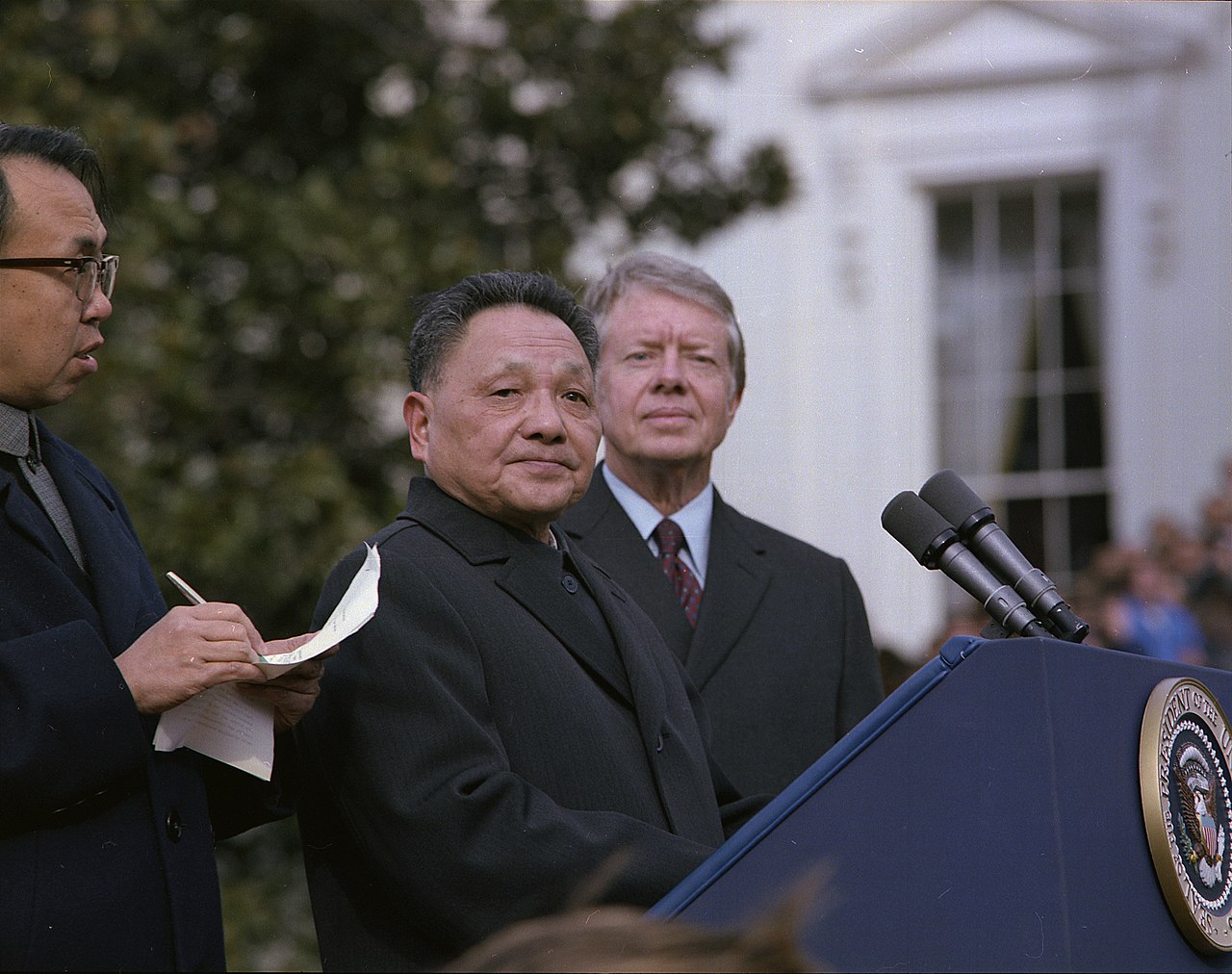
The answer came in the person of Deng Xiaoping, a diminutive, chain-smoking veteran revolutionary who had been purged twice during the Cultural Revolution and rehabilitated twice — a survivor of almost superhuman resilience. By December 1978, Deng had consolidated enough power to convene the Third Plenum of the Eleventh Central Committee, a meeting that would prove to be the most consequential political event in modern Chinese history. The plenum formally shifted the Chinese Communist Party's priority from class struggle to economic development, launching what became known as 改革开放 (gǎigé kāifàng) — Reform and Opening Up (Vogel, 2011).
Deng's philosophy was captured in a phrase he had first used in the 1960s, which became the unofficial slogan of the reform era: "It doesn't matter if a cat is black or white, as long as it catches mice." The statement was a direct repudiation of Maoist ideological purity. Where Mao had insisted that correct political consciousness was more important than material results, Deng argued that results were all that mattered. Socialism was not a fixed doctrine but a pragmatic project, to be judged by its ability to improve people's lives.
This pragmatism was revolutionary precisely because it refused to be revolutionary. Deng did not propose to overthrow the Communist Party or abandon socialism. He proposed to empty those categories of their Maoist content and refill them with whatever policies actually worked. Private enterprise was not capitalist exploitation — it was "socialism with Chinese characteristics." Foreign investment was not imperialist penetration — it was a tool for national development. The ideological contortions were transparent, but they provided the political cover for changes that would have been unthinkable under Mao.
"It doesn't matter if a cat is black or white, as long as it catches mice it is a good cat."
Deng XiaopingThe Shenzhen Experiment
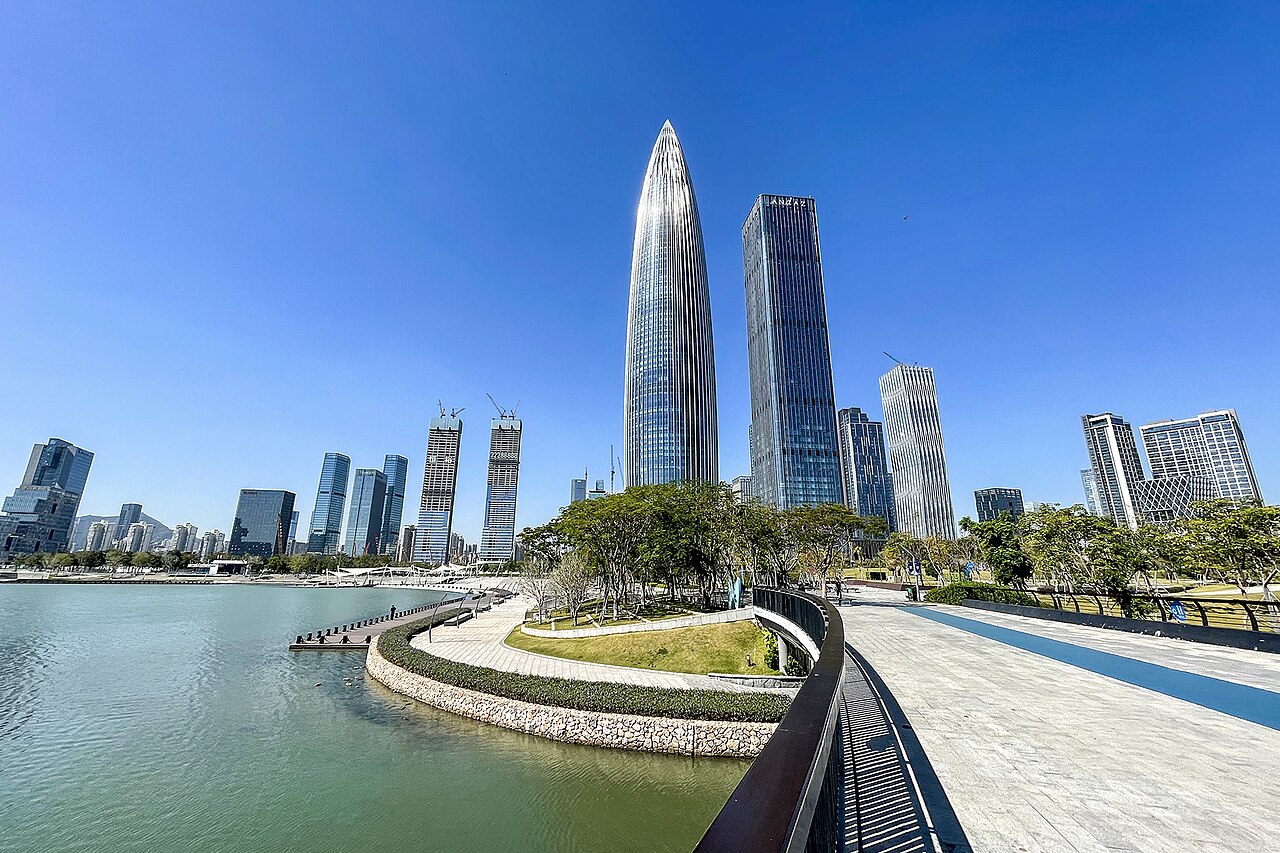
The most visible symbol of Reform and Opening Up was the Special Economic Zone — and the most dramatic of these was Shenzhen. In 1979, Shenzhen was a fishing village of roughly 30,000 people on the border with Hong Kong. The government designated it a Special Economic Zone where foreign investment, private enterprise, and market pricing would be permitted on an experimental basis. It was reform by controlled experiment — if the approach worked, it could be expanded; if it failed, the damage would be contained.
The approach worked beyond anyone's expectations. Foreign capital, initially from Hong Kong and later from around the world, poured into Shenzhen. Factories producing electronics, textiles, and consumer goods sprang up almost overnight. The population exploded as millions of migrant workers left the countryside for the promise of factory wages. By 1990, Shenzhen's population had surpassed one million. By 2020, it exceeded 17 million, and the city had become a global technology hub home to companies like Huawei, Tencent, and BYD (Vogel, 2011).
The SEZ model was replicated across the country. Zhuhai, Shantou, Xiamen, and eventually Hainan Island were designated as Special Economic Zones. Fourteen coastal cities were opened to foreign investment. The Pudong district of Shanghai was transformed from farmland into a forest of skyscrapers that rivals Manhattan. Each experiment built on the last, creating a cascade of development that rolled from the coast inward, drawing hundreds of millions of people into the urban industrial economy.
Discuss with Jason
Want to talk this article through?
Jason discusses the article with you, quizzes you on it and teaches you words from it.
Sign in free to ask. New accounts start with 300 AI credits.
Crossing the River by Feeling the Stones
Deng Xiaoping's approach to reform was captured in another famous metaphor: "Cross the river by feeling the stones." Rather than implementing a comprehensive blueprint for transformation — as Russia would attempt with disastrous "shock therapy" in the 1990s — China proceeded incrementally, testing each step before committing to the next. The approach was cautious, pragmatic, and brilliantly suited to the political constraints Deng faced within the Communist Party.
Agricultural reform came first and most naturally. In 1978, a group of eighteen farmers in the village of Xiaogang, Anhui province, secretly signed a contract dividing collective land among individual households — an act that was technically illegal and potentially punishable by death. When their harvests increased dramatically, local officials looked the other way. When the results came to the attention of senior leaders, Deng endorsed the experiment. The Household Responsibility System, which allowed farmers to sell surplus production on the open market after meeting state quotas, spread across the country within a few years. Agricultural output surged, and rural poverty began its historic decline (Naughton, 2007).
Industrial reform followed a similar pattern of experimentation and gradual expansion. Township and Village Enterprises — collectively owned businesses that operated on market principles — filled the gap between state-owned industry and the not-yet-legalized private sector. Dual-track pricing allowed state enterprises to sell above-quota production at market prices. Each reform created constituencies for further reform. Farmers who profited from household plots supported market pricing. Factory managers who earned bonuses for exceeding targets supported enterprise autonomy. The process was messy, inconsistent, and riddled with corruption — but it worked.
"Cross the river by feeling the stones."
Chinese proverb, popularized by Deng XiaopingThe Staggering Results
The statistical record of China's transformation defies easy comprehension. Between 1978 and 2020, China's GDP grew from $150 billion to over $14.7 trillion — a hundredfold increase in four decades. Per capita income rose from $156 to over $10,000. More than 800 million people were lifted out of extreme poverty, the largest and fastest poverty reduction in human history. Life expectancy increased from 66 years to 77 years. Literacy rates rose from 66 percent to over 96 percent (World Bank, 2021).
The physical transformation of the country was equally dramatic. China built the world's largest high-speed rail network — over 40,000 kilometers of track connecting every major city. It constructed more skyscrapers than the rest of the world combined. Its manufacturing sector became the largest on earth, producing everything from steel and cement to smartphones and solar panels. The country went from having virtually no private automobiles to becoming the world's largest car market.
China's integration into the global economy reshaped international trade patterns. Its accession to the World Trade Organization in 2001 accelerated a process already well underway. By 2010, China had surpassed Japan to become the world's second-largest economy. By 2013, it had become the world's largest trading nation. Chinese demand for raw materials drove commodity booms across Africa, Latin America, and Australia. Chinese manufactured goods flowed to every corner of the planet. The "workshop of the world" label that had once applied to Victorian Britain now belonged to twenty-first-century China.
The Price of Transformation
The achievements of Reform and Opening Up are extraordinary, but they came at significant cost. Environmental degradation has been severe: China became the world's largest emitter of greenhouse gases, its cities suffered from choking air pollution, and decades of rapid industrialization contaminated rivers, soil, and groundwater across wide swaths of the country. The environmental debt accumulated during the reform era will take generations to address (Economy, 2004).
Income inequality, which Mao had suppressed through universal impoverishment, surged to levels comparable to the United States. The gap between wealthy coastal cities and the impoverished interior became a defining feature of Chinese society. Hundreds of millions of migrant workers who powered factory production lived in conditions of legal precarity, denied access to urban social services by the household registration system that tied benefits to place of birth. The creation of wealth was spectacular; its distribution was deeply uneven.
Political reform did not keep pace with economic transformation. Deng Xiaoping drew a clear line: the Communist Party's monopoly on political power was not negotiable. When the democracy movement of 1989 challenged that principle in Tiananmen Square, the response was military force. The implicit social contract of the reform era — the party delivers economic growth, and the people accept political control — has shaped Chinese governance ever since. Whether that bargain can sustain itself as China transitions from rapid growth to a more mature economy remains the central question of twenty-first-century Chinese politics.
"Practice is the sole criterion for testing truth."
Guangming Daily, May 11, 1978Two Civilizations in One Lifetime
A Chinese person born in 1960 has lived through what may be the most dramatic transformation any generation in human history has experienced. They were born into a country where most people could not read, where famine was a living memory, where a bicycle was a luxury and a telephone a rarity. They watched their nation become a spacefaring power, the builder of the world's longest bridges and tallest buildings, a society where 1.4 billion people carry supercomputers in their pockets and order dinner with a scan of a QR code. They have lived, in effect, in two entirely different civilizations within a single lifetime.
The speed of this transformation has no precedent. Britain's Industrial Revolution unfolded over 150 years. America's rise to global preeminence took a century. China compressed a comparable transformation into roughly forty years. The sociologist Daniel Bell has argued that China's reform era represents not merely economic development but a civilizational shift — the emergence of a new model of modernity that is neither Western nor traditionally Chinese but something genuinely novel (Bell, 2015).
The implications extend far beyond China's borders. The success of Reform and Opening Up challenged the Western assumption that economic development requires liberal democracy. It demonstrated that state-directed capitalism could achieve growth rates that market democracies envied. It shifted the global center of economic gravity from the Atlantic to the Pacific. And it posed a question that the twenty-first century is still answering: what does it mean for the world order when a civilization of 1.4 billion people, heir to five millennia of continuous history, reclaims its place among the leading powers of the earth? Deng Xiaoping's pragmatic revolution did not merely transform China. It transformed the terms on which the modern world understands itself.
Quiz
What was the state of China's economy in 1978?
What was Deng Xiaoping's approach to economic reform?
What role did the Special Economic Zones (SEZs) play in China's reform?
How did agricultural reform begin in China during the reform era?
What was a significant environmental consequence of China's Reform and Opening Up?
What was a major outcome of the reform era in terms of poverty?
What was a key feature of Deng Xiaoping's economic philosophy?
What challenge did China's rapid economic growth pose to Western assumptions?
Write your thoughts, then get feedback from Jason — you can turn any answer into a full discussion.
9. Why do you think Deng Xiaoping's approach to reform was described as 'crossing the river by feeling the stones'?
10. How might China's economic transformation during the Reform and Opening Up period influence its role in global politics today?
Frequently Asked Questions
Common questions about Reform and Opening Up: The Making of Modern China
What was China's Reform and Opening Up policy?
Reform and Opening Up (改革开放, gǎigé kāifàng) was a sweeping program of economic reforms launched by Deng Xiaoping in 1978 that transformed China from an impoverished, centrally planned economy into a market-oriented powerhouse. Key measures included decollectivizing agriculture, creating Special Economic Zones for foreign investment, allowing private enterprise, and gradually integrating China into the global economy.
How did Deng Xiaoping change China?
Deng Xiaoping shifted China's focus from ideological class struggle to pragmatic economic development, famously declaring "it doesn't matter if a cat is black or white, so long as it catches mice." His reforms lifted hundreds of millions out of poverty, turned China into a manufacturing superpower, and laid the foundation for it to become the world's second-largest economy. He achieved this while maintaining one-party rule under the Communist Party.
What were Special Economic Zones in China?
Special Economic Zones (SEZs) were designated areas, starting with Shenzhen in 1980, where foreign companies could invest and operate under market conditions while the rest of China remained under central planning. Shenzhen grew from a fishing village of 30,000 people to a megacity of over 12 million in just four decades. The SEZ model proved so successful that market reforms were gradually extended across the entire country.
How fast did China's economy grow after 1978?
China's economy grew at an average rate of nearly 10 percent per year for over three decades following the 1978 reforms, the fastest sustained expansion by a major economy in recorded history. GDP per capita rose from approximately $156 in 1978 to over $12,000 by the 2020s. This growth lifted over 800 million people out of extreme poverty, representing the largest poverty reduction in human history.
What was China like before the economic reforms of 1978?
Before the 1978 reforms, China was one of the poorest countries on earth with a per capita GDP of roughly $156, lower than most of sub-Saharan Africa. About 88 percent of the population lived in the countryside, many in extreme poverty. The economy had been devastated by the Great Leap Forward famine (1958-1962) and the Cultural Revolution (1966-1976), which together caused tens of millions of deaths and destroyed the education system.