
Podcast


Podcast: Chinese Jade Carving: Stone of Heaven
Listen to Jason & Amy discuss Chinese Jade Carving: Stone of Heaven
New here?
Neolithic Origins and the Liangzhu Revelation
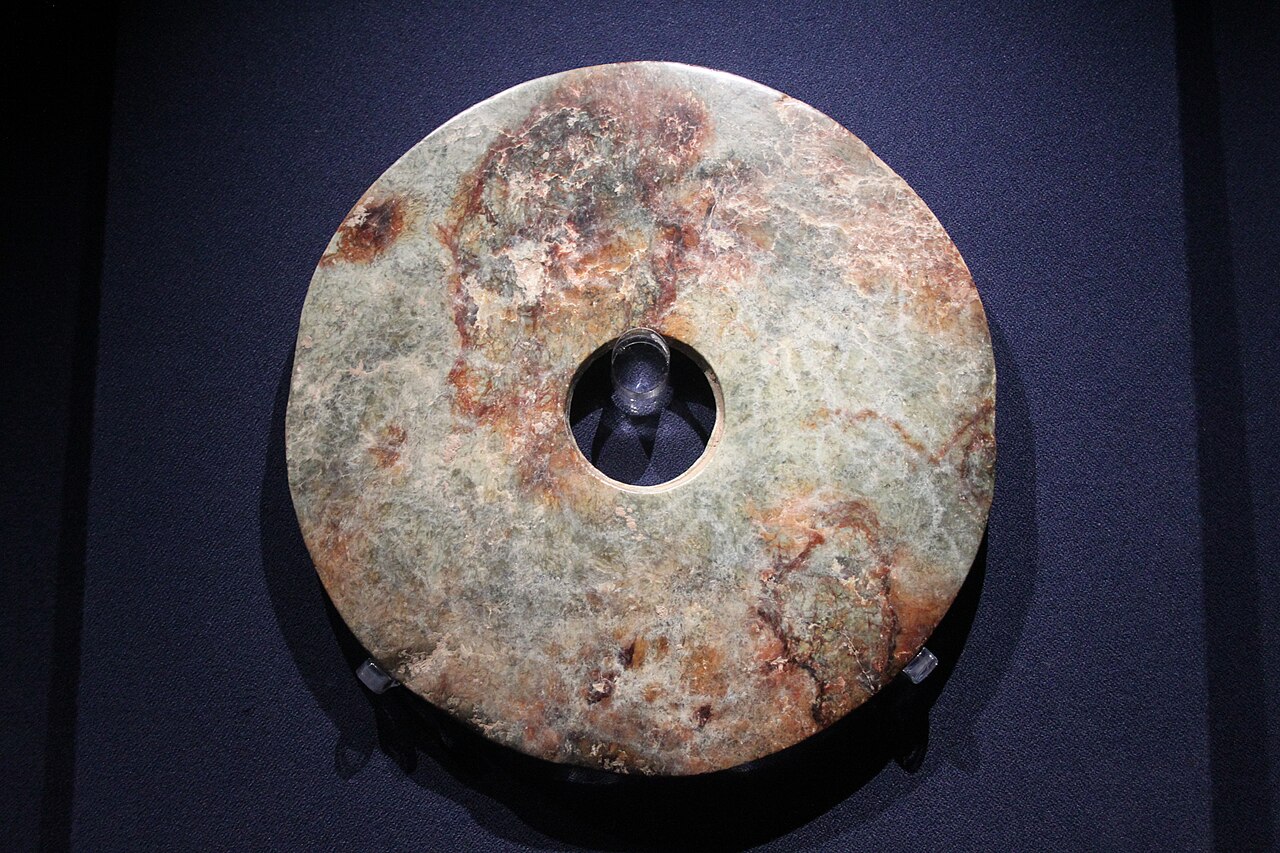
The Chinese relationship with jade reaches back to the earliest stirrings of Neolithic culture, long before the invention of writing, bronze casting, or any of the other technologies conventionally associated with civilization. Archaeological sites across China have yielded jade artifacts dating to 6000 BCE or earlier, testifying to a fascination with this intractable, luminous stone that is among the oldest continuous cultural traditions in human history. But it was the Liangzhu culture (c. 3300–2200 BCE), centered in the Yangtze River Delta region of modern Zhejiang and Jiangsu provinces, that elevated jade working to a level of technical mastery and symbolic complexity that astonished the archaeological world when major excavation results were published in the 1980s. The sheer quantity and quality of jade found at Liangzhu sites — some elite tombs contained hundreds of jade objects — overturned long-held assumptions about the geographical origins of Chinese civilization and demonstrated that jade had served as a medium of ritual and political authority for millennia before the rise of the historically documented Chinese dynasties (Rawson, 1995, pp. 56–72).
The two most distinctive jade forms of the Liangzhu culture are the bi disc and the cong tube, objects whose precise ritual significance remains a subject of scholarly debate more than a century after their first systematic study. The bi is a flat disc with a central perforation, its surfaces sometimes left plain and sometimes decorated with incised patterns. The cong is a tube with a circular bore encased in a square exterior, often decorated with stylized mask-like faces featuring prominent round eyes. Traditional Chinese scholarship associated the bi with Heaven and the cong with Earth, an interpretation that, while perhaps overly schematic, captures something of the cosmic resonance these objects seem to have carried. The labor required to produce them was extraordinary: jade is too hard to be carved with metal tools and must instead be worked by grinding with an abrasive, a process that could require months or even years for a single complex piece. The fact that a Neolithic society without metal technology invested such enormous effort in jade production testifies to the material's supreme importance in the Liangzhu symbolic universe (Childs-Johnson, 1998, p. 24).
The discovery of Liangzhu jade also transformed understanding of early Chinese social organization. The concentration of jade objects in elite tombs, combined with the specialized knowledge required for their production, implies a hierarchical society with organized workshops, controlled access to jade sources, and an ideological system that linked political authority to the possession and display of jade. Some scholars have argued that the Liangzhu represents a "jade age" parallel to the Bronze Age cultures of the Yellow River valley — a distinct pathway to social complexity in which jade, rather than metal, served as the primary medium of elite power and ritual communication. Whether or not this characterization is accepted in all its details, the Liangzhu evidence makes clear that jade working was not a peripheral luxury craft but a central organizing institution of early Chinese society, a role it would continue to play, in evolving forms, for the next five thousand years (Allan, 2007, pp. 110–128).
"Jade that is not polished cannot become a vessel."
Three Character Classic (Sanzijing)Jade in Ritual and Burial
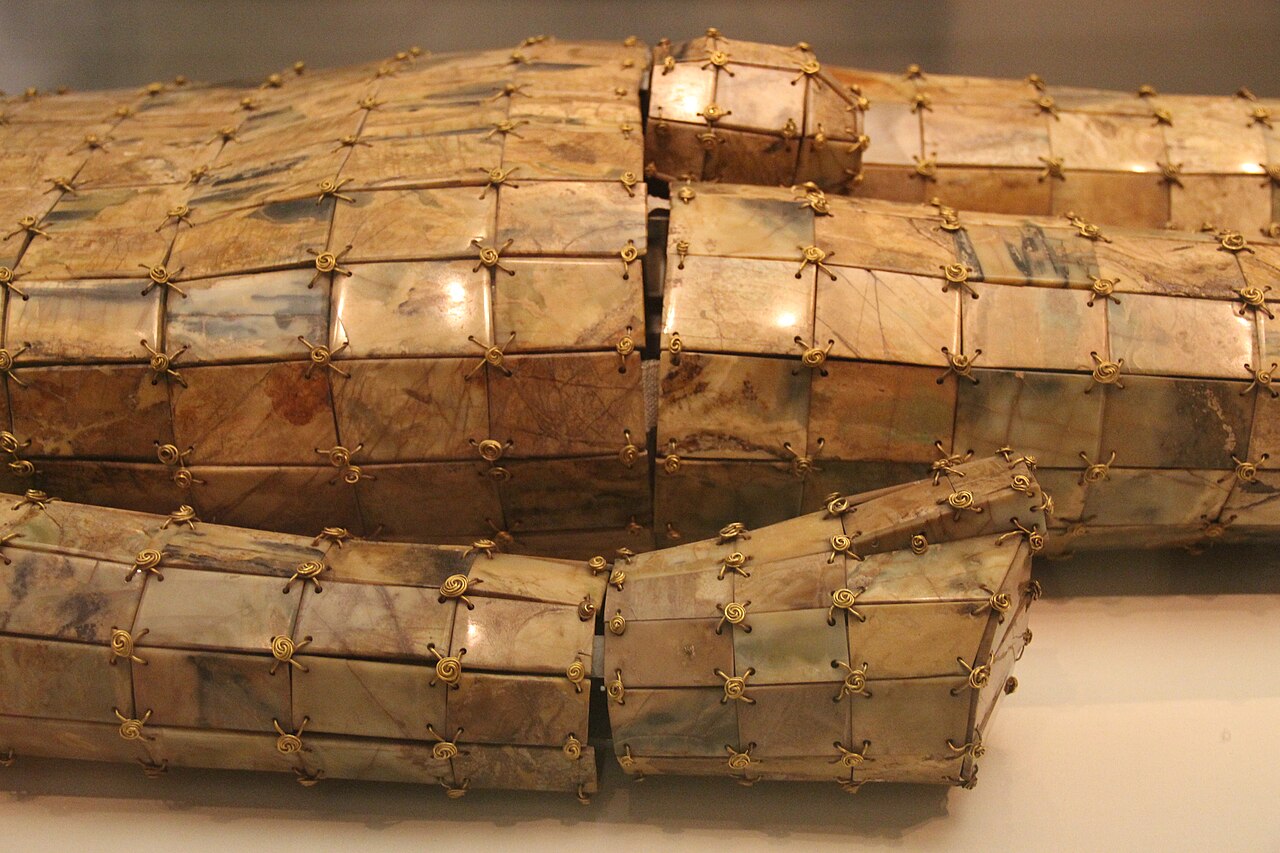
The association between jade and the afterlife is one of the most enduring themes in Chinese material culture, reaching its most dramatic expression in the jade burial suits of the Han dynasty (206 BCE – 220 CE). These extraordinary garments, composed of thousands of small jade plaques sewn together with gold, silver, or copper wire, were intended to preserve the body of the deceased and ensure immortality. The most famous example, discovered in 1968 in the tomb of Prince Liu Sheng of Zhongshan (d. 113 BCE) at Mancheng, Hebei province, consists of 2,498 jade plaques joined by 1,100 grams of gold wire, forming a complete body covering from head to foot. His consort Dou Wan was buried in a similarly elaborate jade suit of 2,160 plaques. The production of a single jade burial suit is estimated to have required more than ten years of continuous labor by skilled craftsmen, making these objects among the most labor-intensive artifacts ever created by human hands (Michaelson, 1999, p. 87).
The belief that jade could preserve the body and confer immortality was rooted in the broader Chinese understanding of jade as a substance of cosmic purity that partook of the vital essence of Heaven and Earth. The Daoist alchemical tradition held that jade, when ingested in powdered form, could purify the body and extend life — a belief that, while scientifically unfounded, reflected genuine observations about jade's remarkable physical properties: its hardness, its cool touch, its resistance to decay, and its luminous quality. These properties made jade a natural symbol of permanence and incorruptibility, qualities that the Han elite hoped to transfer to their own mortal remains through the enveloping presence of jade in the tomb. In addition to burial suits, Han tombs contained jade plugs for the nine orifices of the body, jade cicadas placed on the tongue (symbolizing resurrection, as the cicada emerges from the earth), and jade pigs held in the hands of the deceased (Rawson, 1995, pp. 289–312).
Beyond burial practices, jade played a central role in state ritual throughout Chinese history. The six ritual jades described in the Zhou Li (Rites of Zhou) — the bi disc for Heaven, the cong tube for Earth, and four other forms representing the cardinal directions — constituted a cosmological system in which jade objects served as mediators between the human and divine realms. The imperial jade seal, first carved for the Qin emperor Shihuangdi from the legendary Heshibi jade, became the supreme symbol of political legitimacy, its possession or loss a matter of dynastic fate. When a new dynasty was established, one of its first acts was to create new imperial seals in jade, physically embodying the transfer of the Mandate of Heaven. This ritual function of jade as a conduit between the political and cosmic orders gave the material a significance that no other substance — not gold, not silver, not bronze — could rival in Chinese culture (So, 2000, pp. 56–78).
The Confucian Virtues of Jade
No text has been more influential in shaping the cultural significance of jade in China than a passage in the Book of Rites (Liji) in which Confucius is asked why the gentleman prizes jade above all other stones. Confucius replies with a remarkable catalogue of moral qualities that jade is said to embody: its warm luster represents benevolence (ren); its translucency represents righteousness (yi); the clarity of its ring when struck represents wisdom (zhi); its hardness represents courage (yong); and the fact that it can be broken but not bent represents integrity. This mapping of physical properties onto moral virtues transformed jade from a beautiful material into a philosophical symbol, making the wearing and appreciation of jade an expression of ethical aspiration. The phrase "a gentleman's virtue is like jade" (junzi bi de yu yu) became one of the most familiar maxims in Chinese culture, repeated in countless literary, artistic, and conversational contexts over two millennia (Laufer, 1912, pp. 25–34).
The Confucian interpretation of jade had profound practical consequences for Chinese material culture. Because jade was understood as a moral emblem rather than merely an ornament, its use was governed by elaborate sumptuary regulations that specified which types of jade could be worn or displayed by persons of different social ranks. During the Zhou dynasty, jade pendants were an essential component of court dress, and their arrangement — a complex assemblage of bi discs, curved huang pendants, and tubular beads — was codified in ritual texts with a precision usually reserved for the most solemn ceremonies. The gentle clinking of these jade pendants as the wearer walked was itself considered morally significant: the sound regulated the wearer's movements, preventing undignified haste and encouraging the measured, deliberate gait considered appropriate for a person of cultivation. In this way, jade served not only as a symbol of virtue but as an active instrument of self-discipline, its physical presence on the body shaping behavior in conformity with Confucian ideals of propriety (So, 2000, pp. 112–134).
The moral philosophy of jade extended into aesthetic criticism, creating a distinctive vocabulary that pervaded Chinese culture far beyond the world of lapidary art. Porcelain glazes were praised as "jade-like," calligraphy was described as having the "bone" and "flesh" of jade, and a beautiful or virtuous person might be called "jade-like" in character. Even the Chinese word for a country's culture or civilization, guobao (national treasure), frequently referred to jade objects as its paradigmatic examples. This pervasive metaphorical presence testifies to jade's unique position in Chinese thought: unlike gold or gems in Western culture, which are valued primarily for their rarity and beauty, jade in China carries an irreducibly moral dimension. To appreciate jade is not merely to enjoy a luxury but to engage with a philosophical tradition that identifies beauty with goodness and material refinement with spiritual cultivation. This fusion of the aesthetic and the ethical remains one of the most distinctive characteristics of Chinese civilization (Forsyth & McElney, 1994, pp. 15–28).
"The gentleman compares his virtue to jade."
Confucius, Book of Rites (Liji)Discuss with Jason
Want to talk this article through?
Jason discusses the article with you, quizzes you on it and teaches you words from it.
Sign in free to ask. New accounts start with 300 AI credits.
Nephrite and Jadeite: Two Stones, One Name
Western mineralogy distinguishes between two entirely different minerals that share the name "jade": nephrite, a calcium-magnesium silicate, and jadeite, a sodium-aluminum silicate. In Chinese, the term yu encompasses both materials (and, historically, other attractive stones as well), but the distinction between the two has significant cultural and historical implications. For the vast majority of Chinese history — roughly from the Neolithic period until the eighteenth century — the jade used in China was exclusively nephrite, primarily sourced from the riverbeds and mountains of the Hetian (Khotan) region in what is now Xinjiang province. Hetian nephrite, particularly the prized "mutton fat" (yangzhi) variety — a warm, creamy white of extraordinary smoothness and translucency — set the standard for jade quality in China and remains the most valued type among traditional connoisseurs. The long, arduous journey from the jade-producing regions of Central Asia to the workshops of eastern China made nephrite one of the earliest commodities in what would become the Silk Road trade network (Wen, 2009, pp. 45–67).
Jadeite entered China relatively late, probably during the eighteenth century, imported from the mines of northern Burma (modern Myanmar). Initially regarded with some suspicion by connoisseurs accustomed to the warm, muted tones of nephrite, jadeite gradually won acceptance and eventually passionate admiration, particularly for its vivid "imperial green" (dicui) variety — a deep, saturated emerald green of extraordinary intensity. The Qing dynasty empress dowager Cixi was famously devoted to jadeite, amassing a legendary collection that included jewelry, vessels, and decorative objects of the finest quality. Jadeite's brilliant colors — green, lavender, red, and even blue — contrast sharply with the subtle, understated palette of nephrite, and the two materials have come to represent different aesthetic sensibilities within the broader jade tradition: nephrite embodies the classical Confucian virtues of restraint, warmth, and understatement, while jadeite appeals to a more flamboyant, display-oriented taste that some traditionalists associate with the decline of classical values (Keverne, 1991, pp. 178–195).
The geological and cultural distinction between nephrite and jadeite illuminates broader themes in the history of Chinese taste. The Hetian nephrite tradition, sustained over five millennia, represents what may be the longest continuous human engagement with a single geological material in world history — a relationship that shaped trade routes, diplomatic relations, and cultural values across the breadth of the Asian continent. The relatively recent arrival of jadeite demonstrates that the Chinese jade tradition, far from being static, has continually absorbed new materials, new techniques, and new aesthetic possibilities. Today, both nephrite and jadeite command extraordinary prices in the Chinese art market, driven by a combination of cultural reverence, investment speculation, and genuine connoisseurial passion. A single exceptional jadeite bangle or a Song dynasty nephrite carving can sell for tens of millions of dollars at auction, making jade one of the most valuable materials in the global luxury market — a remarkable testament to the enduring power of a cultural tradition that began in the river gravels of Neolithic China (Laufer, 1912, pp. 289–312).
Imperial Jade Seals and the Mandate of Heaven
The imperial jade seal (chuanguo yuxi) occupies a singular position in Chinese political symbolism as the physical embodiment of the Mandate of Heaven — the cosmic authorization to rule. According to tradition, the first imperial seal was carved from the legendary Heshibi jade by order of Qin Shihuangdi after his unification of China in 221 BCE, inscribed with the characters "Having received the Mandate from Heaven, may the emperor lead a long and prosperous life." This seal was subsequently passed from dynasty to dynasty as the ultimate token of legitimate sovereignty, its possession confirming a ruler's right to govern and its absence undermining that claim. The history of the imperial seal reads like a political thriller: it was supposedly thrown into a lake by a fleeing emperor, recovered by a fisherman, lost during a succession crisis, and ultimately vanished from the historical record after the fall of the Later Tang dynasty in 936 CE. Whether the original seal survived or not, the idea of the imperial jade seal — as a material link between political authority and cosmic order — shaped Chinese political culture for two millennia (Loewe, 2006, pp. 156–178).
Beyond the legendary chuanguo yuxi, Chinese emperors throughout history maintained extensive collections of jade seals for different administrative and ceremonial purposes. The Qing dynasty emperor Qianlong possessed twenty-five imperial seals, each designated for a specific function — approving memorials, issuing edicts, conducting diplomatic correspondence, and so on. These seals were carved from the finest jade available, their designs incorporating dragons, phoenixes, and other imperial motifs, and their inscriptions rendered in archaic seal script that linked the current ruler to the deep past of Chinese writing. The act of stamping a document with the imperial jade seal was understood not merely as an administrative procedure but as a ritual act that invested the document with the authority of the cosmos itself. The brilliant red impression left by the seal — made with a cinnabar paste called yinni — was literally and figuratively the "mark" of Heaven's approval, a visible sign that the cosmic order sanctioned the words that followed (Wen, 2009, pp. 123–145).
The symbolism of the jade seal extended beyond the imperial court to permeate Chinese bureaucratic and literary culture more broadly. Scholar-officials carved personal seals from jade, stone, or other materials, using them to authenticate documents, mark their art collections, and express their literary identities through carefully chosen seal names and legends. The art of seal carving (zhuanke) developed into a distinct artistic discipline during the Ming and Qing dynasties, with recognized masters, published treatises, and passionate collectors. Seal script, the archaic writing style used for seal inscriptions, became a subject of scholarly study and calligraphic practice in its own right, valued for its connection to the most ancient forms of Chinese writing. In this way, the imperial tradition of the jade seal, born in the political ambitions of the first emperor, filtered down through the entire social hierarchy, transforming a symbol of absolute power into a ubiquitous element of Chinese cultural life — a reminder that in China, the humblest personal seal partakes, however distantly, of the cosmic authority first claimed by Qin Shihuangdi and his piece of jade (Mair, 2007, pp. 45–56).
"Better to be shattered jade than an intact tile."
Book of the Northern Qi (Bei Qi Shu)Jade in the Modern Era
The modern history of Chinese jade has been shaped by the same forces of revolution, reform, and globalization that have transformed every aspect of Chinese culture, yet the stone's hold on the Chinese imagination has proven remarkably resilient. During the Cultural Revolution, jade was denounced as a feudal luxury, and many antique jade collections were confiscated, destroyed, or dispersed. Jade carving workshops that had operated continuously for centuries were shuttered, and the transmission of traditional techniques was interrupted for a generation. Yet even during this period of radical iconoclasm, jade's symbolic associations could not be entirely suppressed — the very vehemence of the attacks testified to the depth of the tradition's hold on Chinese consciousness. When Mao Zedong's body was preserved for public display after his death in 1976, the crystal coffin that housed his remains was framed by jade carvings, an unconscious echo of the Han dynasty belief that jade could preserve the body and confer immortality (Keverne, 1991, pp. 256–270).
The reform era unleashed a jade renaissance that has only intensified in the twenty-first century. As Chinese economic growth created a new class of wealthy collectors, demand for both antique and contemporary jade soared, driving prices to unprecedented levels. The jade market became a complex ecosystem encompassing fine art, luxury goods, investment speculation, and cultural nationalism, with major auction houses in Beijing, Hong Kong, and New York reporting record-breaking sales of jade objects. Hetian white nephrite and Burmese imperial green jadeite command particularly astronomical prices, with exceptional pieces selling for tens of millions of dollars. This market frenzy has had mixed consequences: on one hand, it has revitalized jade carving as a profession and supported the preservation of traditional techniques; on the other, it has flooded the market with treated, enhanced, and outright fake jade, creating a connoisseurship challenge of daunting proportions (Allan, 2007, pp. 289–305).
Contemporary jade carving in China displays the same creative tension between tradition and innovation visible in other Chinese art forms. Master carvers in cities such as Suzhou, Yangzhou, and Hotan continue to produce works in traditional forms — bi discs, cong tubes, figure carvings, and vessels — using techniques that would be recognizable to their Song or Qing dynasty predecessors. Simultaneously, a younger generation of jade artists is experimenting with abstract forms, minimalist design, and contemporary themes, pushing the medium beyond its traditional boundaries while drawing on its deep cultural resonance. The most sophisticated contemporary jade art inhabits a space between these poles, honoring the material's philosophical and historical associations while engaging with the aesthetic concerns of the present. As China continues its dramatic transformation, jade remains what it has been for seven millennia: the stone of heaven, a material bridge between the human and the cosmic, the physical and the metaphysical, the ancient and the eternal (Forsyth & McElney, 1994, pp. 312–334).
Quiz
What is the significance of jade in Liangzhu culture?
Which dynasty is known for the jade burial suits composed of thousands of jade plaques?
How did Confucius describe the virtues of jade?
What was the primary source of jade in China before the 18th century?
What role did the imperial jade seal play in Chinese political culture?
How did the Cultural Revolution impact jade in China?
What characterizes the modern jade market in China?
What distinguishes nephrite from jadeite in the context of Chinese culture?
Write your thoughts, then get feedback from Jason — you can turn any answer into a full discussion.
9. How might the cultural significance of jade in ancient China influence modern Chinese society's values and practices?
10. In what ways do you think the historical use of jade in burial practices reflects broader beliefs about life and death in Chinese culture?
Frequently Asked Questions
Common questions about Chinese Jade Carving: Stone of Heaven
Why is jade so important in Chinese culture?
Jade has been central to Chinese civilization for over 7,000 years because it was believed to embody the five cardinal virtues: benevolence, righteousness, wisdom, courage, and purity. Unlike gold or diamonds in Western culture, jade held deep moral and spiritual significance, and Confucius himself compared the qualities of a gentleman to the properties of jade.
What is the difference between nephrite and jadeite in Chinese jade carving?
Nephrite, the original "true jade" of China, is a softer stone sourced from Khotan along the Silk Road and was used for thousands of years in ritual and decorative objects. Jadeite, a harder and more vibrantly colored stone from Burma, only entered China in the 18th century but quickly became the most valued variety, especially the translucent emerald-green "imperial jade."
What were jade burial suits and why were they made?
Jade burial suits were funerary garments made for Han dynasty royalty, constructed from thousands of thin jade plaques sewn together with gold, silver, or bronze wire. The Chinese believed jade had the power to preserve the body and prevent decay, so encasing the deceased in jade was thought to grant immortality in the afterlife.
How is Chinese jade carved and shaped?
Because jade is extremely tough and cannot be chipped like flint, it must be shaped through slow abrasion using harder materials like quartz sand and water applied with cord, bamboo, or metal tools. Ancient jade workers spent months or even years completing a single piece, and the painstaking process was considered a spiritual discipline that mirrored the refinement of one's own character.
What are the most famous pieces of Chinese jade art?
Among the most celebrated works are the Liangzhu culture jade cong tubes dating to 3000 BCE, the jade burial suit of Prince Liu Sheng from the Han dynasty, and the massive Qing dynasty "Yu the Great Taming the Flood" boulder carving that took over a decade to complete. The Jadeite Cabbage in Taiwan's National Palace Museum is perhaps the most recognized jade carving worldwide.