
Podcast


Podcast: Digital Society: Life in the WeChat Era and China's Technological Transformation
Listen to Jason & Amy discuss Digital Society: Life in the WeChat Era and China's Technological Transformation
New here?
The Rise of Super-Apps and the Cashless Revolution
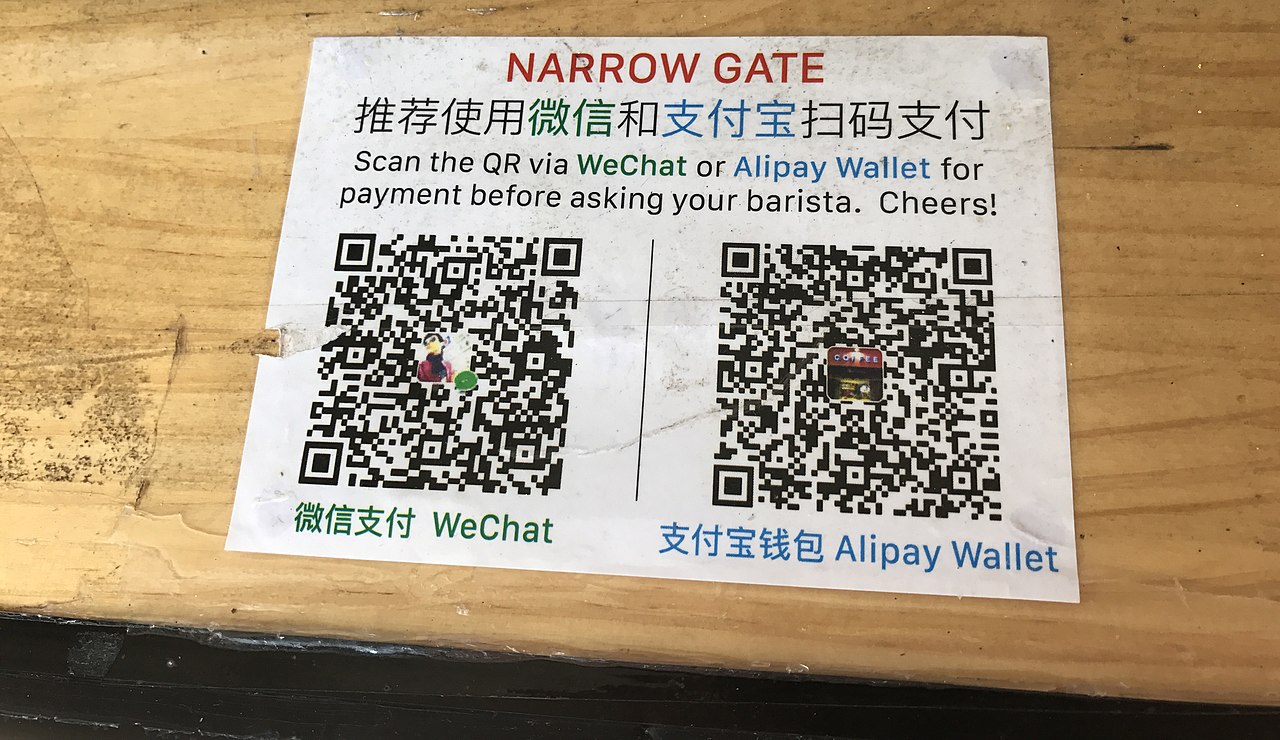
The launch of WeChat (微信, Wēixìn) by Tencent in January 2011 marked the beginning of a technological transformation that would remake the fabric of Chinese daily life more thoroughly than any innovation since the mobile phone itself. What began as a simple messaging application rapidly evolved into a comprehensive digital ecosystem — a "super-app" that integrated social networking, mobile payments, e-commerce, ride-hailing, food delivery, utility bill payment, government services, and hundreds of other functions into a single platform. By 2023, WeChat boasted over 1.3 billion monthly active users, and the average Chinese user spent approximately four hours per day within the app, making it arguably the most influential piece of software in history in terms of the depth of its integration into a single society's daily routines (Stockmann, 2013, pp. 145-178). The parallel development of Alipay by Alibaba's financial affiliate Ant Group created a duopoly that between them captured virtually the entire Chinese mobile payments market, rendering cash and credit cards largely obsolete in urban China within the span of barely five years.
The speed and completeness of China's transition to a cashless society stunned observers worldwide and confounded Western assumptions about the sequential nature of technological adoption. China essentially skipped the credit card era entirely, leapfrogging from a cash-dominated economy directly to mobile payments. By 2020, mobile payment transactions in China exceeded 347 trillion yuan ($49 trillion), dwarfing comparable figures in any other country. The mechanism was elegantly simple: QR codes. Rather than requiring the expensive point-of-sale terminals that credit card systems demand, mobile payments in China work through QR codes that can be printed on a sheet of paper and taped to a street vendor's cart, enabling even the smallest and most informal businesses to accept digital payments (Stockmann, 2013, pp. 201-234). This low barrier to entry was crucial in a country where millions of small merchants — noodle shops, fruit sellers, bicycle repair stands — form the backbone of the retail economy. The ubiquity of QR payments created a virtuous cycle: as more merchants accepted them, more consumers adopted them, and as more consumers used them, holdout merchants faced increasing pressure to comply.
The implications of the cashless revolution extend far beyond convenience. The digitization of virtually all financial transactions generates an unprecedented volume of data about consumer behavior, movement patterns, and social connections, creating both opportunities and risks. For consumers, the integration of payments with loyalty programs, credit scoring, and financial services has created a seamless commercial experience in which a single app can pay for a taxi, order lunch, invest spare change, and purchase insurance. For businesses, access to real-time transaction data enables precision marketing and supply chain optimization that were previously impossible. For the state, the comprehensive digital trail left by cashless transactions provides a tool of surveillance and control whose implications are still being fully understood (Chen, 2020, pp. 67-98). The question of whether China's digital payment ecosystem represents a model of technological progress to be emulated or a cautionary tale about the erosion of financial privacy has become one of the central debates in global technology policy.
"With one phone, you can travel the whole world."
Popular Chinese saying about mobile digital lifeE-Commerce, Livestream Shopping, and the New Consumer Culture
China's e-commerce ecosystem has evolved into the world's largest and most innovative digital marketplace, fundamentally transforming how over a billion consumers discover, evaluate, and purchase goods. The ecosystem is anchored by Alibaba's Taobao and Tmall platforms, JD.com, and Pinduoduo, each serving distinct market segments and pioneering different models of online retail. Alibaba's annual Singles' Day shopping festival on November 11, launched in 2009 as a marketing promotion, has grown into the world's largest shopping event, generating gross merchandise volume of over 540 billion yuan ($84 billion) in 2021 — a figure that dwarfs Black Friday and Cyber Monday combined. The logistics infrastructure built to support this commerce — including Cainiao's smart logistics network, which can deliver packages to most Chinese addresses within 24 to 48 hours, and a fleet of over three million delivery workers navigating city streets on electric scooters — represents one of the most impressive supply chain achievements in commercial history (Chen, 2020, pp. 201-234).
The most significant recent innovation in Chinese e-commerce is the explosive growth of livestream shopping, a format in which charismatic hosts demonstrate and sell products in real-time video broadcasts, interacting with viewers who can purchase items with a single tap. This format, which combines elements of home shopping television, social media entertainment, and flash sales, emerged around 2016 and grew exponentially during the COVID-19 pandemic lockdowns. Top livestream hosts like Li Jiaqi (known as the "Lipstick King" for his legendary lipstick-testing demonstrations) and Viya built audiences of hundreds of millions and generated billions of yuan in sales during single streaming sessions. A single Li Jiaqi broadcast could sell more cosmetics in a few hours than a department store chain sells in months, fundamentally disrupting traditional retail distribution channels (Stockmann, 2013, pp. 267-298). The format succeeded because it addressed key pain points of traditional e-commerce: the inability to see products in action, the lack of trusted recommendations, and the absence of the social experience of shopping. Livestream hosts serve as curators, entertainers, and trusted advisors, building parasocial relationships with their audiences that drive extraordinary commercial outcomes.
The penetration of e-commerce into rural China represents one of the most significant dimensions of the country's digital transformation. Alibaba's "Rural Taobao" initiative, government-supported e-commerce training programs, and the expansion of logistics networks into remote areas have connected millions of rural producers directly with urban consumers, disintermediating the layers of wholesalers and distributors that previously captured most of the value in agricultural supply chains. "Taobao villages" — rural communities in which a significant proportion of households operate e-commerce businesses — numbered over 7,000 by 2022, concentrated in provinces such as Zhejiang, Guangdong, and Jiangsu but increasingly appearing in less developed inland regions (Chen, 2020, pp. 267-289). These digital entrepreneurs sell everything from handmade furniture and traditional crafts to agricultural products and processed foods, generating incomes that often far exceed what conventional farming or factory work could provide. The phenomenon has created a new pathway for rural development that does not require physical urbanization, allowing people to remain in their communities while participating in the national consumer economy — though critics note that the precarious nature of e-commerce income, the intense competition, and the dependence on platform algorithms create their own forms of vulnerability and inequality.
"Science and technology are the primary productive forces."
Deng Xiaoping (1988)Discuss with Jason
Want to talk this article through?
Jason discusses the article with you, quizzes you on it and teaches you words from it.
Sign in free to ask. New accounts start with 300 AI credits.
Social Credit, Surveillance, and the Digital Panopticon

No aspect of China's digital transformation has generated more international concern and misunderstanding than the social credit system (社会信用体系, shèhuì xìnyòng tǐxì). Announced in a 2014 State Council document, the system aims to use data aggregation and algorithmic evaluation to assess the "trustworthiness" of individuals, businesses, and government entities across multiple dimensions — financial creditworthiness, legal compliance, commercial reliability, and social behavior. Western media coverage has often portrayed the system as a unified, Orwellian scoring mechanism that assigns each citizen a single number determining their access to services and opportunities. The reality, as documented by researchers who have studied the system's actual implementation, is considerably more fragmented, experimental, and varied than this dystopian narrative suggests (Stockmann, 2013, pp. 312-345). As of the mid-2020s, the social credit system consists of dozens of partially overlapping local and sectoral pilot programs, government blacklists for specific violations such as failing to comply with court judgments, and private credit scoring services operated by companies like Alibaba's Sesame Credit — rather than a single centralized scoring system.
However, the distinction between the imagined and actual social credit system should not obscure the genuine expansion of digital surveillance infrastructure in China during the 2010s and 2020s. The installation of hundreds of millions of surveillance cameras equipped with facial recognition technology — the "Skynet" (天网) and "Sharp Eyes" (雪亮工程) programs — has created a monitoring network of unprecedented density, particularly in cities and in the Xinjiang Uyghur Autonomous Region, where the technology has been deployed as part of a comprehensive system of ethnic surveillance and control. The integration of facial recognition with mobile payment systems, public transportation, and building access creates a comprehensive digital trail that can, in principle, be used to track an individual's movements, purchases, social contacts, and daily routines in real time (Chen, 2020, pp. 312-345). The COVID-19 pandemic accelerated the normalization of digital surveillance through health code systems that required citizens to scan QR codes to enter public spaces, with their movement data shared with health authorities — a system that proved effective in pandemic control but raised fundamental questions about whether such surveillance infrastructure would be dismantled after the health emergency ended.
The relationship between China's digital surveillance capabilities and individual privacy reflects a cultural and political context that differs significantly from Western liberal democratic norms, though it would be a mistake to assume that Chinese citizens are indifferent to privacy concerns. Survey research consistently shows that Chinese internet users express significant concern about the collection and use of their personal data by both corporations and the government, and the passage of the Personal Information Protection Law (PIPL) in 2021 — China's first comprehensive data privacy legislation — reflected genuine public demand for greater control over personal information (Stockmann, 2013, pp. 378-402). The PIPL imposed consent requirements, data minimization principles, and restrictions on automated decision-making that mirror elements of the European Union's GDPR, though the law explicitly exempts state security and public health activities from its restrictions. The tension between the convenience and efficiency that digital integration provides and the surveillance and control it enables defines the central paradox of life in China's digital society — a paradox that is not unique to China but is experienced there with particular intensity due to the scale of the digital infrastructure and the absence of institutional checks on state power that exist, however imperfectly, in democratic systems.
The Digital Divide: Age, Geography, and Inequality
The digital transformation of Chinese society, for all its remarkable achievements, has produced new forms of inequality that mirror and sometimes exacerbate existing social divisions. The most visible digital divide is generational: while young and middle-aged Chinese urbanites navigate the digital ecosystem with effortless fluency, tens of millions of elderly citizens find themselves increasingly marginalized in a society that assumes universal digital literacy. The COVID-19 pandemic brought this divide into sharp relief when elderly people without smartphones were unable to display the health codes required to enter supermarkets, hospitals, and public transportation, effectively rendering them second-class citizens in their own communities. Viral videos of confused elderly people being turned away from public spaces because they could not produce a QR code provoked a wave of public sympathy and government directives requiring the maintenance of non-digital alternatives for essential services (Chen, 2020, pp. 389-412). The irony that the generation which built modern China through decades of sacrifice was being excluded from the digital society their labor made possible was not lost on Chinese commentators.
The geographic dimension of the digital divide, while narrowing, remains significant. China's internet penetration rate reached approximately 75 percent by 2023, meaning that roughly 350 million people — a population larger than that of the United States — remained offline, concentrated disproportionately in rural areas, western provinces, and among the elderly and less educated. Even among those who are online, the quality of digital access varies enormously: urban residents typically enjoy high-speed broadband and 5G mobile connectivity, while rural users may rely on slower connections that limit their ability to participate in bandwidth-intensive activities such as livestream shopping or online education. The government's "internet poverty alleviation" programs have made significant progress in extending connectivity to remote areas, but access alone does not guarantee meaningful digital participation without accompanying investments in digital literacy, relevant content, and affordable devices (Stockmann, 2013, pp. 412-445). The experience of using the internet through a basic smartphone on a slow rural connection is qualitatively different from using it through a flagship device on an urban 5G network, and these differences compound over time to create divergent digital trajectories.
The platformization of the Chinese economy has also created new labor dynamics that raise important questions about digital inequality. The gig economy — food delivery riders for Meituan and Ele.me, ride-hail drivers for Didi, couriers for logistics companies — employs tens of millions of workers who are essential to the functioning of the digital ecosystem yet occupy its most precarious and poorly protected positions. Investigative journalism and academic research have documented the punishing working conditions faced by delivery riders, who are managed by algorithms that optimize delivery times with little regard for traffic safety, weather conditions, or worker fatigue, creating what one widely circulated investigative report described as workers "trapped in the system" (困在系统里, kùn zài xìtǒng lǐ). The algorithms that make Chinese digital services so convenient for consumers achieve that convenience partly by externalizing costs onto a workforce that lacks the labor protections, social insurance, and collective bargaining rights that factory workers have at least nominally won (Chen, 2020, pp. 445-478). The tension between the gleaming consumer-facing interface of China's digital economy and the harsh realities of the labor that sustains it represents one of the most important social contradictions of the WeChat era.
"Trapped in the system."
Renwu Magazine investigative report on delivery riders (2020)Global Implications: China's Digital Model and the World
China's digital transformation has implications that extend far beyond its borders, reshaping global technology competition, internet governance debates, and development models for the Global South. The international expansion of Chinese technology companies — Huawei's telecommunications infrastructure, TikTok's global social media presence, Alibaba's cloud computing services, and the growing adoption of Chinese digital payment systems in Southeast Asia and Africa — has created a Chinese sphere of digital influence that challenges the previously unquestioned dominance of American technology firms. The concept of "digital sovereignty" — the idea that nations should control the data generated within their borders and develop indigenous technology ecosystems rather than depending on foreign platforms — has gained traction worldwide, and China's success in building a thriving digital economy behind the Great Firewall is often cited as evidence that decoupling from the American-dominated internet does not necessarily mean digital backwardness (Stockmann, 2013, pp. 456-489). Countries as diverse as Russia, India, Indonesia, and Nigeria have adopted elements of the Chinese approach, including data localization requirements, platform regulation, and support for domestic technology champions.
The export of Chinese surveillance technology has become one of the most contentious dimensions of China's global digital influence. Chinese companies including Huawei, ZTE, Hikvision, and Dahua have sold surveillance equipment and "safe city" solutions to governments across the developing world, from Ecuador to Zimbabwe to Pakistan, often with financing from Chinese state banks. Critics argue that these exports enable authoritarian governance by providing repressive regimes with sophisticated tools for monitoring and controlling their populations, while proponents contend that the technology serves legitimate public safety purposes and that the decision to use it for surveillance or repression lies with the purchasing government rather than the technology supplier (Chen, 2020, pp. 501-534). The debate mirrors broader questions about technology transfer and dual-use goods that have attended every major technological revolution, but the scale and sophistication of modern surveillance technology gives these questions particular urgency.
The competition between Chinese and American technology ecosystems has become a defining feature of twenty-first-century geopolitics, with implications for everything from semiconductor supply chains to artificial intelligence research to the governance of outer space. The U.S. government's efforts to restrict Chinese access to advanced semiconductor manufacturing technology, its campaign against Huawei's participation in 5G networks, and its forced divestiture demands regarding TikTok reflect a bipartisan consensus that technological leadership is inseparable from national security and geopolitical power. China's response — massive investment in domestic semiconductor capacity, accelerated development of indigenous operating systems and software, and the cultivation of alternative technology partnerships through the Belt and Road Initiative and the Digital Silk Road — suggests that the global technology landscape is fracturing along geopolitical lines in ways that may prove irreversible (Stockmann, 2013, pp. 501-534). For ordinary Chinese citizens, these geopolitical tensions manifest in practical ways: the loss of access to certain foreign apps and services, restrictions on studying technology subjects at American universities, and a growing cultural emphasis on technological self-reliance that echoes the rhetoric of earlier periods of Chinese history when foreign dependence was viewed as a source of national vulnerability.
Quiz
What marked the beginning of China's technological transformation into a digitally integrated society?
How did China transition to a cashless society?
Which platform shifted Chinese social media from text-based to video-based content?
What is a significant innovation in Chinese e-commerce mentioned in the article?
What is the 'social credit system' in China primarily designed to assess?
Which demographic has been most affected by the digital divide in China?
How has the Chinese government managed digital discourse on social media platforms?
What is one global implication of China's digital transformation?
Write your thoughts, then get feedback from Jason — you can turn any answer into a full discussion.
9. How might the integration of digital technology into daily life impact privacy and surveillance in China?
10. In what ways does the digital divide in China reflect broader social inequalities, and how might addressing it improve social equity?
Frequently Asked Questions
Common questions about Digital Society: Life in the WeChat Era and China's Technological Transformation
How does WeChat work as a super app in China?
WeChat (微信) functions as an all-in-one platform that combines messaging, social media, mobile payments, food ordering, ride-hailing, bill payments, government services, and more within a single application. With over 1.3 billion monthly active users, it has become essentially a digital operating system for daily life in China, replacing the need for dozens of separate apps.
Why is mobile payment so popular in China?
Mobile payment became dominant in China because the country leapfrogged credit cards entirely, jumping from a cash-based economy directly to smartphone-based payments through WeChat Pay and Alipay. Street vendors, taxi drivers, and even beggars use QR codes, making China one of the first societies where carrying cash has become virtually unnecessary.
What is China's social credit system?
China's social credit system is an evolving network of government and commercial programs that use data collection to rate the trustworthiness of individuals and businesses. While often portrayed in Western media as a single Orwellian score, it actually consists of multiple fragmented pilot programs with varying levels of implementation across different cities and sectors.
How does internet censorship work in China?
Internet censorship in China operates through the "Great Firewall" (防火长城), a sophisticated system of technical filtering, keyword blocking, and human monitoring that restricts access to foreign platforms like Google, Facebook, and Twitter. Domestic platforms practice extensive self-censorship, with content moderators and AI systems removing politically sensitive material while generally allowing commercial and entertainment content.
What is the gig economy like in China?
China's gig economy encompasses tens of millions of delivery riders, ride-hail drivers, and freelance workers operating through platforms like Meituan, Ele.me, and Didi. A viral 2020 exposé revealed how algorithmic management traps delivery riders in increasingly dangerous working conditions, squeezing delivery times while shifting all risk onto individual workers.
The Social Media Landscape: Weibo, Douyin, and Digital Public Discourse
China's social media ecosystem, operating behind the Great Firewall that blocks Western platforms like Facebook, Twitter, YouTube, and Instagram, has produced a parallel digital universe with its own distinctive dynamics, norms, and cultural productions. Sina Weibo, launched in 2009 as a microblogging platform often compared to Twitter, became China's first truly mass social media platform and served as an unexpectedly vibrant arena for public discourse during its early years. Journalists, intellectuals, activists, and ordinary citizens used Weibo to discuss social issues, expose corruption, and coordinate collective action in ways that surprised both the government and the platform's creators. The exposure of officials' undeclared luxury watches, the coordination of disaster relief during the 2013 Ya'an earthquake, and the viral spread of citizen journalism documenting environmental pollution demonstrated social media's potential to serve as a check on power in a system without a free press (Stockmann, 2013, pp. 89-124). However, a sustained government crackdown beginning in 2013, which included the arrest of prominent Weibo users and the implementation of real-name registration requirements, significantly dampened the platform's role as a space for critical public discourse.
The subsequent rise of Douyin (the Chinese version of TikTok), launched by ByteDance in 2016, shifted the center of gravity in Chinese social media from text-based discussion to short-form video entertainment. Douyin's algorithmically curated feed, which learns user preferences with remarkable precision and serves an endless stream of personalized content, proved irresistibly engaging — the average Douyin user in China spends over 100 minutes per day on the app, and the platform has more than 700 million daily active users. The cultural impact has been transformative: Douyin has democratized content creation, turning ordinary people into celebrities and enabling new forms of cultural expression including lip-syncing, dance challenges, cooking demonstrations, travel vlogging, and educational content. The platform has also become a powerful commercial engine, pioneering the integration of e-commerce with short video content that has reshaped China's retail landscape (Chen, 2020, pp. 134-167). Small-town entrepreneurs, rural farmers, and craftspeople have found audiences of millions through Douyin, creating economic opportunities in communities that were previously isolated from national consumer markets.
The relationship between Chinese social media and the state represents one of the most sophisticated systems of information management in human history. Rather than simply blocking or censoring content — though those tools remain available and are frequently deployed — the Chinese government has developed a nuanced approach that combines technological filtering, legal regulation, platform self-censorship, and the strategic use of social media by state actors to shape public opinion. Research by King, Pan, and Roberts (2013, pp. 326-345) demonstrated that Chinese censorship is selectively targeted: criticism of government officials or policies is often tolerated, while content that has the potential to inspire collective action is swiftly removed. The government employs hundreds of thousands of online commentators — dubbed the "fifty-cent army" (五毛党, wǔmáo dǎng) by netizens — to flood comment sections with pro-government perspectives and redirect conversations away from sensitive topics. This system of managed digital discourse allows the appearance of openness and debate while maintaining firm boundaries around topics deemed threatening to social stability, creating a paradox that defines the Chinese digital experience: an internet that feels free and vibrant to most users most of the time, yet operates within invisible constraints that become apparent only when they are tested.