
Podcast


Podcast: Shenzhen: From Fishing Village to Silicon Valley of the East
Listen to Jason & Amy discuss Shenzhen: From Fishing Village to Silicon Valley of the East
New here?
The Special Economic Zone Experiment
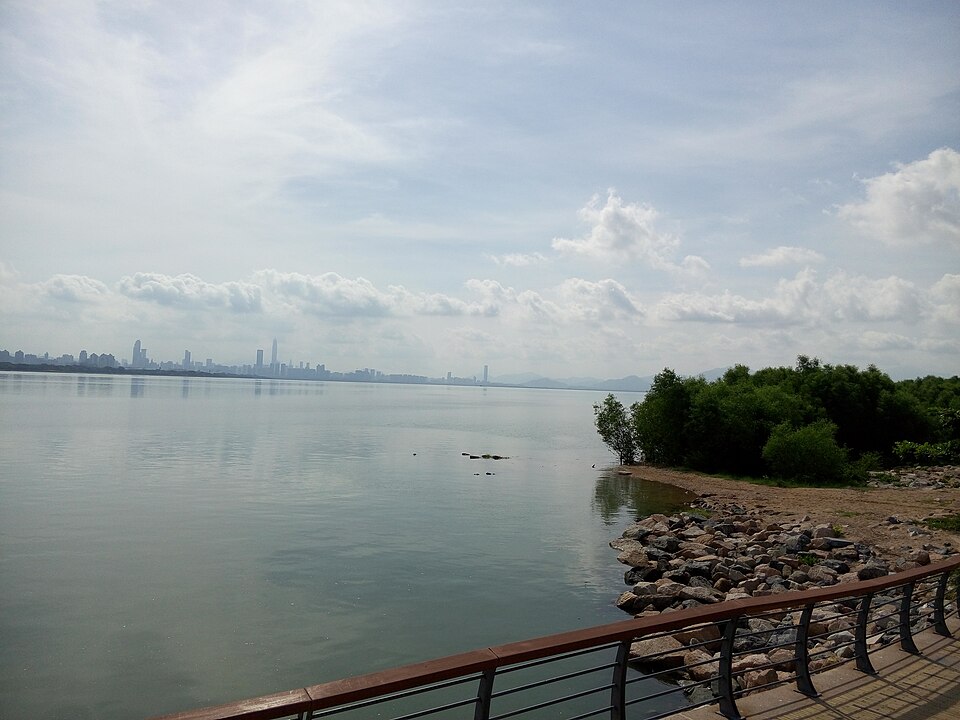
On August 26, 1980, the Standing Committee of the National People's Congress formally approved the establishment of the Shenzhen Special Economic Zone, a radical experiment that would test whether market-oriented capitalism could coexist with China's socialist political system. The decision was the brainchild of Deng Xiaoping, who chose this small border town adjacent to Hong Kong precisely because of its proximity to one of the world's most dynamic capitalist economies. The initial zone covered just 327.5 square kilometers, a fraction of the city's current administrative area, but the policy innovations introduced within its boundaries would eventually reshape the entire Chinese economy. Foreign firms were offered tax holidays, streamlined customs procedures, and the right to repatriate profits, incentives that were unheard of in a country that had only recently emerged from the Cultural Revolution (O'Donnell, 2017).
The early years of the SEZ were marked by a frenzy of construction that earned Shenzhen the nickname "the overnight city." The phrase "Shenzhen speed" entered the national lexicon after the Guomao Building rose at the rate of one floor every three days in 1984, a pace of development that symbolized the urgency and ambition of the reform era. Infrastructure that would have taken decades in other developing nations was completed in months: roads, power plants, telecommunications networks, and industrial parks materialized with breathtaking rapidity. The central government granted Shenzhen considerable legislative autonomy, allowing the city to pass its own commercial regulations and labor laws, effectively creating a separate legal jurisdiction within the People's Republic. This regulatory flexibility attracted thousands of entrepreneurs, both domestic and foreign, who were eager to test business models that would have been impossible under the planned economy (Du, 2020).
The sociological impact of the Shenzhen experiment was equally profound. The SEZ acted as a magnet for internal migrants from every province in China, creating one of the youngest and most diverse urban populations in the country. By the mid-1980s, the average age of Shenzhen's residents was just twenty-seven, and the city developed a distinctive culture that valued risk-taking, pragmatism, and meritocracy over the seniority-based hierarchies that prevailed elsewhere. This demographic dynamism produced a labor force that was not only cheap but also remarkably adaptable and willing to work grueling hours in pursuit of economic advancement. The success of the Shenzhen model led to the designation of additional SEZs in Zhuhai, Shantou, and Xiamen, and eventually to the opening of fourteen coastal cities and the creation of the Pudong New Area in Shanghai, but Shenzhen remained the flagship — the proof of concept that persuaded skeptics within the Communist Party that reform could strengthen rather than undermine their rule (Vogel, 2011).
Hong Kong Capital and the Manufacturing Boom
Hong Kong played an indispensable role in Shenzhen's metamorphosis, serving simultaneously as a source of investment capital, managerial expertise, and access to global markets. Throughout the 1980s and 1990s, Hong Kong manufacturers — squeezed by rising land costs, labor shortages, and environmental regulations in the territory — relocated their factories across the border in what became one of the largest industrial migrations in modern history. At its peak, Hong Kong businesspeople operated more than 50,000 factories in the Pearl River Delta region, employing over ten million workers. These factories initially focused on labor-intensive products such as textiles, toys, and plastic goods, but gradually moved up the value chain into electronics assembly, precision engineering, and component manufacturing. The symbiotic relationship between Hong Kong's commercial sophistication and Shenzhen's cheap land and labor created a cross-border production system of extraordinary efficiency (Du, 2020).
The electronics manufacturing sector that would come to define Shenzhen's global identity emerged organically from this ecosystem. In the Huaqiangbei district, which began as a handful of component stalls in the late 1980s, a vast marketplace developed where buyers could source every conceivable electronic part, from resistors and capacitors to LCD screens and microprocessors, often at prices far below those available anywhere else in the world. This concentration of suppliers, assemblers, and logistics providers created what economists call "agglomeration effects" — the clustering of related businesses that reduces transaction costs and accelerates the pace of innovation. A hardware startup in Shenzhen could go from concept to finished prototype in a matter of days, a timeline that would take weeks or months in the United States or Europe. This speed advantage attracted entrepreneurs and engineers from around the world, transforming the city into a global hub for hardware development and manufacturing (Lindtner, 2020).
The manufacturing boom also catalyzed the development of an extensive supply chain infrastructure that extended far beyond factory floors. Shenzhen became home to one of the world's busiest container ports, Yantian International Container Terminal, which handled over thirteen million TEUs annually by the 2010s. The logistics networks connecting Shenzhen's factories to global consumers were among the most sophisticated anywhere, with specialized freight forwarders, customs brokers, and shipping agents clustered around the port area. This infrastructure, combined with the city's proximity to Hong Kong International Airport, one of the world's premier cargo airports, gave Shenzhen-based manufacturers unparalleled access to global markets. The cumulative effect of these advantages was a manufacturing ecosystem so powerful and deeply embedded that even as labor costs rose and other countries attempted to lure factories away, Shenzhen's dominance in electronics production proved remarkably resilient (O'Donnell, 2017).
"Cross the river by feeling the stones."
Deng Xiaoping, on the gradualist approach to economic reformHuawei and the Birth of Indigenous Innovation
No company better embodies Shenzhen's evolution from low-cost manufacturer to technological innovator than Huawei Technologies. Founded in 1987 by Ren Zhengfei, a former military engineer, with just 21,000 yuan (approximately $5,000 at the time) in registered capital, Huawei began by reselling private branch exchange (PBX) switches imported from Hong Kong. Ren's background in the People's Liberation Army, where he had served as a research engineer in the Engineering Corps, gave him both the technical knowledge to understand telecommunications equipment and the organizational discipline to build a company that could compete with multinational giants. By the early 1990s, Huawei had begun developing its own switches, initially targeting rural markets that were too small and too remote to interest foreign competitors like Alcatel, Ericsson, and Siemens. This strategy of starting in underserved markets and gradually moving upmarket would become the textbook example of what business scholars call "disruptive innovation" (Tao, 2014).
Huawei's commitment to research and development set it apart from the vast majority of Chinese companies of its generation. While most Shenzhen firms were content to assemble products designed elsewhere, Ren Zhengfei invested a fixed percentage of annual revenue — initially ten percent, later rising to over fifteen percent — into R&D. By the 2020s, Huawei was spending more on research than most European tech companies, with over 100,000 employees dedicated to R&D across dozens of research centers worldwide. This investment produced a vast patent portfolio that made Huawei one of the world's top patent filers, with particular strength in 5G telecommunications, optical networking, and semiconductor design. The company's rise to become the world's largest telecommunications equipment maker, surpassing Ericsson in revenue in 2012, was a milestone not just for Shenzhen but for the broader narrative of Chinese technological development, demonstrating that Chinese firms could compete at the technological frontier rather than merely serving as contract manufacturers for Western brands (O'Donnell, 2017).
The Huawei model inspired a generation of Shenzhen technology companies that shared a common emphasis on heavy R&D spending, aggressive global expansion, and a willingness to compete in markets that had previously been dominated by Western and Japanese firms. ZTE, Huawei's crosstown rival in telecommunications, followed a similar trajectory. BYD, founded in 1995 by chemist Wang Chuanfu, applied Shenzhen's manufacturing prowess to rechargeable batteries before pivoting to become one of the world's largest electric vehicle manufacturers. Tencent, though primarily a software company, chose to headquarter in Shenzhen rather than Beijing, drawn by the city's business-friendly environment and distance from the political capital. Together, these companies and thousands of smaller firms created an innovation ecosystem that gradually shifted Shenzhen's reputation from "the world's factory floor" to "China's Silicon Valley," a transformation that accelerated dramatically in the 2010s with the rise of the maker movement and the proliferation of hardware startups (Lindtner, 2020).
Discuss with Jason
Want to talk this article through?
Jason discusses the article with you, quizzes you on it and teaches you words from it.
Sign in free to ask. New accounts start with 300 AI credits.
DJI and the Drone Revolution
The story of DJI — Da-Jiang Innovations — illustrates how Shenzhen's unique ecosystem enabled a new generation of globally dominant technology companies to emerge with remarkable speed. Frank Wang Tao founded DJI in 2006 in a small apartment near the Hong Kong University of Science and Technology, where he had studied as an undergraduate, but quickly relocated the company to Shenzhen to take advantage of the city's unmatched supply chain for electronic components. Wang's initial focus was on flight control systems for model helicopters, a niche hobbyist market, but he recognized that advances in sensor technology, battery capacity, and miniaturized computing would soon make small autonomous aircraft commercially viable. By 2013, DJI launched the Phantom, a consumer drone that combined GPS-guided flight, integrated camera capabilities, and user-friendly controls in a package that cost under $1,000. The Phantom became the iPhone of drones, a product so superior to anything else on the market that it essentially created a new consumer electronics category (Tao, 2014).
DJI's dominance — by 2020 the company controlled approximately seventy percent of the global consumer and commercial drone market — was inseparable from Shenzhen's manufacturing advantages. The company could iterate on hardware designs at a pace that no competitor in the United States, Europe, or Japan could match, releasing new models with significant improvements on an annual or even semi-annual basis. When DJI engineers identified a promising sensor, motor, or battery technology, they could source prototypes from suppliers located within a short drive of their headquarters and have working samples within days. This compressed development cycle allowed DJI to maintain a technological lead even as well-funded competitors like GoPro, Parrot, and Intel attempted to challenge its market position. The company also benefited from Shenzhen's deep pool of engineering talent, recruiting graduates from top Chinese universities who were attracted by the city's quality of life, relatively affordable housing compared to Beijing and Shanghai, and the opportunity to work on cutting-edge technology (Du, 2020).
Beyond DJI, Shenzhen became home to an entire constellation of drone-related businesses, from component manufacturers and software developers to training academies and aerial photography services. This clustering effect mirrored the pattern seen in other Shenzhen industries: the initial success of a pioneering company attracted suppliers, competitors, and complementary businesses, creating an ecosystem that reinforced the city's advantages in that particular technology domain. The drone industry also exemplified the broader shift in Shenzhen's economy from manufacturing for export to developing products for the domestic Chinese market. As China's middle class expanded and consumer spending power grew, Shenzhen companies increasingly designed products with Chinese consumers as the primary target, rather than simply manufacturing goods specified by foreign brands. This transition from "made in Shenzhen" to "designed in Shenzhen" represented the maturation of the city's innovation ecosystem and signaled a fundamental change in China's position within the global technology hierarchy (Lindtner, 2020).
"Time is money, efficiency is life."
Shekou Industrial Zone slogan, 1981 — the motto of early ShenzhenThe Maker Movement and Open Innovation
In the early 2010s, Shenzhen became an unexpected magnet for the global maker movement, attracting hardware enthusiasts, independent designers, and technology entrepreneurs from around the world who came to tap into the city's unparalleled manufacturing infrastructure. The concept of "shanzhai" — originally a pejorative term for copycat or counterfeit products — was reinterpreted by scholars and entrepreneurs as a distinctive form of open-source innovation. Shanzhai manufacturers in Shenzhen had developed an informal but highly effective system of sharing designs, modifying existing products, and rapidly iterating on hardware, creating a culture of collaborative innovation that bore striking similarities to the open-source software movement. Silvia Lindtner, an anthropologist who spent years studying Shenzhen's maker spaces, argued that the shanzhai ecosystem represented "a form of technological innovation that challenges Western assumptions about intellectual property, originality, and the relationship between copying and creativity" (Lindtner, 2020).
The physical manifestation of this maker culture was a network of co-working spaces, fabrication laboratories, and accelerator programs that sprang up across Shenzhen, with particular concentrations in the Nanshan and Futian districts. Organizations like Seeed Studio, founded by Eric Pan in 2008, bridged the gap between the maker community and Shenzhen's manufacturing capabilities, offering small-batch production services that enabled independent designers to bring products to market without the enormous minimum order quantities typically required by Chinese factories. HAX, a hardware accelerator backed by the venture capital firm SOSV, brought cohorts of international startups to Shenzhen for intensive programs that combined mentorship, prototyping support, and access to the local supply chain. These institutions created a permeable boundary between Shenzhen's industrial ecosystem and the global community of hardware innovators, facilitating a two-way flow of ideas and talent that enriched both (O'Donnell, 2017).
The Chinese government actively encouraged this maker ecosystem, viewing it as a vehicle for achieving the national goal of transitioning from a manufacturing-driven economy to one based on innovation and entrepreneurship. Premier Li Keqiang visited Shenzhen's Chaihuo Maker Space in 2015, declaring that "mass entrepreneurship and innovation" would be a key engine of economic growth. Local government policies followed, including subsidized rents for maker spaces, grants for hardware startups, and streamlined business registration procedures. Critics noted that government involvement sometimes distorted the organic development of the maker community, channeling resources toward politically connected projects rather than the most promising innovations. Nevertheless, the sheer scale of support — Shenzhen's government invested billions of yuan in innovation infrastructure during the 2010s — created an environment in which hardware entrepreneurship could flourish to a degree unmatched anywhere else in the world. The result was a city that produced not only the world's consumer electronics but increasingly the ideas, designs, and business models that defined the industry's future (Du, 2020).
Shenzhen Today and the Greater Bay Area
By the mid-2020s, Shenzhen had completed a remarkable transition from manufacturing hub to innovation capital. The city's GDP surpassed that of Hong Kong in 2018, a symbolic milestone that underscored the dramatic reversal of economic fortunes between the two neighbors. Shenzhen's economy, valued at over four trillion yuan, was driven by a diverse portfolio of high-technology industries including telecommunications, biotechnology, artificial intelligence, electric vehicles, and financial technology. The city was home to seven companies listed on the Fortune Global 500, including Huawei, Tencent, China Merchants Bank, Ping An Insurance, BYD, SF Express, and Vanke, a concentration of corporate headquarters that rivaled any city in the world outside of Beijing and Tokyo. Shenzhen also led China in patent filings, research spending as a percentage of GDP, and the number of international patent applications filed under the Patent Cooperation Treaty, metrics that reflected the depth and sophistication of its innovation ecosystem (Vogel, 2011).
The integration of Shenzhen into the Guangdong-Hong Kong-Macao Greater Bay Area, a national development strategy announced in 2017, represented the next chapter in the city's evolution. The Greater Bay Area plan envisioned a megalopolitan region of over seventy million people, encompassing nine cities in Guangdong Province plus the special administrative regions of Hong Kong and Macau, that would function as a unified economic zone comparable to the San Francisco Bay Area, the Tokyo Bay Area, or the New York metropolitan region. Within this framework, Shenzhen was designated as a core engine of technological innovation, complementing Hong Kong's strengths in finance and professional services, Guangzhou's role as a commercial and transportation hub, and Macau's tourism and leisure economy. Major infrastructure projects, including the Hong Kong-Zhuhai-Macau Bridge and the Guangzhou-Shenzhen-Hong Kong Express Rail Link, physically connected the region's cities and facilitated the flow of people, goods, and capital across previously rigid administrative boundaries (Du, 2020).
Yet Shenzhen's ascent also generated significant challenges that tested the limits of its growth model. Housing prices soared to levels that threatened to undermine the city's attractiveness to young talent, with the average apartment costing more than forty times the average annual salary by 2021. Environmental degradation, traffic congestion, and the strain on public services from rapid population growth demanded massive investments in urban infrastructure and governance. The city's reliance on the technology sector made it vulnerable to geopolitical tensions, particularly the escalating technological competition between the United States and China that placed companies like Huawei and DJI under severe pressure from export controls and sanctions. Despite these challenges, Shenzhen continued to attract ambitious entrepreneurs, engineers, and dreamers from across China and around the world, drawn by the same promise that had pulled the first generation of migrants to this unlikely corner of the Pearl River Delta: the promise that in Shenzhen, anything was possible. Whether the city could sustain its extraordinary dynamism in the face of these mounting pressures would be one of the defining questions of China's economic future in the decades ahead (O'Donnell, 2017).
"Dare to be first in the world."
Shenzhen city spirit, encapsulating its culture of bold innovationQuiz
What was the initial purpose of the Shenzhen Special Economic Zone (SEZ) established in 1980?
How did Hong Kong contribute to Shenzhen's development during the 1980s and 1990s?
What was a key factor in Huawei's rise to become a major telecommunications company?
What advantage did Shenzhen provide to DJI in developing its drone technology?
What does the term 'shanzhai' refer to in the context of Shenzhen's innovation culture?
How did Shenzhen's maker movement contribute to its innovation ecosystem?
What was a significant challenge faced by Shenzhen as it transitioned to an innovation capital?
What role does Shenzhen play in the Guangdong-Hong Kong-Macao Greater Bay Area plan?
Write your thoughts, then get feedback from Jason — you can turn any answer into a full discussion.
9. Why do you think Shenzhen's transformation from a fishing village to a technological hub is significant on a global scale?
10. How might the challenges faced by Shenzhen, such as rising housing costs and geopolitical tensions, influence its future development?
Frequently Asked Questions
Common questions about Shenzhen: From Fishing Village to Silicon Valley of the East
How did Shenzhen grow from a fishing village to a tech hub?
Shenzhen was designated as China's first Special Economic Zone in 1980, transforming it from a sleepy fishing village of 30,000 people into a metropolis of over 17 million. The city attracted massive foreign investment through tax incentives and relaxed regulations, becoming first a manufacturing powerhouse and then evolving into a global center for technology innovation and hardware development.
Why is Shenzhen called the Silicon Valley of China?
Shenzhen earned this nickname because it is home to some of China's most influential technology companies, including Huawei, Tencent, BYD, and DJI. The city has developed a unique innovation ecosystem that combines rapid hardware prototyping capabilities, a dense network of component suppliers, world-class R&D facilities, and a culture of fast iteration that rivals or surpasses Silicon Valley in certain technology sectors.
What major tech companies are headquartered in Shenzhen?
Shenzhen is headquarters to global technology giants including Huawei (telecommunications and smartphones), Tencent (social media and gaming), BYD (electric vehicles and batteries), DJI (consumer drones), and ZTE (telecommunications equipment). The city also hosts thousands of smaller hardware startups and the world's largest electronics marketplace, Huaqiangbei.
What is Shenzhen Speed and what does it mean?
Shenzhen Speed (深圳速度) is a phrase that originated from the construction of the Guomao Building in 1984, where workers completed one floor every three days, a record-breaking pace at the time. The term has since become a metaphor for the city's extraordinary rate of economic development and its culture of rapid execution, efficiency, and relentless innovation.
What role did manufacturing play in Shenzhen's rise?
Manufacturing was the foundation of Shenzhen's economic miracle, as the city initially attracted Hong Kong and Taiwanese factory owners seeking cheaper labor and land. This manufacturing base evolved from simple assembly operations to sophisticated electronics production, creating the dense supply chain ecosystem and technical workforce that ultimately enabled Shenzhen's transition into a high-tech innovation hub.