
Podcast


Podcast: The Belt and Road Initiative: China's 21st-Century Silk Road
Listen to Jason & Amy discuss The Belt and Road Initiative: China's 21st-Century Silk Road
New here?
The Announcement in Kazakhstan
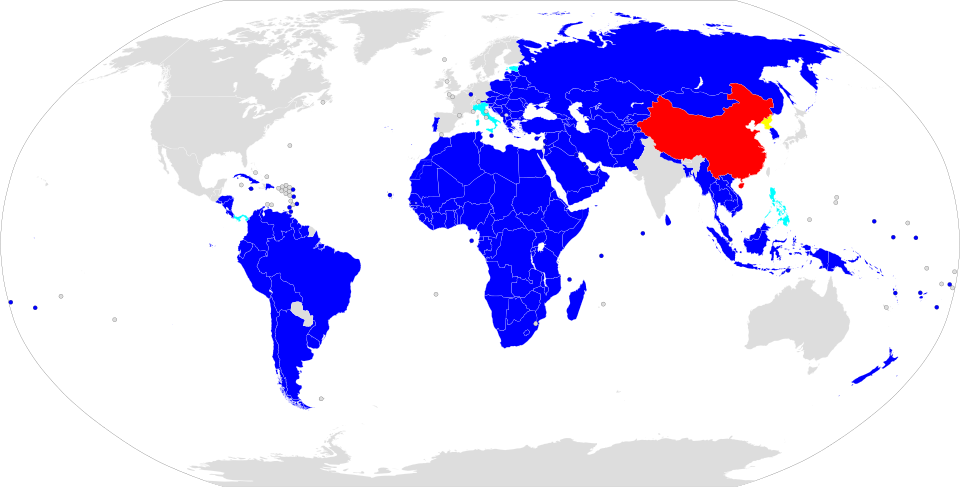
On September 7, 2013, President Xi Jinping stood before an audience of faculty and students at Nazarbayev University in Astana, Kazakhstan, and delivered a speech that would reshape the contours of global geopolitics. In measured tones, Xi proposed the creation of a "Silk Road Economic Belt" — a vast network of infrastructure, trade, and cultural connections stretching from China through Central Asia to Europe, reviving the ancient overland trade routes that had linked the civilizations of East and West for over two millennia. One month later, speaking before the Indonesian parliament in Jakarta, Xi complemented this vision with the "21st-Century Maritime Silk Road," a parallel network of sea routes, ports, and coastal infrastructure connecting China's southeastern seaboard with Southeast Asia, South Asia, the Middle East, East Africa, and the Mediterranean. Together, these two components — collectively branded as "One Belt, One Road" and later renamed the "Belt and Road Initiative" (BRI) — constituted the most ambitious international development program launched by any single nation since the Marshall Plan, encompassing potentially over 140 countries and trillions of dollars in investment (Frankopan, 2018).
The choice of Kazakhstan as the venue for the announcement was deeply symbolic. Central Asia, the geographic heart of the ancient Silk Road, had been marginalized by the maritime-dominated trade patterns of the modern era, its vast landmass transformed from a vital commercial crossroads into a peripheral backwater. Xi's speech explicitly invoked the legacy of the Silk Road, portraying the BRI as a revival of an ancient tradition of Eurasian connectivity that had been interrupted by colonialism, world wars, and Cold War divisions. This historical framing was strategically astute: by presenting the BRI as a continuation of a shared heritage rather than a novel Chinese projection of power, Xi sought to disarm potential critics and position China as a benevolent facilitator of mutual prosperity rather than a hegemonic power pursuing its own interests. The Silk Road metaphor also served a domestic audience, linking the BRI to a narrative of Chinese civilizational greatness that resonated with the nationalist sentiment that Xi had cultivated since assuming power in 2012 (Maçães, 2018).
The intellectual foundations of the BRI drew on several strands of Chinese strategic thinking that had been developing for decades before Xi's announcement. Chinese scholars and policymakers had long discussed the need to develop China's western provinces, which lagged far behind the prosperous eastern seaboard, and the idea of building transportation infrastructure connecting western China with Central Asian and European markets had been circulating in planning circles since the 1990s. Similarly, China's growing dependence on maritime trade routes, particularly the Strait of Malacca through which over eighty percent of China's oil imports passed, had generated concerns about strategic vulnerability that overland routes through Central Asia could help mitigate. The BRI synthesized these existing ideas into a comprehensive framework that aligned domestic economic interests — particularly the need to find productive outlets for China's excess industrial capacity in steel, cement, and construction equipment — with strategic geopolitical objectives, creating a program of breathtaking scope and ambition that would consume much of China's diplomatic and financial resources for years to come (Frankopan, 2018).
"The bond between nations lies in the friendship of their peoples."
Xi Jinping, quoting a classical saying in his Belt and Road speech in Kazakhstan, 2013The Scope: Infrastructure, Ports, and Railways
The physical infrastructure at the heart of the Belt and Road Initiative spanned an extraordinary range of projects, from high-speed railways and deep-water ports to power plants, fiber-optic networks, and industrial parks. In Pakistan, the China-Pakistan Economic Corridor (CPEC), the BRI's flagship project, encompassed over $60 billion in planned investments including the modernization of the Karakoram Highway, the construction of the Gwadar deep-water port on the Arabian Sea, multiple coal and hydroelectric power plants, and a network of special economic zones modeled on China's own successful experiments. In East Africa, Chinese companies built the Standard Gauge Railway connecting Nairobi to Mombasa, Kenya's first new railway in over a century, as well as the Addis Ababa-Djibouti Railway, which linked landlocked Ethiopia to the sea. In Southeast Asia, the China-Laos Railway, a $5.9 billion project completed in 2021, connected Kunming in Yunnan Province to Vientiane, the Laotian capital, through 167 tunnels and over 300 bridges carved through some of the most challenging terrain on earth (Hillman, 2020).
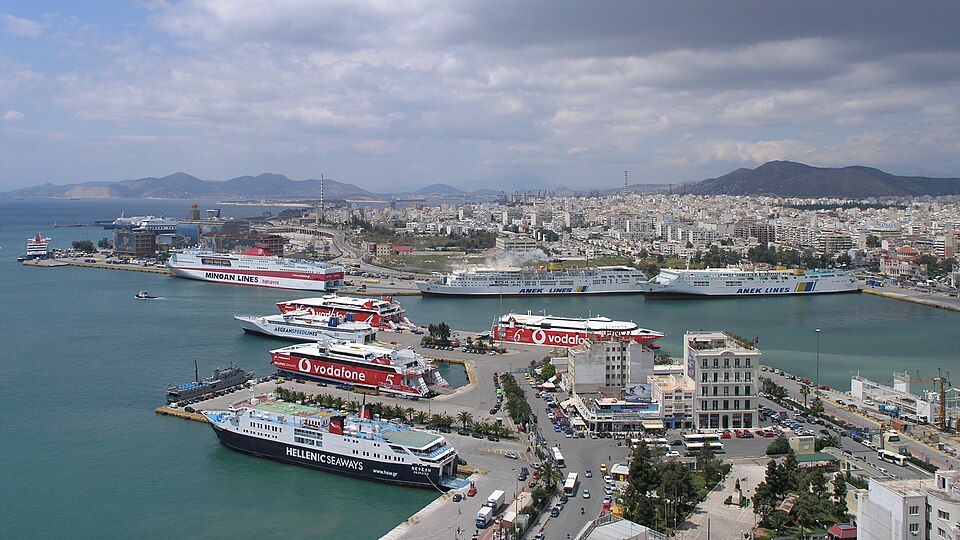
Maritime infrastructure received equally massive investment. Chinese companies acquired stakes in or built ports in Piraeus (Greece), Hambantota (Sri Lanka), Djibouti, Gwadar (Pakistan), Colombo (Sri Lanka), and Kyaukpyu (Myanmar), among dozens of others, creating a network of naval and commercial facilities that extended China's maritime reach across the Indian Ocean and into the Mediterranean. The Port of Piraeus, which China's COSCO Shipping acquired a majority stake in 2016, became the showcase of BRI maritime development: under Chinese management, the port's container throughput increased from 880,000 TEUs in 2010 to over 5 million TEUs by 2019, transforming it from a struggling regional port into one of the Mediterranean's busiest and most efficient facilities. Critics argued that these port investments gave China strategic leverage over critical maritime chokepoints and could potentially be converted to military use, a concern that intensified after China established its first overseas military base in Djibouti in 2017, adjacent to the commercial port that Chinese companies had built (Maçães, 2018).
The "Digital Silk Road," a technology-focused component of the BRI announced in 2015, extended the initiative's reach into telecommunications, e-commerce, and digital infrastructure. Chinese companies including Huawei, ZTE, and Alibaba built fiber-optic networks, data centers, and smart city systems across BRI partner countries, often offering packages that bundled telecommunications infrastructure with e-commerce platforms and digital payment systems. This digital dimension of the BRI was both the least visible to casual observers and potentially the most consequential for the long term, as it established Chinese technological standards, platforms, and data governance models in dozens of countries that might otherwise have adopted Western alternatives. The export of surveillance technology, including facial recognition systems and urban monitoring platforms, attracted particular controversy, with critics arguing that China was providing authoritarian governments with the tools to repress their own populations. Defenders countered that Chinese technology companies were simply meeting market demand and that Western companies had sold similar technologies to repressive governments for decades without attracting comparable criticism (Hillman, 2020).
Financing the Vision: AIIB and Policy Banks
The financial architecture of the Belt and Road Initiative was as innovative and controversial as its physical infrastructure. Traditional sources of international development finance — the World Bank, the International Monetary Fund, and regional development banks — were insufficient to fund the BRI's enormous capital requirements, which some estimates placed at over $1 trillion in the initiative's first decade alone. To fill this gap, China created new financial institutions and repurposed existing ones on a scale that reshaped the landscape of global development finance. The Asian Infrastructure Investment Bank (AIIB), proposed by Xi Jinping in 2013 and formally launched in January 2016 with 57 founding members, was the most prominent of these new institutions. Despite fierce opposition from the United States, which lobbied its allies to boycott the bank, the AIIB attracted membership from virtually every significant economy outside North America, including the United Kingdom, Germany, France, Australia, and South Korea — a diplomatic triumph that demonstrated China's growing influence in international financial governance (Frankopan, 2018).
Beyond the AIIB, the bulk of BRI financing flowed through China's state-owned policy banks, particularly the China Development Bank (CDB) and the Export-Import Bank of China (China Exim Bank). These institutions, which operated under direct government guidance rather than purely commercial imperatives, were able to extend loans on terms that no private bank or multilateral institution could match — longer repayment periods, lower interest rates, and fewer conditionalities regarding governance, environmental standards, or human rights. The Silk Road Fund, a $40 billion state investment vehicle established in 2014, provided equity financing for BRI projects, while the New Development Bank, created jointly by the BRICS nations (Brazil, Russia, India, China, South Africa), offered an additional channel for infrastructure lending. The combined lending capacity of these institutions gave China unprecedented financial leverage in the developing world, enabling it to offer infrastructure packages that no other country or international organization could rival in either scale or speed of deployment (Maçães, 2018).
The terms on which BRI financing was extended became one of the initiative's most contentious aspects. Unlike the World Bank and other multilateral lenders, which typically required recipient countries to meet conditions related to governance, transparency, and environmental protection, Chinese lenders generally imposed fewer policy conditions, a practice that appealed to governments tired of what they perceived as Western paternalism but that also raised legitimate concerns about corruption, environmental degradation, and fiscal sustainability. Many BRI loans were secured against natural resources or infrastructure assets, creating arrangements in which a borrowing country's mines, oil fields, or ports could be seized by Chinese creditors in the event of default. The interest rates on BRI loans, while often lower than commercial rates, were generally higher than those offered by multilateral development banks, and the opacity of many loan agreements — some of which contained confidentiality clauses that prevented public scrutiny — made it difficult for civil society organizations and opposition politicians in borrowing countries to assess whether the terms were fair. These financing practices generated intense debate about whether the BRI represented a genuine development partnership or a sophisticated form of economic coercion (Hillman, 2020).
"If you want to get rich, first build a road."
Popular Chinese saying, reflecting the belief in infrastructure as the foundation of prosperityDiscuss with Jason
Want to talk this article through?
Jason discusses the article with you, quizzes you on it and teaches you words from it.
Sign in free to ask. New accounts start with 300 AI credits.
Debt Diplomacy: Concerns and Realities
The term "debt-trap diplomacy" — the allegation that China deliberately extends excessive loans to vulnerable countries with the intention of seizing strategic assets when borrowers default — became the most prominent criticism of the Belt and Road Initiative and the subject of fierce scholarly and political debate. The case most frequently cited by proponents of the debt-trap thesis was Sri Lanka's Hambantota Port, which was leased to a Chinese state-owned company for 99 years in 2017 after Sri Lanka struggled to service the Chinese loans that had financed the port's construction. Critics argued that this outcome was not accidental but the culmination of a deliberate Chinese strategy to saddle Sri Lanka with unsustainable debt in order to acquire a strategic naval facility in the Indian Ocean. The Hambantota case became a cautionary tale invoked by politicians, journalists, and policy analysts around the world as evidence that BRI lending was fundamentally predatory in nature (Hillman, 2020).
However, more rigorous academic analysis of the Hambantota case and other alleged instances of debt-trap diplomacy has produced a considerably more nuanced picture. Research by scholars at the Johns Hopkins School of Advanced International Studies, the Chatham House think tank, and other institutions found little evidence that China systematically lent to countries with the intention of provoking defaults and seizing assets. The Hambantota Port, rather than being a Chinese scheme, was a pet project of Sri Lankan President Mahinda Rajapaksa, who pushed for the port's construction against the advice of feasibility studies that questioned its commercial viability. China was not the first lender approached; several other potential funders, including India, declined before Chinese banks agreed to finance the project. The subsequent debt restructuring, while undoubtedly advantageous to China, was a negotiated commercial arrangement rather than a hostile seizure. Similar investigations of other alleged debt traps — in Djibouti, Zambia, and elsewhere — found that the reality was invariably more complex than the simple predatory lending narrative suggested, with local political dynamics, corruption, and poor governance playing at least as significant a role as Chinese lending practices (Frankopan, 2018).
Nevertheless, the debt sustainability concerns surrounding BRI lending were real and significant, even if the "debt-trap diplomacy" framing was an oversimplification. Several BRI borrowing countries, including Pakistan, Sri Lanka, Laos, and Zambia, experienced serious debt distress in which Chinese loans were a contributing factor, though rarely the sole or even primary cause. The COVID-19 pandemic, which devastated the economies of many developing countries and reduced their capacity to service external debt, intensified these pressures and forced China to engage in debt restructuring negotiations on a scale it had not previously anticipated. China's participation in the G20's Debt Service Suspension Initiative and its bilateral debt relief agreements with several countries demonstrated a willingness to adapt its approach, though critics argued that Chinese responses were too slow, too opaque, and too focused on protecting Chinese financial interests rather than providing genuine relief to struggling economies. The debate over BRI debt highlighted a fundamental tension at the heart of the initiative: between China's stated commitment to South-South solidarity and mutual benefit, and the commercial imperatives of Chinese state-owned banks and construction companies that demanded profitable returns on their investments (Maçães, 2018).
Success Stories and Economic Impact
For all the controversy surrounding the Belt and Road Initiative, its impact on physical infrastructure in participating countries was undeniable and, in many cases, transformative. The China-Laos Railway, which opened in December 2021, reduced travel time between the Laotian capital Vientiane and the Chinese border from two days by road to three hours by rail, opening up landlocked Laos to trade flows that had previously bypassed it entirely. In East Africa, Chinese-built roads, railways, and ports dramatically improved connectivity in a region where the lack of infrastructure had been identified by virtually every development economist as the single greatest obstacle to economic growth. The Mombasa-Nairobi Standard Gauge Railway reduced freight transit time between Kenya's two largest cities from twelve hours to four, while the Addis Ababa-Djibouti Railway provided Ethiopia with its first reliable rail link to the sea, a development of enormous strategic and economic significance for a country of over 100 million people. In Europe, Chinese investment revived the Port of Piraeus and contributed to the development of the China-Europe railway freight service, which by 2021 was operating over 15,000 train trips annually between Chinese and European cities, providing an alternative to sea freight that was faster if more expensive (Hillman, 2020).
The economic impact of BRI investment on participating countries was uneven and contested, with assessments varying dramatically depending on the methodology employed, the time frame considered, and the political perspective of the analyst. World Bank research published in 2019 estimated that full implementation of BRI transportation projects could increase trade among participating countries by up to 12 percent and reduce trade costs by up to 2.2 percent, while lifting 7.6 million people out of extreme poverty. However, the same study noted that these gains would be distributed unevenly, with countries along major transit corridors benefiting most and others potentially losing out as trade was diverted to new routes. Independent academic studies produced similarly mixed findings: some documented significant positive effects on economic growth, foreign direct investment, and employment in BRI recipient countries, while others found that the benefits were concentrated among political elites and Chinese companies, with limited spillover to local economies and workforces. The truth, as is often the case with large-scale development interventions, lay somewhere between the most optimistic and most pessimistic assessments (Frankopan, 2018).
Beyond economics, the BRI generated significant soft power benefits for China, enhancing its diplomatic influence and cultural presence in regions where it had previously maintained a relatively low profile. The People-to-People Bond, one of the BRI's five designated "connectivity" pillars, supported educational exchanges, cultural events, media cooperation, and tourism promotion that raised China's visibility and improved perceptions of China in many participating countries. Chinese government scholarships brought tens of thousands of students from BRI countries to Chinese universities each year, creating networks of Chinese-educated professionals who would potentially serve as bridges between China and their home countries for decades to come. Confucius Institutes, Chinese cultural centers, and Chinese-language media outlets proliferated across BRI countries, contributing to a Chinese cultural presence that, while still far less extensive than American cultural influence, was growing rapidly and strategically. Whether these soft power gains would prove durable, or whether the controversies surrounding debt, labor practices, and environmental impact would ultimately overshadow them, remained one of the many unanswered questions about the BRI's long-term trajectory (Maçães, 2018).
"Together we are strong; alone we are weak."
Classical Chinese proverb invoked in BRI promotional materials to emphasize multilateral cooperationThe BRI and the Marshall Plan: Parallels and Differences
The comparison between the Belt and Road Initiative and the Marshall Plan — the American program that channeled over $13 billion (approximately $150 billion in 2020 dollars) into the reconstruction of Western Europe after World War II — has been a recurring theme in analysis of the BRI, invoked by both supporters and critics to frame the initiative in terms that Western audiences can readily understand. The parallels are suggestive: both programs involved a rising power deploying economic resources on a massive scale to reshape the geopolitical landscape, both combined commercial and strategic motivations, and both sought to create networks of economic interdependence that would bind recipient countries to the sponsoring power's economic and political orbit. Chinese commentators have occasionally embraced the comparison, portraying the BRI as evidence that China is assuming the mantle of global leadership that the United States has increasingly abdicated. American critics, conversely, have used the comparison to argue that the BRI, like the Marshall Plan, is fundamentally a tool of geopolitical competition — a strategy for building a China-centered international order that would displace American hegemony (Frankopan, 2018).
However, the differences between the two programs are at least as significant as the similarities. The Marshall Plan was a grant program: the majority of its funds were disbursed as outright gifts that did not need to be repaid, reflecting the United States' enormous economic surplus in the immediate postwar period and the strategic urgency of preventing Western Europe from falling under Soviet influence. The BRI, by contrast, relies primarily on loans that must be repaid with interest, creating a fundamentally different relationship between donor and recipient. The Marshall Plan was concentrated in a relatively small number of wealthy, industrialized countries with strong institutions and existing infrastructure, while the BRI targets a vastly more diverse group of countries at every level of economic development, institutional capacity, and governance quality. The Marshall Plan operated within a clear ideological framework — the defense and promotion of liberal democracy and free-market capitalism — while the BRI explicitly eschews ideological conditionality, positioning itself as a purely economic partnership that respects the sovereignty and political systems of participating countries (Maçães, 2018).
Perhaps the most important difference between the BRI and the Marshall Plan is the international context in which each program operates. The Marshall Plan was launched at a moment of unquestioned American economic supremacy, when the United States produced nearly half of global GDP and possessed the world's only fully functional industrial economy. The BRI, by contrast, is being implemented in a multipolar world in which China, while an economic superpower, faces competition from the United States, the European Union, Japan, and India, each of which has launched its own connectivity and infrastructure initiatives partly in response to the BRI. The United States' Build Back Better World (B3W) initiative, the European Union's Global Gateway, Japan's Partnership for Quality Infrastructure, and India's Infrastructure for Resilient Island States all represent attempts to offer alternatives to BRI financing that are more transparent, more environmentally sustainable, and less likely to generate debt distress. Whether these competing initiatives will meaningfully constrain the BRI's expansion or simply demonstrate the difficulty of matching China's scale and speed of infrastructure deployment remains to be seen. What is clear is that the Belt and Road Initiative has fundamentally altered the landscape of international development finance and infrastructure investment, forcing every major power to articulate its own vision for global connectivity and compelling a debate about the terms on which the 21st century's physical and digital infrastructure will be built (Hillman, 2020).
Quiz
What was the symbolic significance of Xi Jinping announcing the Silk Road Economic Belt in Kazakhstan?
What is the primary focus of the 'Digital Silk Road'?
Which institution was created to finance the Belt and Road Initiative?
What was a major criticism of China's port investments under the BRI?
How did the Marshall Plan differ fundamentally from the Belt and Road Initiative?
What was the outcome of the Hambantota Port case often cited as evidence of?
Which country experienced a transformative change due to the China-Laos Railway?
What does the 'People-to-People Bond' pillar of the BRI focus on?
Write your thoughts, then get feedback from Jason — you can turn any answer into a full discussion.
9. How does the Belt and Road Initiative aim to address the strategic vulnerabilities associated with China's maritime trade routes?
10. In what ways might the Belt and Road Initiative impact the cultural and economic landscapes of participating countries?
Frequently Asked Questions
Common questions about The Belt and Road Initiative: China's 21st-Century Silk Road
What is China's Belt and Road Initiative?
The Belt and Road Initiative (BRI), launched by President Xi Jinping in 2013, is a massive global infrastructure and investment program spanning over 140 countries across Asia, Europe, Africa, and Latin America. It consists of the overland "Silk Road Economic Belt" and the maritime "21st-Century Maritime Silk Road," together representing the largest infrastructure project in human history with estimated investments exceeding $1 trillion.
How many countries are part of the Belt and Road Initiative?
Over 140 countries have signed cooperation agreements with China under the Belt and Road Initiative, spanning every continent except Antarctica. These participating nations represent approximately two-thirds of the world's population and one-third of global GDP, making the BRI the most geographically expansive development program ever undertaken by a single country.
What are the main criticisms of the Belt and Road Initiative?
Critics have raised concerns about "debt-trap diplomacy," where developing nations take on unsustainable Chinese loans for infrastructure projects they cannot afford to repay, potentially ceding strategic assets or political leverage to Beijing. Other criticisms include lack of transparency in project financing, environmental damage from large-scale construction, use of Chinese rather than local labor, and allegations that the BRI serves China's geopolitical interests more than the development needs of host countries.
How does the Belt and Road Initiative compare to the original Silk Road?
While the ancient Silk Road emerged organically over centuries through merchant activity and cultural exchange, the modern BRI is a state-directed initiative with centralized planning and financing from Chinese policy banks. Both share the goal of connecting China to global markets through trade infrastructure, but the BRI operates on a vastly larger scale, incorporating railways, ports, power plants, digital networks, and financial institutions across multiple continents.
What infrastructure projects has the Belt and Road Initiative built?
BRI projects include major infrastructure such as the China-Pakistan Economic Corridor with highways and power plants, the Piraeus port in Greece, high-speed rail lines in Southeast Asia, industrial parks in Ethiopia, and digital infrastructure across Central Asia. The initiative also funds pipelines, bridges, special economic zones, and telecommunications networks designed to create integrated trade corridors linking China to markets worldwide.